
#walletsecurity
walletsecurity
171,833 views
451 Discussing
Hot
Latest

·
--
Bearish
MANTRA PAUSED UNSTAKING — BUT SOME WITHDRAWAL CLOCKS ARE STILL RUNNING
Imagine having your crypto locked in staking, only to discover someone else has started withdrawing it
That's the situation MANTRA is trying to contain
$MANTRA
{future}(MANTRAUSDT)
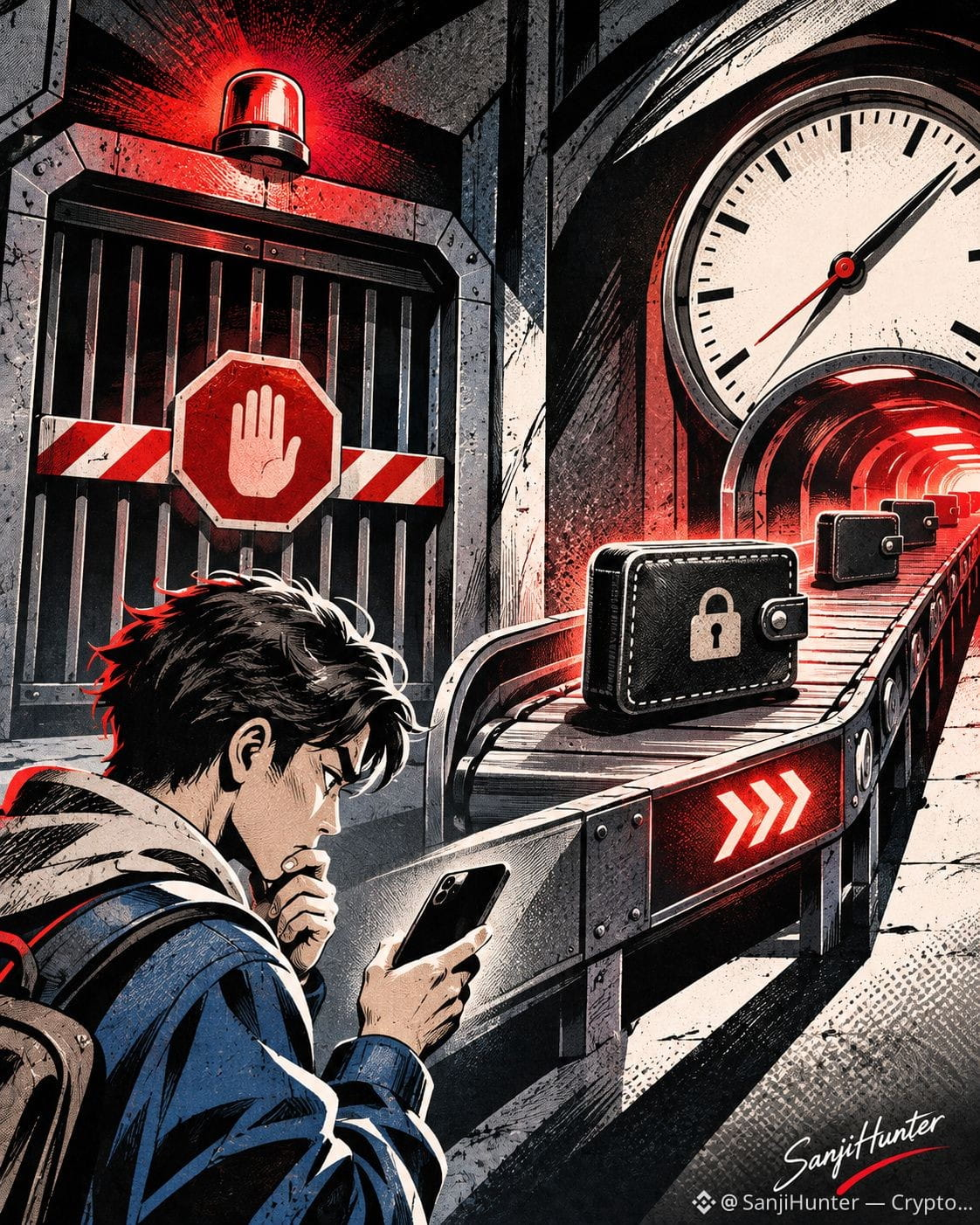
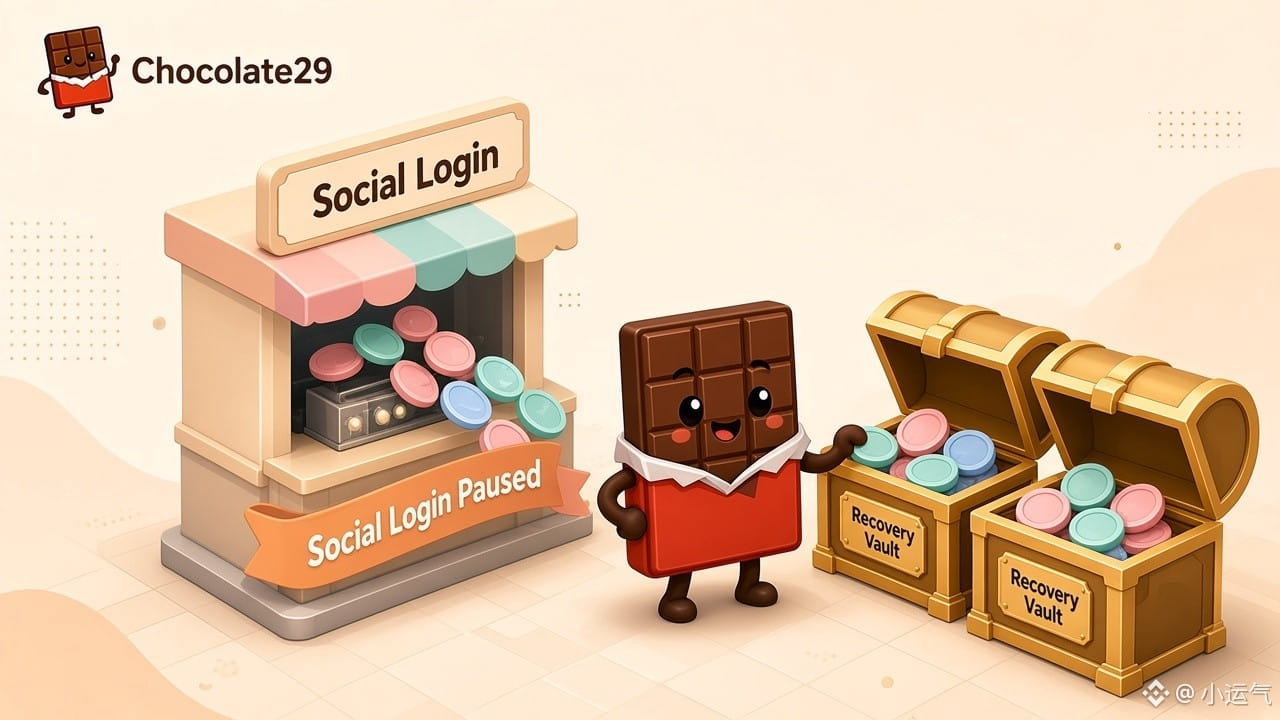
⚠️ Following reports of compromised Web3Auth and Keplr wallet access, MANTRA announced a 7-day emergency pause on new unstaking requests
Attackers reportedly stole liquid tokens before initiating unauthorized unstaking of $OM
But there's a dangerous exception
Existing unstaking requests are NOT frozen
The 8-day withdrawal countdown continues, potentially allowing attackers with compromised keys to claim the tokens when they become available
🔐 MANTRA has urged affected users to redelegate before that countdown ends
Redelegation may stop an ongoing withdrawal, but it cannot make an exposed private key secure again
Not every Keplr wallet is necessarily compromised
If you're affected, check your staking status and follow official recovery instructions — never enter your recovery phrase into an unsolicited website
A temporary pause buys time
What users do with that time matters
{spot}(MANTRAUSDT)
$MANTRA #WalletSecurity #CryptoSecurity
MANTRA PAUSED UNSTAKING — BUT SOME WITHDRAWAL CLOCKS ARE STILL RUNNING
Imagine having your crypto locked in staking, only to discover someone else has started withdrawing it
That's the situation MANTRA is trying to contain
$MANTRA
⚠️ Following reports of compromised Web3Auth and Keplr wallet access, MANTRA announced a 7-day emergency pause on new unstaking requests
Attackers reportedly stole liquid tokens before initiating unauthorized unstaking of $OM
But there's a dangerous exception
Existing unstaking requests are NOT frozen
The 8-day withdrawal countdown continues, potentially allowing attackers with compromised keys to claim the tokens when they become available
🔐 MANTRA has urged affected users to redelegate before that countdown ends
Redelegation may stop an ongoing withdrawal, but it cannot make an exposed private key secure again
Not every Keplr wallet is necessarily compromised
If you're affected, check your staking status and follow official recovery instructions — never enter your recovery phrase into an unsolicited website
A temporary pause buys time
What users do with that time matters
$MANTRA #WalletSecurity #CryptoSecurity
Imagine having your crypto locked in staking, only to discover someone else has started withdrawing it
That's the situation MANTRA is trying to contain
$MANTRA
⚠️ Following reports of compromised Web3Auth and Keplr wallet access, MANTRA announced a 7-day emergency pause on new unstaking requests
Attackers reportedly stole liquid tokens before initiating unauthorized unstaking of $OM
But there's a dangerous exception
Existing unstaking requests are NOT frozen
The 8-day withdrawal countdown continues, potentially allowing attackers with compromised keys to claim the tokens when they become available
🔐 MANTRA has urged affected users to redelegate before that countdown ends
Redelegation may stop an ongoing withdrawal, but it cannot make an exposed private key secure again
Not every Keplr wallet is necessarily compromised
If you're affected, check your staking status and follow official recovery instructions — never enter your recovery phrase into an unsolicited website
A temporary pause buys time
What users do with that time matters
$MANTRA #WalletSecurity #CryptoSecurity
259

·
--
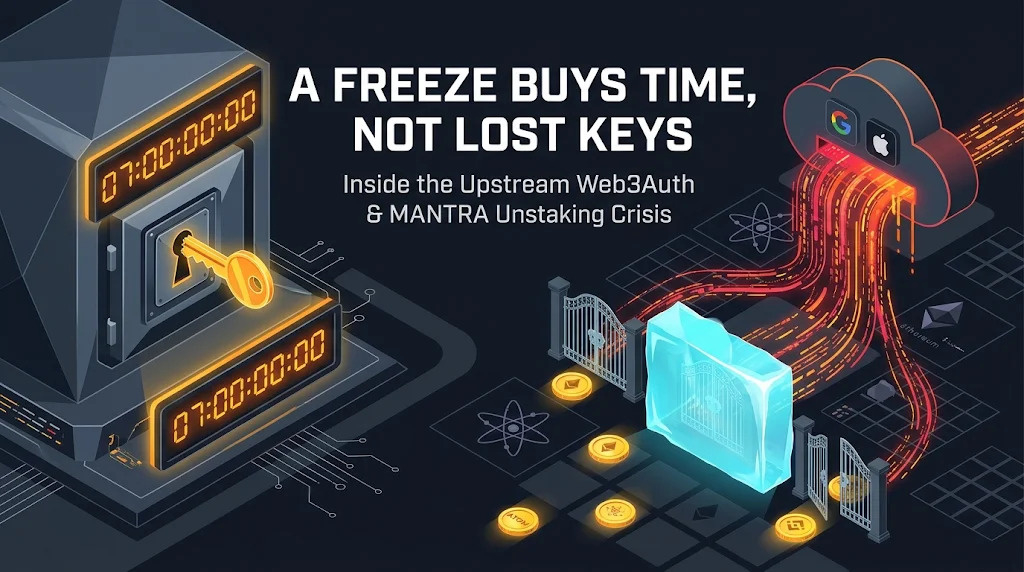
⚠️A seven-day unstaking freeze cannot reverse a stolen private key. It can only buy time.
On November 13, MANTRA paused all new unbonding transactions for seven days after reports that attackers were withdrawing staked MANTRA from compromised Keplr social-login wallets. It does not cancel withdrawals already in the eight-day unbonding queue.
MANTRA says affected holders must redelegate before that timer expires.
The weakness sits upstream: Web3Auth's embedded-wallet infrastructure, used by Keplr's Google/Apple login. Keplr says recovery-phrase and hardware-wallet accounts were not affected.
This is not evidence that Google or Apple accounts themselves were hacked.
Bitquery's November 12 investigation traced at least $1.82M taken between November 1–12 from 7,842 Cosmos wallets, 52 Ethereum wallets and 13 Hyperliquid accounts. More than $1.01M left before Web3Auth's first rescue sweep. Separately, Web3Auth moved roughly $6M into recovery wallets. That $6M is not a confirmed theft total.
The missing pieces are the technical root cause, final loss reconciliation and a confirmed return timetable.
MANTRA also suffered a separate upstream chain-accounting exploit in August. Different cause, but repeated security shocks across different layers matter for trust.
The freeze restricts exits; it does not repair compromised keys or protect every other chain.
Not financial advice.
$MANTRA
{future}(MANTRAUSDT)
#MANTRAPausesUnstakingFor7DaysAfterKeplrSecurityIncident #mantra #WalletSecurity #CosmosEcosystem
⚠️A seven-day unstaking freeze cannot reverse a stolen private key. It can only buy time.
On November 13, MANTRA paused all new unbonding transactions for seven days after reports that attackers were withdrawing staked MANTRA from compromised Keplr social-login wallets. It does not cancel withdrawals already in the eight-day unbonding queue.
MANTRA says affected holders must redelegate before that timer expires.
The weakness sits upstream: Web3Auth's embedded-wallet infrastructure, used by Keplr's Google/Apple login. Keplr says recovery-phrase and hardware-wallet accounts were not affected.
This is not evidence that Google or Apple accounts themselves were hacked.
Bitquery's November 12 investigation traced at least $1.82M taken between November 1–12 from 7,842 Cosmos wallets, 52 Ethereum wallets and 13 Hyperliquid accounts. More than $1.01M left before Web3Auth's first rescue sweep. Separately, Web3Auth moved roughly $6M into recovery wallets. That $6M is not a confirmed theft total.
The missing pieces are the technical root cause, final loss reconciliation and a confirmed return timetable.
MANTRA also suffered a separate upstream chain-accounting exploit in August. Different cause, but repeated security shocks across different layers matter for trust.
The freeze restricts exits; it does not repair compromised keys or protect every other chain.
Not financial advice.
$MANTRA
#MANTRAPausesUnstakingFor7DaysAfterKeplrSecurityIncident #mantra #WalletSecurity #CosmosEcosystem
On November 13, MANTRA paused all new unbonding transactions for seven days after reports that attackers were withdrawing staked MANTRA from compromised Keplr social-login wallets. It does not cancel withdrawals already in the eight-day unbonding queue.
MANTRA says affected holders must redelegate before that timer expires.
The weakness sits upstream: Web3Auth's embedded-wallet infrastructure, used by Keplr's Google/Apple login. Keplr says recovery-phrase and hardware-wallet accounts were not affected.
This is not evidence that Google or Apple accounts themselves were hacked.
Bitquery's November 12 investigation traced at least $1.82M taken between November 1–12 from 7,842 Cosmos wallets, 52 Ethereum wallets and 13 Hyperliquid accounts. More than $1.01M left before Web3Auth's first rescue sweep. Separately, Web3Auth moved roughly $6M into recovery wallets. That $6M is not a confirmed theft total.
The missing pieces are the technical root cause, final loss reconciliation and a confirmed return timetable.
MANTRA also suffered a separate upstream chain-accounting exploit in August. Different cause, but repeated security shocks across different layers matter for trust.
The freeze restricts exits; it does not repair compromised keys or protect every other chain.
Not financial advice.
$MANTRA
#MANTRAPausesUnstakingFor7DaysAfterKeplrSecurityIncident #mantra #WalletSecurity #CosmosEcosystem
1
292

⚠️ $MANTRA PAUSED UNSTAKING WHILE ATTACKERS KEEP THE CLOCK TICKING 🦈
📊 The 7‑day emergency pause bought a narrow window, but the 8‑day withdrawal countdown stays alive, letting compromised keys still pull liquid tokens. 🕵️♂️ Smart money is already scanning the order flow for any residual exits, and volume spikes could signal a last‑minute sweep.
💡 Redelegate now if you spot an active request – it can halt the pending pull, though it won’t patch a leaked . Stay razor‑sharp, audit your Keplr access, and keep the recovery steps locked down. 🤔 Are you redelegating before the timer runs out?
⚠️ Not financial advice. Always manage your risk. 🛡️
🏷️ #MANTRA #WalletSecurity #Staking #Crypto
🦈 🔥
⚠️ $MANTRA PAUSED UNSTAKING WHILE ATTACKERS KEEP THE CLOCK TICKING 🦈
📊 The 7‑day emergency pause bought a narrow window, but the 8‑day withdrawal countdown stays alive, letting compromised keys still pull liquid tokens. 🕵️♂️ Smart money is already scanning the order flow for any residual exits, and volume spikes could signal a last‑minute sweep.
💡 Redelegate now if you spot an active request – it can halt the pending pull, though it won’t patch a leaked . Stay razor‑sharp, audit your Keplr access, and keep the recovery steps locked down. 🤔 Are you redelegating before the timer runs out?
⚠️ Not financial advice. Always manage your risk. 🛡️
🏷️ #MANTRA #WalletSecurity #Staking #Crypto
🦈 🔥
📊 The 7‑day emergency pause bought a narrow window, but the 8‑day withdrawal countdown stays alive, letting compromised keys still pull liquid tokens. 🕵️♂️ Smart money is already scanning the order flow for any residual exits, and volume spikes could signal a last‑minute sweep.
💡 Redelegate now if you spot an active request – it can halt the pending pull, though it won’t patch a leaked . Stay razor‑sharp, audit your Keplr access, and keep the recovery steps locked down. 🤔 Are you redelegating before the timer runs out?
⚠️ Not financial advice. Always manage your risk. 🛡️
🏷️ #MANTRA #WalletSecurity #Staking #Crypto
🦈 🔥
9

On 31 October 2024, one SMS stopped a thief mid-withdrawal.
About $2,000 was taken from our founder in total, including 1.088 BNB. It was stolen from MetaMask, Trust Wallet and an OKX account.
On HTX, the attacker got into the account and converted the assets to $BNB. The withdrawal still failed: an SMS confirmation went to a separate phone number.
We could not establish how they got in. Working hypothesis: the laptop, handed to a stranger for repair, running unlicensed Windows with no antivirus. Circumstances, not a proven cause.
This is not a claim that SMS is strong. SIM-swaps exist. It is one narrow observation: a separate channel stopped the withdrawal. That is all the first C·H·A·O· hallmark on HTX says. It is not a security audit of the exchange.
The lesson: don't trust, verify. Nihil sine probatione.
So Cirqus Intelligence is launching The Cirqus Register. It publishes shifts, not news. Every forecast gets a date and a criterion for whether it came true. Once a month we check our own calls, misses first. No trading signals, no price calls.
The Q is not a typo. It's the lens.
AI agents help with research, a Verifier checks the claims, and a human approves every issue.
Which of your withdrawals still depends on a single device?
#CryptoSecurity #Binance #WalletSecurity #CirqusRegister
On 31 October 2024, one SMS stopped a thief mid-withdrawal.
About $2,000 was taken from our founder in total, including 1.088 BNB. It was stolen from MetaMask, Trust Wallet and an OKX account.
On HTX, the attacker got into the account and converted the assets to $BNB . The withdrawal still failed: an SMS confirmation went to a separate phone number.
We could not establish how they got in. Working hypothesis: the laptop, handed to a stranger for repair, running unlicensed Windows with no antivirus. Circumstances, not a proven cause.
This is not a claim that SMS is strong. SIM-swaps exist. It is one narrow observation: a separate channel stopped the withdrawal. That is all the first C·H·A·O· hallmark on HTX says. It is not a security audit of the exchange.
The lesson: don't trust, verify. Nihil sine probatione.
So Cirqus Intelligence is launching The Cirqus Register. It publishes shifts, not news. Every forecast gets a date and a criterion for whether it came true. Once a month we check our own calls, misses first. No trading signals, no price calls.
The Q is not a typo. It's the lens.
AI agents help with research, a Verifier checks the claims, and a human approves every issue.
Which of your withdrawals still depends on a single device?
#CryptoSecurity #Binance #WalletSecurity #CirqusRegister
About $2,000 was taken from our founder in total, including 1.088 BNB. It was stolen from MetaMask, Trust Wallet and an OKX account.
On HTX, the attacker got into the account and converted the assets to $BNB . The withdrawal still failed: an SMS confirmation went to a separate phone number.
We could not establish how they got in. Working hypothesis: the laptop, handed to a stranger for repair, running unlicensed Windows with no antivirus. Circumstances, not a proven cause.
This is not a claim that SMS is strong. SIM-swaps exist. It is one narrow observation: a separate channel stopped the withdrawal. That is all the first C·H·A·O· hallmark on HTX says. It is not a security audit of the exchange.
The lesson: don't trust, verify. Nihil sine probatione.
So Cirqus Intelligence is launching The Cirqus Register. It publishes shifts, not news. Every forecast gets a date and a criterion for whether it came true. Once a month we check our own calls, misses first. No trading signals, no price calls.
The Q is not a typo. It's the lens.
AI agents help with research, a Verifier checks the claims, and a human approves every issue.
Which of your withdrawals still depends on a single device?
#CryptoSecurity #Binance #WalletSecurity #CirqusRegister
1
129

·
--
Disconnecting Isn’t the Same as Revoking Wallet Permissions
Disconnecting from a DeFi app does not necessarily revoke the permission you gave it. Ethereum.org says token allowances can remain active after you disconnect—and may have no expiry. An unlimited approval can let a contract spend all of that token type held in your wallet. Binance Academy recommends reviewing approval requests carefully and revoking permissions you no longer need.
That makes approval hygiene a separate security habit: check the contract before signing, limit the amount where your wallet allows it, and review allowances on each network. Revocation is an on-chain transaction and can require a network fee.
My take: do not assume “disconnect” means “revoke.” Do you audit your wallet approvals regularly?
Sources: Ethereum.org — https://ethereum.org/guides/how-to-revoke-token-access/ | Binance Academy — https://academy.binance.com/en/articles/how-to-spot-scams-in-decentralized-finance-defi
#Cybersecurity #DeFi #WalletSecurity
Disconnecting Isn’t the Same as Revoking Wallet Permissions
Disconnecting from a DeFi app does not necessarily revoke the permission you gave it. Ethereum.org says token allowances can remain active after you disconnect—and may have no expiry. An unlimited approval can let a contract spend all of that token type held in your wallet. Binance Academy recommends reviewing approval requests carefully and revoking permissions you no longer need.
That makes approval hygiene a separate security habit: check the contract before signing, limit the amount where your wallet allows it, and review allowances on each network. Revocation is an on-chain transaction and can require a network fee.
My take: do not assume “disconnect” means “revoke.” Do you audit your wallet approvals regularly?
Sources: Ethereum.org — https://ethereum.org/guides/how-to-revoke-token-access/ | Binance Academy — https://academy.binance.com/en/articles/how-to-spot-scams-in-decentralized-finance-defi
#Cybersecurity #DeFi #WalletSecurity
Disconnecting from a DeFi app does not necessarily revoke the permission you gave it. Ethereum.org says token allowances can remain active after you disconnect—and may have no expiry. An unlimited approval can let a contract spend all of that token type held in your wallet. Binance Academy recommends reviewing approval requests carefully and revoking permissions you no longer need.
That makes approval hygiene a separate security habit: check the contract before signing, limit the amount where your wallet allows it, and review allowances on each network. Revocation is an on-chain transaction and can require a network fee.
My take: do not assume “disconnect” means “revoke.” Do you audit your wallet approvals regularly?
Sources: Ethereum.org — https://ethereum.org/guides/how-to-revoke-token-access/ | Binance Academy — https://academy.binance.com/en/articles/how-to-spot-scams-in-decentralized-finance-defi
#Cybersecurity #DeFi #WalletSecurity
3
·
--
Bearish
🚨 A $SUI hardware wallet was ready to ship — now the entire project is shutting down
Suiball has announced the cancellation of its hardware wallet launch and promised USDC refunds for all pre-orders
The team says security concerns led the Sui Foundation to withdraw support
But the most important detail for customers is HOW they paid 👇
$SUI
{future}(SUIUSDT)
🔹 On-chain pre-orders — Around 80% of orders will receive automatic USDC refunds to wallets holding their soulbound reservation NFTs
No claim or wallet connection required
🔹 Credit-card pre-orders — Customers will receive an email requesting a Sui wallet address for a separate refund distribution
⚠️ Suiball says it will NEVER request seed phrases, private keys or additional payments
Verify communications through official channels before responding
A refund email can be spoofed — even when the sender looks familiar
This is a hardware wallet project shutdown, NOT evidence that the Sui blockchain itself was hacked
{spot}(SUIUSDT)
The next milestone is confirmed refund transactions, not another promise
A scheduled refund isn't the same as money returned
$SUI #SUİ #WalletSecurity
🚨 A $SUI hardware wallet was ready to ship — now the entire project is shutting down
Suiball has announced the cancellation of its hardware wallet launch and promised USDC refunds for all pre-orders
The team says security concerns led the Sui Foundation to withdraw support
But the most important detail for customers is HOW they paid 👇
$SUI
🔹 On-chain pre-orders — Around 80% of orders will receive automatic USDC refunds to wallets holding their soulbound reservation NFTs
No claim or wallet connection required
🔹 Credit-card pre-orders — Customers will receive an email requesting a Sui wallet address for a separate refund distribution
⚠️ Suiball says it will NEVER request seed phrases, private keys or additional payments
Verify communications through official channels before responding
A refund email can be spoofed — even when the sender looks familiar
This is a hardware wallet project shutdown, NOT evidence that the Sui blockchain itself was hacked
The next milestone is confirmed refund transactions, not another promise
A scheduled refund isn't the same as money returned
$SUI #SUİ #WalletSecurity
Suiball has announced the cancellation of its hardware wallet launch and promised USDC refunds for all pre-orders
The team says security concerns led the Sui Foundation to withdraw support
But the most important detail for customers is HOW they paid 👇
$SUI
🔹 On-chain pre-orders — Around 80% of orders will receive automatic USDC refunds to wallets holding their soulbound reservation NFTs
No claim or wallet connection required
🔹 Credit-card pre-orders — Customers will receive an email requesting a Sui wallet address for a separate refund distribution
⚠️ Suiball says it will NEVER request seed phrases, private keys or additional payments
Verify communications through official channels before responding
A refund email can be spoofed — even when the sender looks familiar
This is a hardware wallet project shutdown, NOT evidence that the Sui blockchain itself was hacked
The next milestone is confirmed refund transactions, not another promise
A scheduled refund isn't the same as money returned
$SUI #SUİ #WalletSecurity

227

Multiple Bitcoin keys do not help much if one theft exposes all of them.
A multisignature wallet can require several independent approvals before spending $BTC. For example, a two-of-three setup needs any two signing keys—not just a password on one device.
The practical benefit is separation: stealing one key alone is insufficient. But keeping every key and backup together can undermine that protection.
Before choosing this setup, map which devices and locations could fail together. Then check whether enough signing keys would remain available to recover access.
The trade-off is complexity: losing access to too many keys can lock you out. Multisignature changes the security design; it does not remove the need for careful backups.
Source: Bitcoin.org — https://bitcoin.org/en/secure-your-wallet
#Bitcoin #WalletSecurity #Multisig #CryptoEducation #SelfCustody
Multiple Bitcoin keys do not help much if one theft exposes all of them.
A multisignature wallet can require several independent approvals before spending $BTC . For example, a two-of-three setup needs any two signing keys—not just a password on one device.
The practical benefit is separation: stealing one key alone is insufficient. But keeping every key and backup together can undermine that protection.
Before choosing this setup, map which devices and locations could fail together. Then check whether enough signing keys would remain available to recover access.
The trade-off is complexity: losing access to too many keys can lock you out. Multisignature changes the security design; it does not remove the need for careful backups.
Source: Bitcoin.org — https://bitcoin.org/en/secure-your-wallet
#Bitcoin #WalletSecurity #Multisig #CryptoEducation #SelfCustody
A multisignature wallet can require several independent approvals before spending $BTC . For example, a two-of-three setup needs any two signing keys—not just a password on one device.
The practical benefit is separation: stealing one key alone is insufficient. But keeping every key and backup together can undermine that protection.
Before choosing this setup, map which devices and locations could fail together. Then check whether enough signing keys would remain available to recover access.
The trade-off is complexity: losing access to too many keys can lock you out. Multisignature changes the security design; it does not remove the need for careful backups.
Source: Bitcoin.org — https://bitcoin.org/en/secure-your-wallet
#Bitcoin #WalletSecurity #Multisig #CryptoEducation #SelfCustody
64

AN ELEVEN-YEAR DORMANT $ETH WHALE JUST WOKE UP AND DODGED A DEADLY TRAP 🚨
When ancient capital stirs after a decade of hibernation, predatory eyes circle instantly. A dormant $ETH wallet executed a minor test transfer, and within minutes, malicious actors flooded its ledger with lookalike dust addresses designed to mimic recent counterparties 🦈.
This poisoning tactic weaponizes human habit by planting microscopic replicas inside your transaction history. While this whale spotted the counterfeit destination and secured their stack safely, trusting recent UI records without independent verification remains a dangerous blind spot.
Are you double checking the full destination address every single time, or relying blindly on your recent transaction dropdown 👇?
⚠️ Not financial advice. Always manage your risk. 🛡️
🏷️ #ETH #WalletSecurity #Crypto #SmartMoney
💎
AN ELEVEN-YEAR DORMANT $ETH WHALE JUST WOKE UP AND DODGED A DEADLY TRAP 🚨
When ancient capital stirs after a decade of hibernation, predatory eyes circle instantly. A dormant $ETH wallet executed a minor test transfer, and within minutes, malicious actors flooded its ledger with lookalike dust addresses designed to mimic recent counterparties 🦈.
This poisoning tactic weaponizes human habit by planting microscopic replicas inside your transaction history. While this whale spotted the counterfeit destination and secured their stack safely, trusting recent UI records without independent verification remains a dangerous blind spot.
Are you double checking the full destination address every single time, or relying blindly on your recent transaction dropdown 👇?
⚠️ Not financial advice. Always manage your risk. 🛡️
🏷️ #ETH #WalletSecurity #Crypto #SmartMoney
💎
When ancient capital stirs after a decade of hibernation, predatory eyes circle instantly. A dormant $ETH wallet executed a minor test transfer, and within minutes, malicious actors flooded its ledger with lookalike dust addresses designed to mimic recent counterparties 🦈.
This poisoning tactic weaponizes human habit by planting microscopic replicas inside your transaction history. While this whale spotted the counterfeit destination and secured their stack safely, trusting recent UI records without independent verification remains a dangerous blind spot.
Are you double checking the full destination address every single time, or relying blindly on your recent transaction dropdown 👇?
⚠️ Not financial advice. Always manage your risk. 🛡️
🏷️ #ETH #WalletSecurity #Crypto #SmartMoney
💎

2
·
--
Bearish
🚨 An Ethereum wallet dormant for 11 YEARS moved $4.6 MILLION — and scammers were waiting within 3 minutes
On November 9, the wallet sent a small 0.05 $ETH test transaction
Almost immediately, two lookalike addresses started flooding its transaction history with tiny payments
One reportedly sent 43 dust transfers
The attack wasn't about stealing a private key 🔐
{future}(ETHUSDT)
It targeted something far simpler — copying a recipient address from recent transactions
Both fake addresses resembled the legitimate destination
But the wallet ultimately transferred 2,154.94 $ETH to the correct address, avoiding the trap
⚠️ The overlooked lesson?
A successful test transfer doesn't protect you if you copy a poisoned address for the next transaction
Before moving serious funds, compare the FULL destination address against a trusted, independently verified source
Never rely solely on recent transaction history
Your wallet can be technically secure while one copy-paste mistake puts everything at risk
{spot}(ETHUSDT)
$ETH #Ethereum #WalletSecurity
🚨 An Ethereum wallet dormant for 11 YEARS moved $4.6 MILLION — and scammers were waiting within 3 minutes
On November 9, the wallet sent a small 0.05 $ETH test transaction
Almost immediately, two lookalike addresses started flooding its transaction history with tiny payments
One reportedly sent 43 dust transfers
The attack wasn't about stealing a private key 🔐
It targeted something far simpler — copying a recipient address from recent transactions
Both fake addresses resembled the legitimate destination
But the wallet ultimately transferred 2,154.94 $ETH to the correct address, avoiding the trap
⚠️ The overlooked lesson?
A successful test transfer doesn't protect you if you copy a poisoned address for the next transaction
Before moving serious funds, compare the FULL destination address against a trusted, independently verified source
Never rely solely on recent transaction history
Your wallet can be technically secure while one copy-paste mistake puts everything at risk
$ETH #Ethereum #WalletSecurity
On November 9, the wallet sent a small 0.05 $ETH test transaction
Almost immediately, two lookalike addresses started flooding its transaction history with tiny payments
One reportedly sent 43 dust transfers
The attack wasn't about stealing a private key 🔐
It targeted something far simpler — copying a recipient address from recent transactions
Both fake addresses resembled the legitimate destination
But the wallet ultimately transferred 2,154.94 $ETH to the correct address, avoiding the trap
⚠️ The overlooked lesson?
A successful test transfer doesn't protect you if you copy a poisoned address for the next transaction
Before moving serious funds, compare the FULL destination address against a trusted, independently verified source
Never rely solely on recent transaction history
Your wallet can be technically secure while one copy-paste mistake puts everything at risk
$ETH #Ethereum #WalletSecurity

11

·
--
Binance urgent alert! iPhone users, beware: iOS has a security vulnerability called "worse_query" that allows malicious apps to steal your wallet's seed phrase and private keys! The scariest part is that Apple's November 9 update didn't mention it at all! Check your wallet security now, and don't let hackers easily steal your $BTC and $BNB!
Binance just dropped a serious warning for iPhone users! There's an iOS flaw called "worse_query" that lets malicious apps steal your wallet seed phrases and private keys. Scariest part? Apple's Nov. 9 update doesn't even mention this bug! Check your wallet security now and don't let hackers easily grab your $BTC and $BNB!
#cryptosecurity #walletsecurity #iOSsecurity
Binance urgent alert! iPhone users, beware: iOS has a security vulnerability called "worse_query" that allows malicious apps to steal your wallet's seed phrase and private keys! The scariest part is that Apple's November 9 update didn't mention it at all! Check your wallet security now, and don't let hackers easily steal your $BTC and $BNB !
Binance just dropped a serious warning for iPhone users! There's an iOS flaw called "worse_query" that lets malicious apps steal your wallet seed phrases and private keys. Scariest part? Apple's Nov. 9 update doesn't even mention this bug! Check your wallet security now and don't let hackers easily grab your $BTC and $BNB !
#cryptosecurity #walletsecurity #iOSsecurity
Binance just dropped a serious warning for iPhone users! There's an iOS flaw called "worse_query" that lets malicious apps steal your wallet seed phrases and private keys. Scariest part? Apple's Nov. 9 update doesn't even mention this bug! Check your wallet security now and don't let hackers easily grab your $BTC and $BNB !
#cryptosecurity #walletsecurity #iOSsecurity
553
·
--
Keplr paused Google and Apple login after unauthorized transactions on some social-login wallets, and Web3Auth says a $6.01 million theft figure included recovery transfers.
Web3Auth disclosed a security issue at about 21:13 UTC on November 6, 2026, and paused its embedded wallet product. Keplr said around 04:38 UTC on November 7 that some Google and Apple login accounts had unauthorized transactions, and it paused those sign-in options. Co-founder Josh Lee said Keplr's own code was not hacked, estimating about 20% of social-login accounts were affected and only a fraction fully exploited. Recovery-phrase and hardware-wallet accounts were not affected, and Web3Auth found no evidence MetaMask users were impacted.
On November 8, Web3Auth disputed the $6.01 million theft estimate, saying some drains were protective recoveries into verified wallets. It published recovery addresses across eleven Cosmos-based networks and eight EVM-compatible chains. Keplr told social-login users not to send new funds to those accounts, not to re-import them, and to ignore unofficial recovery messages.
#Crypto #WalletSecurity #Keplr
DYOR. Not financial advice.
Keplr paused Google and Apple login after unauthorized transactions on some social-login wallets, and Web3Auth says a $6.01 million theft figure included recovery transfers.
Web3Auth disclosed a security issue at about 21:13 UTC on November 6, 2026, and paused its embedded wallet product. Keplr said around 04:38 UTC on November 7 that some Google and Apple login accounts had unauthorized transactions, and it paused those sign-in options. Co-founder Josh Lee said Keplr's own code was not hacked, estimating about 20% of social-login accounts were affected and only a fraction fully exploited. Recovery-phrase and hardware-wallet accounts were not affected, and Web3Auth found no evidence MetaMask users were impacted.
On November 8, Web3Auth disputed the $6.01 million theft estimate, saying some drains were protective recoveries into verified wallets. It published recovery addresses across eleven Cosmos-based networks and eight EVM-compatible chains. Keplr told social-login users not to send new funds to those accounts, not to re-import them, and to ignore unofficial recovery messages.
#Crypto #WalletSecurity #Keplr
DYOR. Not financial advice.
Web3Auth disclosed a security issue at about 21:13 UTC on November 6, 2026, and paused its embedded wallet product. Keplr said around 04:38 UTC on November 7 that some Google and Apple login accounts had unauthorized transactions, and it paused those sign-in options. Co-founder Josh Lee said Keplr's own code was not hacked, estimating about 20% of social-login accounts were affected and only a fraction fully exploited. Recovery-phrase and hardware-wallet accounts were not affected, and Web3Auth found no evidence MetaMask users were impacted.
On November 8, Web3Auth disputed the $6.01 million theft estimate, saying some drains were protective recoveries into verified wallets. It published recovery addresses across eleven Cosmos-based networks and eight EVM-compatible chains. Keplr told social-login users not to send new funds to those accounts, not to re-import them, and to ignore unofficial recovery messages.
#Crypto #WalletSecurity #Keplr
DYOR. Not financial advice.
AAPL-0.52%
GOOGUS-1.72%
196
A clean token-approval screen can hide a simple mistake: checking the wrong network.
Approval tools show permissions for the selected blockchain. Reviewing Ethereum Mainnet does not tell you which contracts can spend your tokens on Polygon or another network you use.
For a useful wallet cleanup, list the networks where you have used apps. Open a trusted approval checker through its verified address, match the network in the tool and wallet, then review the spending permissions on each network separately.
Revoking an approval requires an on-chain transaction and a network fee. Afterwards, refresh the checker to confirm the permission changed.
The limitation: an empty list on one network is not an all-clear for your entire wallet.
Source: Ethereum.org — https://ethereum.org/en/guides/how-to-revoke-token-access/
#WalletSecurity #TokenApprovals #CryptoEducation #DeFi #Blockchain
A clean token-approval screen can hide a simple mistake: checking the wrong network.
Approval tools show permissions for the selected blockchain. Reviewing Ethereum Mainnet does not tell you which contracts can spend your tokens on Polygon or another network you use.
For a useful wallet cleanup, list the networks where you have used apps. Open a trusted approval checker through its verified address, match the network in the tool and wallet, then review the spending permissions on each network separately.
Revoking an approval requires an on-chain transaction and a network fee. Afterwards, refresh the checker to confirm the permission changed.
The limitation: an empty list on one network is not an all-clear for your entire wallet.
Source: Ethereum.org — https://ethereum.org/en/guides/how-to-revoke-token-access/
#WalletSecurity #TokenApprovals #CryptoEducation #DeFi #Blockchain
Approval tools show permissions for the selected blockchain. Reviewing Ethereum Mainnet does not tell you which contracts can spend your tokens on Polygon or another network you use.
For a useful wallet cleanup, list the networks where you have used apps. Open a trusted approval checker through its verified address, match the network in the tool and wallet, then review the spending permissions on each network separately.
Revoking an approval requires an on-chain transaction and a network fee. Afterwards, refresh the checker to confirm the permission changed.
The limitation: an empty list on one network is not an all-clear for your entire wallet.
Source: Ethereum.org — https://ethereum.org/en/guides/how-to-revoke-token-access/
#WalletSecurity #TokenApprovals #CryptoEducation #DeFi #Blockchain
81

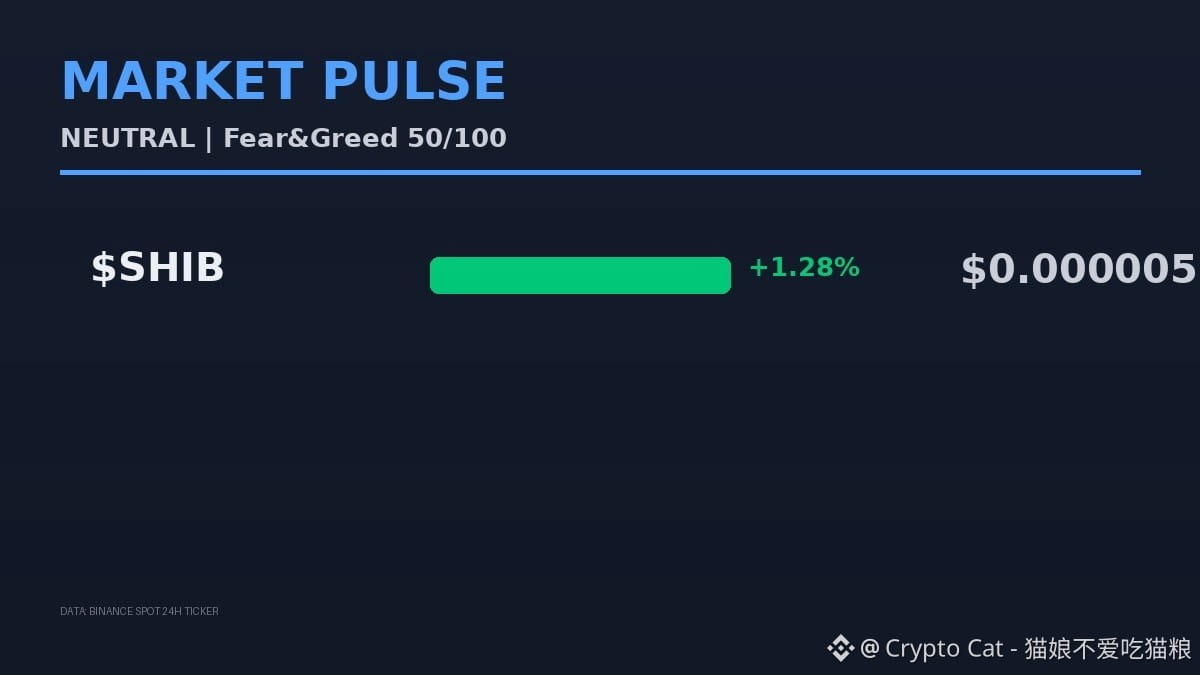
A high-risk iOS spyware vulnerability has been exposed, leaving crypto holders’ wallets completely exposed. $SHIB is currently at 0.000005, up 1.28%—are you affected?
Don’t think this has nothing to do with you. This vulnerability can directly extract all the permissions granted by your wallet. Your DeFi interactions and exchange two-factor authentication could all be stolen. Plenty of people who use $SHIB also prefer mobile wallets, putting them at extremely high risk.
There’s no obvious market reaction for now, and the news hasn’t fully spread yet. Don’t rush to buy or sell just yet. First, wait to see whether reports of large-scale theft emerge. There’s no shame in sitting on the sidelines while things remain unclear.
If you think my take is sound, come get some practice in the Spot Trading Tournament Season 10. You’ll know how you do once you compete—and you can earn rebates too.
Will this vulnerability escalate into a large-scale security incident? If you’re bullish and think the bad news is already priced in, reply 1. If you’re bearish and think it’ll trigger a sell-off, reply 2.
#Write2Earn #BinanceSquare #SHIB #WalletSecurity #TradingTournament
A high-risk iOS spyware vulnerability has been exposed, leaving crypto holders’ wallets completely exposed. $SHIB is currently at 0.000005, up 1.28%—are you affected?
Don’t think this has nothing to do with you. This vulnerability can directly extract all the permissions granted by your wallet. Your DeFi interactions and exchange two-factor authentication could all be stolen. Plenty of people who use $SHIB also prefer mobile wallets, putting them at extremely high risk.
There’s no obvious market reaction for now, and the news hasn’t fully spread yet. Don’t rush to buy or sell just yet. First, wait to see whether reports of large-scale theft emerge. There’s no shame in sitting on the sidelines while things remain unclear.
If you think my take is sound, come get some practice in the Spot Trading Tournament Season 10. You’ll know how you do once you compete—and you can earn rebates too.
Will this vulnerability escalate into a large-scale security incident? If you’re bullish and think the bad news is already priced in, reply 1. If you’re bearish and think it’ll trigger a sell-off, reply 2.
#Write2Earn #BinanceSquare #SHIB #WalletSecurity #TradingTournament
Don’t think this has nothing to do with you. This vulnerability can directly extract all the permissions granted by your wallet. Your DeFi interactions and exchange two-factor authentication could all be stolen. Plenty of people who use $SHIB also prefer mobile wallets, putting them at extremely high risk.
There’s no obvious market reaction for now, and the news hasn’t fully spread yet. Don’t rush to buy or sell just yet. First, wait to see whether reports of large-scale theft emerge. There’s no shame in sitting on the sidelines while things remain unclear.
If you think my take is sound, come get some practice in the Spot Trading Tournament Season 10. You’ll know how you do once you compete—and you can earn rebates too.
Will this vulnerability escalate into a large-scale security incident? If you’re bullish and think the bad news is already priced in, reply 1. If you’re bearish and think it’ll trigger a sell-off, reply 2.
#Write2Earn #BinanceSquare #SHIB #WalletSecurity #TradingTournament
7
·
--
Article
A Beginner's Step-by-Step Guide to Securing Your Crypto WalletWhen I first bought a few dollars of $BTC at $77,078, I felt a mix of excitement and nerves. Seeing the price dip 1.37% in a single day reminded me that the market can move fast, but my wallet's safety should be even steadier. Below is a simple checklist that anyone can follow to keep their crypto safe.
Why Security Matters
Even when the Fear & Greed Index reads 26 (Fear), the risk of losing funds to a simple mistake stays high. A lost seed phrase or a compromised device can turn a modest $2,257 $ETH holding into a zero-balance account in minutes. Treat security like a habit, not a one-time setup.
Step 1, Pick a Reputable Wallet
Start with a wallet that has a solid reputation and open-source code. Hardware wallets, such as Ledger or Trezor, keep your private keys offline, which means they can't be hacked through a website. If you prefer a software wallet, choose one that offers non-custodial control and has regular audits.
Step 2, Back Up Your Seed Phrase
When the wallet generates a 12- or 24-word seed phrase, write it down on paper, not on a phone note or cloud service. Store the paper in a safe place, ideally in two separate locations. This phrase is the master key; without it, even the most secure wallet can't be recovered.
Step 3, Enable Two-Factor Authentication (2FA)
Add an extra layer of protection by linking your wallet's app or exchange account to a 2FA app like Google Authenticator. Avoid SMS codes, which can be intercepted. A simple code from your phone makes it much harder for a thief to log in, even if they somehow obtain your password.
Step 4, Keep Software Updated
Software bugs are a common entry point for attackers. Regularly update your wallet app, operating system, and any related plugins. The same way $SOL moved from $90.87 to $95.95 in a week, your security posture should improve over time with each update.
Step 5, Test with a Small Amount
Before moving a large balance, send a tiny amount, say a fraction of a dollar of XRP at $1.25, to confirm everything works as expected. This practice saves you from costly mistakes and builds confidence in your security setup.
What security habit has worked best for you?
Not financial advice
#CryptoSafety #BeginnerGuide #WalletSecurity #CryptoEducation
A Beginner's Step-by-Step Guide to Securing Your Crypto Wallet
When I first bought a few dollars of $BTC at $77,078, I felt a mix of excitement and nerves. Seeing the price dip 1.37% in a single day reminded me that the market can move fast, but my wallet's safety should be even steadier. Below is a simple checklist that anyone can follow to keep their crypto safe.
Why Security Matters
Even when the Fear & Greed Index reads 26 (Fear), the risk of losing funds to a simple mistake stays high. A lost seed phrase or a compromised device can turn a modest $2,257 $ETH holding into a zero-balance account in minutes. Treat security like a habit, not a one-time setup.
Step 1, Pick a Reputable Wallet
Start with a wallet that has a solid reputation and open-source code. Hardware wallets, such as Ledger or Trezor, keep your private keys offline, which means they can't be hacked through a website. If you prefer a software wallet, choose one that offers non-custodial control and has regular audits.
Step 2, Back Up Your Seed Phrase
When the wallet generates a 12- or 24-word seed phrase, write it down on paper, not on a phone note or cloud service. Store the paper in a safe place, ideally in two separate locations. This phrase is the master key; without it, even the most secure wallet can't be recovered.
Step 3, Enable Two-Factor Authentication (2FA)
Add an extra layer of protection by linking your wallet's app or exchange account to a 2FA app like Google Authenticator. Avoid SMS codes, which can be intercepted. A simple code from your phone makes it much harder for a thief to log in, even if they somehow obtain your password.
Step 4, Keep Software Updated
Software bugs are a common entry point for attackers. Regularly update your wallet app, operating system, and any related plugins. The same way $SOL moved from $90.87 to $95.95 in a week, your security posture should improve over time with each update.
Step 5, Test with a Small Amount
Before moving a large balance, send a tiny amount, say a fraction of a dollar of XRP at $1.25, to confirm everything works as expected. This practice saves you from costly mistakes and builds confidence in your security setup.
What security habit has worked best for you?
Not financial advice
#CryptoSafety #BeginnerGuide #WalletSecurity #CryptoEducation
Why Security Matters
Even when the Fear & Greed Index reads 26 (Fear), the risk of losing funds to a simple mistake stays high. A lost seed phrase or a compromised device can turn a modest $2,257 $ETH holding into a zero-balance account in minutes. Treat security like a habit, not a one-time setup.
Step 1, Pick a Reputable Wallet
Start with a wallet that has a solid reputation and open-source code. Hardware wallets, such as Ledger or Trezor, keep your private keys offline, which means they can't be hacked through a website. If you prefer a software wallet, choose one that offers non-custodial control and has regular audits.
Step 2, Back Up Your Seed Phrase
When the wallet generates a 12- or 24-word seed phrase, write it down on paper, not on a phone note or cloud service. Store the paper in a safe place, ideally in two separate locations. This phrase is the master key; without it, even the most secure wallet can't be recovered.
Step 3, Enable Two-Factor Authentication (2FA)
Add an extra layer of protection by linking your wallet's app or exchange account to a 2FA app like Google Authenticator. Avoid SMS codes, which can be intercepted. A simple code from your phone makes it much harder for a thief to log in, even if they somehow obtain your password.
Step 4, Keep Software Updated
Software bugs are a common entry point for attackers. Regularly update your wallet app, operating system, and any related plugins. The same way $SOL moved from $90.87 to $95.95 in a week, your security posture should improve over time with each update.
Step 5, Test with a Small Amount
Before moving a large balance, send a tiny amount, say a fraction of a dollar of XRP at $1.25, to confirm everything works as expected. This practice saves you from costly mistakes and builds confidence in your security setup.
What security habit has worked best for you?
Not financial advice
#CryptoSafety #BeginnerGuide #WalletSecurity #CryptoEducation
141
·
--
Urgent warning! BTCPay Server warns users of the risk of hot wallet theft! If you're still using an older version of the software, shut down your server immediately! Hackers are frantically stealing funds! #cryptosecurity #walletsecurity $BTC $BCH
Urgent alert! BTCPay Server warns of hot wallet theft! If you're running outdated software, shut down your servers now! Hackers are draining funds! #cryptosecurity #walletsecurity $BTC $BCH
Urgent warning! BTCPay Server warns users of the risk of hot wallet theft! If you're still using an older version of the software, shut down your server immediately! Hackers are frantically stealing funds! #cryptosecurity #walletsecurity $BTC $BCH
Urgent alert! BTCPay Server warns of hot wallet theft! If you're running outdated software, shut down your servers now! Hackers are draining funds! #cryptosecurity #walletsecurity $BTC $BCH
Urgent alert! BTCPay Server warns of hot wallet theft! If you're running outdated software, shut down your servers now! Hackers are draining funds! #cryptosecurity #walletsecurity $BTC $BCH
314

·
--
📰 Trezor warned CryptoBilis buyers: the old seed phrase must not be reused
On October 30, Trezor reported a suspected hardware backdoor in a Safe 5 purchased through CryptoBilis. The company has not yet investigated the device or received any reports of losses, but recommends that everyone who bought any Trezor model from this seller since March 2026 transfer their assets to a new wallet with a new seed phrase.
Simply replacing the device and restoring it with the old phrase will not protect you: the suspected backdoor may have been able to read data from the screen. If the device has not yet been set up, do not use it. Contact official Trezor support to arrange a replacement.
#Trezor #WalletSecurity
📰 Trezor warned CryptoBilis buyers: the old seed phrase must not be reused
On October 30, Trezor reported a suspected hardware backdoor in a Safe 5 purchased through CryptoBilis. The company has not yet investigated the device or received any reports of losses, but recommends that everyone who bought any Trezor model from this seller since March 2026 transfer their assets to a new wallet with a new seed phrase.
Simply replacing the device and restoring it with the old phrase will not protect you: the suspected backdoor may have been able to read data from the screen. If the device has not yet been set up, do not use it. Contact official Trezor support to arrange a replacement.
#Trezor #WalletSecurity
On October 30, Trezor reported a suspected hardware backdoor in a Safe 5 purchased through CryptoBilis. The company has not yet investigated the device or received any reports of losses, but recommends that everyone who bought any Trezor model from this seller since March 2026 transfer their assets to a new wallet with a new seed phrase.
Simply replacing the device and restoring it with the old phrase will not protect you: the suspected backdoor may have been able to read data from the screen. If the device has not yet been set up, do not use it. Contact official Trezor support to arrange a replacement.
#Trezor #WalletSecurity
38
Asked for wallet help in public? Treat the private message that follows as unverified—not as your support ticket.
Ethereum.org describes a common scam: impersonators find people asking questions in public channels, then approach them privately offering help. Knowing your problem is not proof they represent your wallet provider.
Open the provider's official support channel yourself instead of following the sender's link. Never share your recovery phrase or private keys, and never grant a stranger remote access to your computer.
The risk goes beyond an obvious request for money: a convincing helper can build trust before asking for wallet access. A profile picture and a helpful answer do not establish identity.
Source: Ethereum.org — https://ethereum.org/en/security/
#WalletSecurity #ScamPrevention #CryptoEducation #Ethereum #SelfCustody
Asked for wallet help in public? Treat the private message that follows as unverified—not as your support ticket.
Ethereum.org describes a common scam: impersonators find people asking questions in public channels, then approach them privately offering help. Knowing your problem is not proof they represent your wallet provider.
Open the provider's official support channel yourself instead of following the sender's link. Never share your recovery phrase or private keys, and never grant a stranger remote access to your computer.
The risk goes beyond an obvious request for money: a convincing helper can build trust before asking for wallet access. A profile picture and a helpful answer do not establish identity.
Source: Ethereum.org — https://ethereum.org/en/security/
#WalletSecurity #ScamPrevention #CryptoEducation #Ethereum #SelfCustody
Ethereum.org describes a common scam: impersonators find people asking questions in public channels, then approach them privately offering help. Knowing your problem is not proof they represent your wallet provider.
Open the provider's official support channel yourself instead of following the sender's link. Never share your recovery phrase or private keys, and never grant a stranger remote access to your computer.
The risk goes beyond an obvious request for money: a convincing helper can build trust before asking for wallet access. A profile picture and a helpful answer do not establish identity.
Source: Ethereum.org — https://ethereum.org/en/security/
#WalletSecurity #ScamPrevention #CryptoEducation #Ethereum #SelfCustody
83
Disconnecting your wallet from a dapp does not cancel its permission to spend your tokens.
A connection lets the website interact with your wallet. A token approval gives a smart contract spending permission. Closing the tab or disconnecting leaves that approval in place.
For a practical check, open Ethereum.org’s token-access guide and use a linked approval checker. Select the correct network, review the spender and allowance, then revoke permissions you no longer need. Revocation requires an on-chain transaction and a network fee.
The risk: an unlimited approval can expose your entire balance of that token if the approved contract is malicious. Approve only what you need next time—not unlimited access by default.
Source: Ethereum.org — https://ethereum.org/guides/how-to-revoke-token-access/
#WalletSecurity #Ethereum #TokenApprovals #CryptoEducation #DeFi
Disconnecting your wallet from a dapp does not cancel its permission to spend your tokens.
A connection lets the website interact with your wallet. A token approval gives a smart contract spending permission. Closing the tab or disconnecting leaves that approval in place.
For a practical check, open Ethereum.org’s token-access guide and use a linked approval checker. Select the correct network, review the spender and allowance, then revoke permissions you no longer need. Revocation requires an on-chain transaction and a network fee.
The risk: an unlimited approval can expose your entire balance of that token if the approved contract is malicious. Approve only what you need next time—not unlimited access by default.
Source: Ethereum.org — https://ethereum.org/guides/how-to-revoke-token-access/
#WalletSecurity #Ethereum #TokenApprovals #CryptoEducation #DeFi
A connection lets the website interact with your wallet. A token approval gives a smart contract spending permission. Closing the tab or disconnecting leaves that approval in place.
For a practical check, open Ethereum.org’s token-access guide and use a linked approval checker. Select the correct network, review the spender and allowance, then revoke permissions you no longer need. Revocation requires an on-chain transaction and a network fee.
The risk: an unlimited approval can expose your entire balance of that token if the approved contract is malicious. Approve only what you need next time—not unlimited access by default.
Source: Ethereum.org — https://ethereum.org/guides/how-to-revoke-token-access/
#WalletSecurity #Ethereum #TokenApprovals #CryptoEducation #DeFi
76

When a Bitcoin transaction gets stuck and takes a long time to confirm, there’s a feature that can speed it up. At that point, a malicious server may have swapped out the recipient’s address.
Here’s how it works in simple terms: the wallet asks an external server what fee to use to speed up the payment. If that server is malicious, it could return not just a fee amount but a completely altered transaction that sends the money somewhere other than where you intended.
This isn’t a blockchain hack or a problem with Bitcoin itself. It’s a vulnerability in the way certain wallets communicated with third-party servers for a convenient feature. Developers are already patching the bug.
The most important takeaway isn’t technical, but practical: even a foundation like Bitcoin, which everyone considers extremely secure, can have a weak point in some convenient service built around it. The network itself is secure, but the interface you use to access it is also part of your security.
I think people update their wallets too rarely, and that’s the main reason these kinds of bugs get the chance to harm anyone. Let me know if you see it differently.
$BTC #bitcoin #CryptoSecurity #WalletSecurity
When a Bitcoin transaction gets stuck and takes a long time to confirm, there’s a feature that can speed it up. At that point, a malicious server may have swapped out the recipient’s address.
Here’s how it works in simple terms: the wallet asks an external server what fee to use to speed up the payment. If that server is malicious, it could return not just a fee amount but a completely altered transaction that sends the money somewhere other than where you intended.
This isn’t a blockchain hack or a problem with Bitcoin itself. It’s a vulnerability in the way certain wallets communicated with third-party servers for a convenient feature. Developers are already patching the bug.
The most important takeaway isn’t technical, but practical: even a foundation like Bitcoin, which everyone considers extremely secure, can have a weak point in some convenient service built around it. The network itself is secure, but the interface you use to access it is also part of your security.
I think people update their wallets too rarely, and that’s the main reason these kinds of bugs get the chance to harm anyone. Let me know if you see it differently.
$BTC #bitcoin #CryptoSecurity #WalletSecurity
Here’s how it works in simple terms: the wallet asks an external server what fee to use to speed up the payment. If that server is malicious, it could return not just a fee amount but a completely altered transaction that sends the money somewhere other than where you intended.
This isn’t a blockchain hack or a problem with Bitcoin itself. It’s a vulnerability in the way certain wallets communicated with third-party servers for a convenient feature. Developers are already patching the bug.
The most important takeaway isn’t technical, but practical: even a foundation like Bitcoin, which everyone considers extremely secure, can have a weak point in some convenient service built around it. The network itself is secure, but the interface you use to access it is also part of your security.
I think people update their wallets too rarely, and that’s the main reason these kinds of bugs get the chance to harm anyone. Let me know if you see it differently.
$BTC #bitcoin #CryptoSecurity #WalletSecurity
2
136

·
--
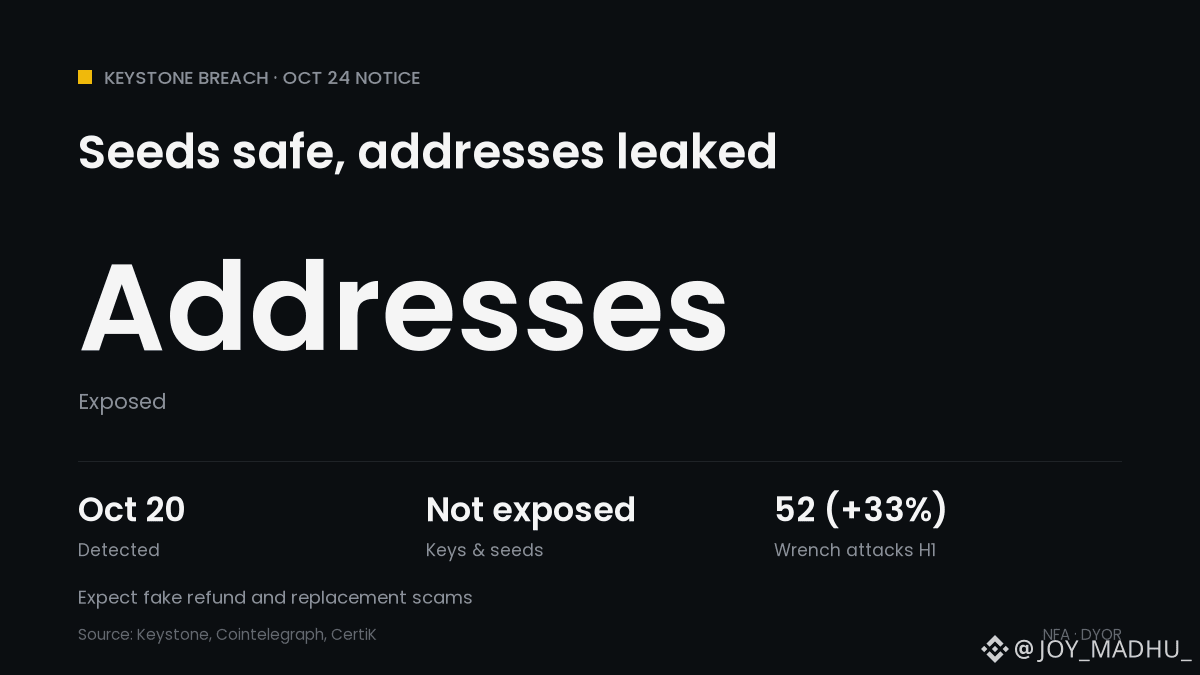
#KeystoneWebsiteBreachExposesBuyersShippingAddresses
📦 Keystone Leak: Your Seed Is Safe, Your Address Isn't
📅 Oct 20: unauthorized access to Keystone's Shopify store detected
🔍 Oct 23: confirmed a third party took customer shipping data
📄 Exposed: names, contacts, addresses, order items and prices
✅ Not exposed: recovery phrases, private keys, wallet passwords, payment data
⚠️ Some buyers from 2024 got notices, despite a 180-day deletion policy
📞 Users already report scam calls citing old orders
📊 CertiK counted 52 wrench attacks in H1 2026, up 33% year on year
What it means for crypto: no funds lost and $BTC security isn't the issue, but a leaked buyer list marks people as likely holders. Keystone will never ask for your seed.
Would you buy a hardware wallet under a PO box or alias address? 👇
$BTC
#KeystoneWebsiteBreachExposesBuyersShippingAddresses #CryptoNews #WalletSecurity #Bitcoin
#KeystoneWebsiteBreachExposesBuyersShippingAddresses
📦 Keystone Leak: Your Seed Is Safe, Your Address Isn't
📅 Oct 20: unauthorized access to Keystone's Shopify store detected
🔍 Oct 23: confirmed a third party took customer shipping data
📄 Exposed: names, contacts, addresses, order items and prices
✅ Not exposed: recovery phrases, private keys, wallet passwords, payment data
⚠️ Some buyers from 2024 got notices, despite a 180-day deletion policy
📞 Users already report scam calls citing old orders
📊 CertiK counted 52 wrench attacks in H1 2026, up 33% year on year
What it means for crypto: no funds lost and $BTC security isn't the issue, but a leaked buyer list marks people as likely holders. Keystone will never ask for your seed.
Would you buy a hardware wallet under a PO box or alias address? 👇
$BTC
#KeystoneWebsiteBreachExposesBuyersShippingAddresses #CryptoNews #WalletSecurity #Bitcoin
📦 Keystone Leak: Your Seed Is Safe, Your Address Isn't
📅 Oct 20: unauthorized access to Keystone's Shopify store detected
🔍 Oct 23: confirmed a third party took customer shipping data
📄 Exposed: names, contacts, addresses, order items and prices
✅ Not exposed: recovery phrases, private keys, wallet passwords, payment data
⚠️ Some buyers from 2024 got notices, despite a 180-day deletion policy
📞 Users already report scam calls citing old orders
📊 CertiK counted 52 wrench attacks in H1 2026, up 33% year on year
What it means for crypto: no funds lost and $BTC security isn't the issue, but a leaked buyer list marks people as likely holders. Keystone will never ask for your seed.
Would you buy a hardware wallet under a PO box or alias address? 👇
$BTC
#KeystoneWebsiteBreachExposesBuyersShippingAddresses #CryptoNews #WalletSecurity #Bitcoin
65
Log in to explore more content
Join global crypto users on Binance Square
⚡️ Get latest and useful information about crypto.
💬 Trusted by the world’s largest crypto exchange.
👍 Discover real insights from verified creators.
Email / Phone number
Trending Topics
1
#WhoWillSucceedJensenHuangatNvidia?
81,433 views
1,108 Discussing
2
#WhatWillDriveCryptoandStocks’NextRebound?
431,655 views
3,015 Discussing
3
#BitcoinActiveSupplyInProfitDropsBelow45%
21,738 views
330 Discussing
4
#KavaSaysAbnormalActivityLimitedToKavaLend
8,507 views
170 Discussing
5
#USSpotXRPETFsSeeLargestWeeklyOutflowIn8Months
7,720 views
159 Discussing
6
#USPPIMissMayEaseBTCPressure
206,752 views
2,041 Discussing
7
#WORPTLetsTouristsConvertCryptoToThaiBaht
2,550 views
50 Discussing
8
#TONStrategyReports$23.97MQ3NetLoss
3,193 views
41 Discussing
9
#PolkadotCommunityApprovesNewStrategyWith97%Vote
18,626 views
242 Discussing
10
#dYdXPlansV9.9UpgradeToShiftUSDCToInjective
11,380 views
195 Discussing