
#proofofreserves
proofofreserves
154,156 views
591 Discussing
Hot
Latest

·
--
What Binance's new zero-knowledge proof checks, and what it can't
Binance said on Nov. 14 that the proof for its Nov. 12 reserves snapshot is generated. Users can now verify that their own balance is counted and backed at least 1:1.
The snapshot (00:00 UTC, Nov. 12, 198 tokens):
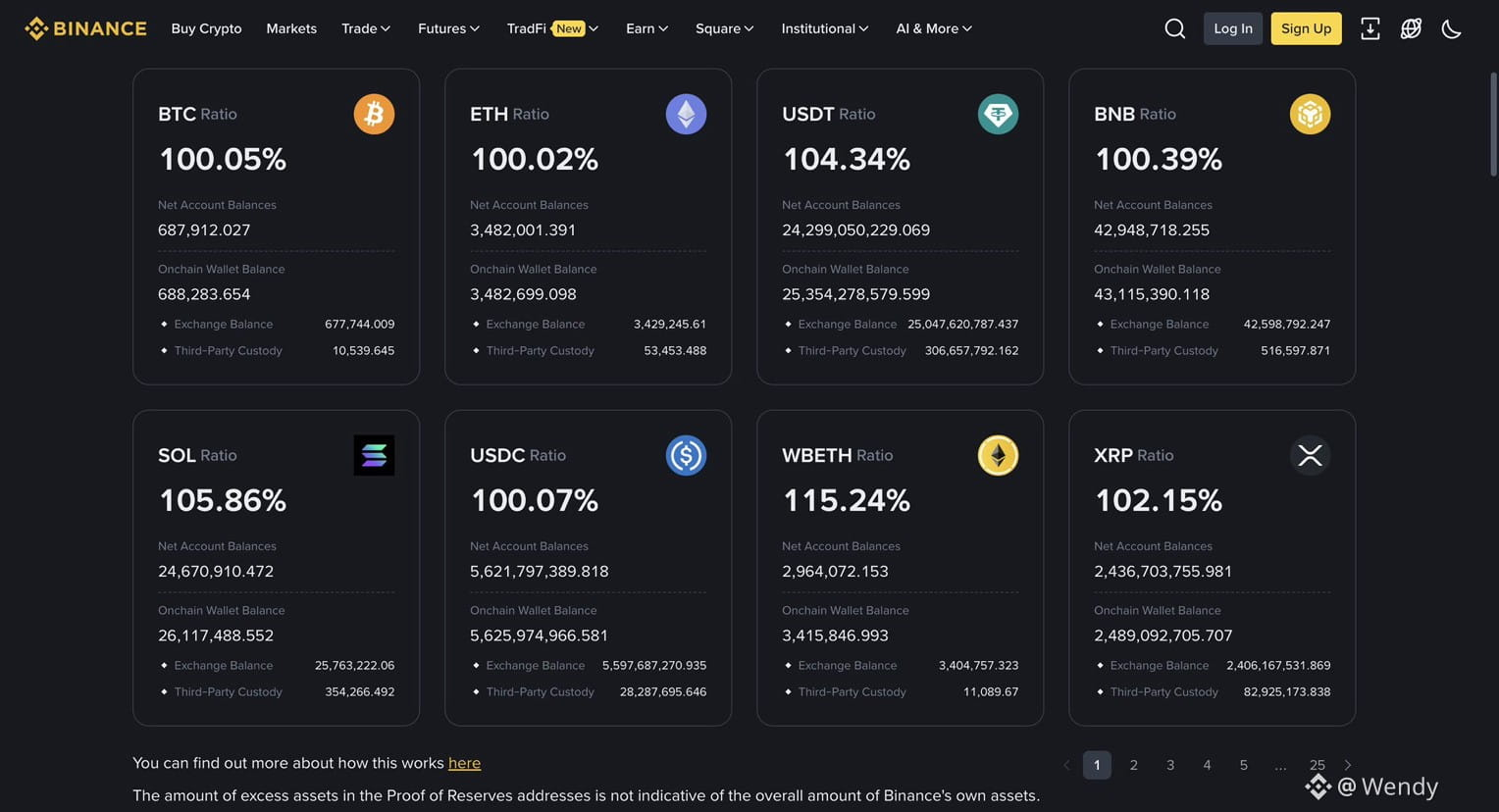
• $BTC: 688,283.654 in wallets vs 687,912.027 in net customer balances = 100.05%
• ETH 100.02%, $BNB 100.39%, USDT 104.34%
• Context: Binance says it committed more than $6.34B of its own funds after the Oct. 29 hack
What the proof does: it lets each user confirm their balance sits inside the total, without exposing anyone else's.
What it doesn't do: it isn't an audit. Binance's own page warns the surplus in reserve addresses isn't a measure of its total assets. It also says nothing about the stolen BTC, which one on-chain tracker reported was still unmoved on Nov. 13.
My read: a thin 0.05% BTC buffer is fine only if the check is repeated regularly. Watch whether the next snapshots keep the ratios above 100% while withdrawals finish reopening.
Which would convince you more: a one-off proof, or a monthly one? Not financial advice.
#Binance #ProofOfReserves
Disclosure: I may earn Write to Earn commissions if you trade via cashtags here.
What Binance's new zero-knowledge proof checks, and what it can't
Binance said on Nov. 14 that the proof for its Nov. 12 reserves snapshot is generated. Users can now verify that their own balance is counted and backed at least 1:1.
The snapshot (00:00 UTC, Nov. 12, 198 tokens):
• $BTC : 688,283.654 in wallets vs 687,912.027 in net customer balances = 100.05%
• ETH 100.02%, $BNB 100.39%, USDT 104.34%
• Context: Binance says it committed more than $6.34B of its own funds after the Oct. 29 hack
What the proof does: it lets each user confirm their balance sits inside the total, without exposing anyone else's.
What it doesn't do: it isn't an audit. Binance's own page warns the surplus in reserve addresses isn't a measure of its total assets. It also says nothing about the stolen BTC, which one on-chain tracker reported was still unmoved on Nov. 13.
My read: a thin 0.05% BTC buffer is fine only if the check is repeated regularly. Watch whether the next snapshots keep the ratios above 100% while withdrawals finish reopening.
Which would convince you more: a one-off proof, or a monthly one? Not financial advice.
#Binance #ProofOfReserves
Disclosure: I may earn Write to Earn commissions if you trade via cashtags here.
3

·
--
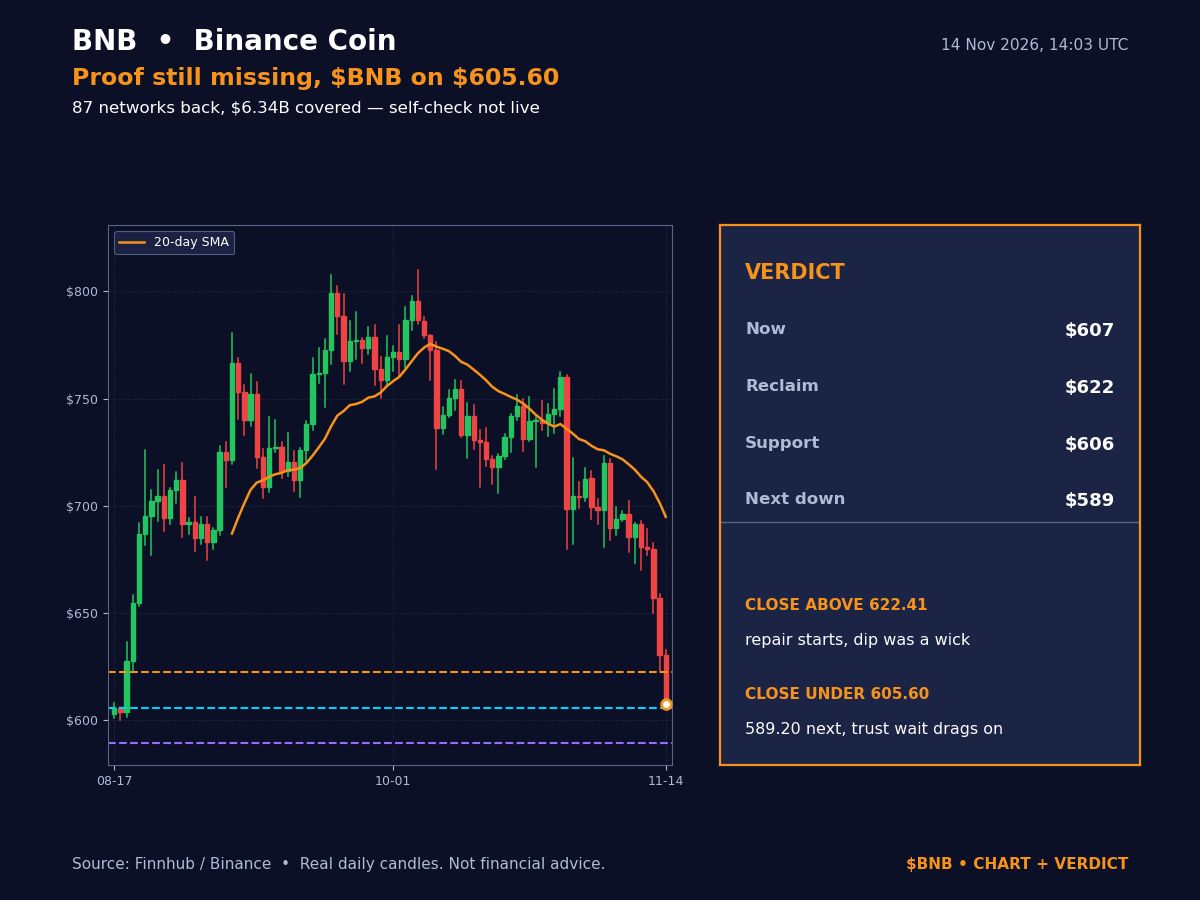
Binance says the $6.34B hack is fully covered — but the proof that lets you check your own balance still isn't out, and $BNB sits on $605.60.
Source: Binance, 13 Nov; snapshot 12 Nov 00:00 UTC, 198 tokens.
Yesterday I said $622.41 decides for BNB. That line is already gone — BNB sliced through it to a $605 low today, $607.46 now (Finnhub, 13:55 UTC).
The snapshot numbers are out — BTC 100.05%, USDT 104.34% — but the zk-SNARK self-check was due Friday evening to Saturday morning, and as of today it's still generating. Until it lands, "fully covered" is Binance's word — you still can't check your own balance. 87 networks reopened this week; real recovery, but the trust receipt is late.
I'm leaning cautious, not panicked. Close above $622.41 and today was a wick; close under $605.60 and $589.20 is next. $BTC is $66,803 too, so BNB isn't falling alone.
$BNB $605.60 hold or break — your call? Snapshot numbers alone, or wait for the proof?
Not financial advice. DYOR.
#BNB #Binance #ProofOfReserves
4

·
--
"Replaced" and "recovered" aren't the same word, and Binance's $6.3B fix is the first one.
For $BNB holders, that gap is the whole story.
Yahoo Finance spelled it out at 19:30 UTC Nov 13: Binance bought new tokens on the market and OTC to restore balances. The coins taken on Oct 29 haven't been recovered.
So the hole didn't close, it moved onto Binance's books 🔄
Per its Nov 12 notice (16:54 UTC), over $6.34B of company money covered users: part of SAFU, part of the Futures insurance fund, plus treasury. It pledged to refill SAFU to about $1B.
That's where the $1.2B and $2.7B sit. The DOJ won court approval to seize or restrain over $1.2B, part of more than $2.7B frozen by US authorities and private firms (The Block, 22:39 UTC Nov 12). It's a law-enforcement track running beside user balances, with no confirmed timeline per Yahoo.
The open item: the full zero-knowledge proof for the Nov 12 00:00 UTC snapshot of 198 tokens 🔍
Binance put it at 40 to 50 hours. As of Yahoo's report, it wasn't out yet. Withdrawals keep reopening in phases.
$BNB is at $623, down 2.55% in 24h and 10.30% over 7 days, just above the $618 range low I'm watching. Bitcoin is off 2.81% at $67,404, Fear & Greed at 13 📉
#BNB #Binance #ProofOfReserves #SAFU
123

KPMG counted and inspected every gold bar backing Tether Gold ($XAUT ) as part of its audit. The detail I’d underline is the date.
Tether announced the result on November 12, 2026, but the audited balance sheet was dated December 31, 2025. On that date, the issuer reported 520,089.350 fine troy ounces against 520,089.300 tokens.
Seven years in insurance taught me to ask a second question. If a bar disappears tomorrow, who can file a claim, and under what policy? A bar count answers the question about reserves. The policy wording answers the question about reimbursement.
#TetherGold #CryptoInsurance
{spot}(XAUTUSDT)
{future}(XAUTUSDT)
#ProofOfReserves
Write to Earn disclosure: I may earn Binance Square rewards from this post.
KPMG counted and inspected every gold bar backing Tether Gold ($XAUT ) as part of its audit. The detail I’d underline is the date.
Tether announced the result on November 12, 2026, but the audited balance sheet was dated December 31, 2025. On that date, the issuer reported 520,089.350 fine troy ounces against 520,089.300 tokens.
Seven years in insurance taught me to ask a second question. If a bar disappears tomorrow, who can file a claim, and under what policy? A bar count answers the question about reserves. The policy wording answers the question about reimbursement.
#TetherGold #CryptoInsurance
#ProofOfReserves
Write to Earn disclosure: I may earn Binance Square rewards from this post.
83
·
--
BINANCE HAS COMPLETED ASSET COVERAGE. BUT HAVE YOU CHECKED HOW PROOF OF RESERVES WORKS?
There's an important Binance update worth understanding.
Binance has announced that it has completed coverage of assets affected by the recent security incident.
It also published a new Proof of Reserves snapshot covering 198 tokens, taken on November 12.
But let's go beyond the announcement.
What exactly is Proof of Reserves?
It's a verification system that allows users to check whether their account balances are included in Binance's reported liabilities and whether the corresponding assets are backed by reserves.
Here's how some of the technology works:
1. Merkle Trees
These help organize large amounts of account information into a cryptographic structure that allows individual records to be verified.
2. zk-SNARKs
These cryptographic proofs help demonstrate that the reported balances are included in the reserve calculations without publicly exposing individual account information.
3. Independent verification
Users can access their verification records and check whether their account balances were included in the relevant snapshot.
And there's another important update:
Binance says it has committed to replenishing SAFU to approximately $1 billion following its use in covering the affected assets.
One detail worth remembering: the latest snapshot has been published but Binance said the full zero knowledge proof was still being generated with an estimated 40–50-hour processing period.
So don't confuse a published snapshot with a completed verification proof.
My takeaway: Understanding how to verify your assets is just as important as knowing how to deposit, withdraw or trade.
Have you ever checked your Binance Proof of Reserves verification record or is this something you're learning about for the first time?
Let's make crypto education practical.
#ProofOfReserves #SAFU🙏 #CryptoSecurity #BinanceSquareFamily #ThankYouBinancians

152

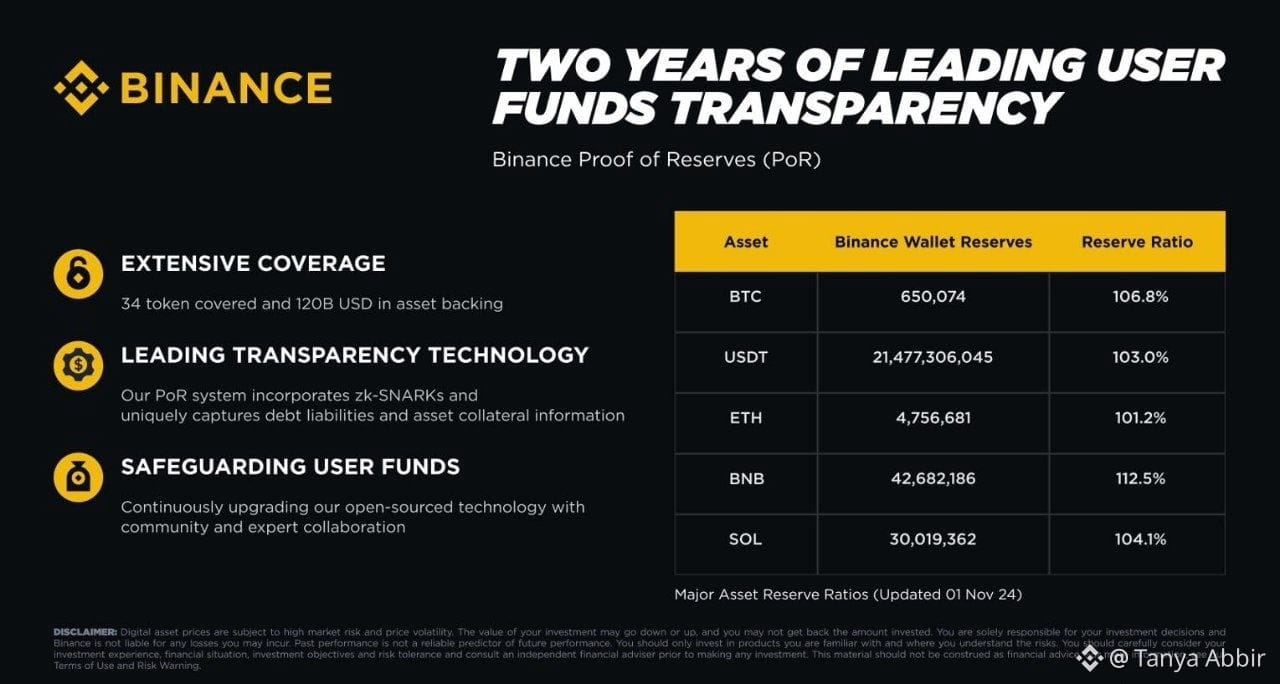
🔐 Can You Trust a Crypto Platform Without Transparency?
In the world of cryptocurrency, trust is everything.
But how can users understand whether a platform holds assets corresponding to user balances?
That's where Proof of Reserves (PoR) comes in.
It is a transparency mechanism that helps users examine a platform's reported reserves.
💡 Don't just follow the crypto trend. Understand the technology behind it.
What matters most to you when choosing a crypto platform?
$BTC $BNB #ProofOfReserves #Transparency
#Binance #ProofOfReserves #PoR
86

·
--
Bearish
Binance says the $6.34B security incident is covered — but the real trust test isn't over
After the October 29 attack, Binance says it has fully replenished the affected assets using corporate funds, part of SAFU and excess Futures insurance reserves
That's significant progress, but three things shouldn't be confused
$BNB
{future}(BNBUSDT)
🔍 Asset coverage isn't the same as independent verification
Binance's November 12 Proof of Reserves snapshot covers 198 tokens, while the full zero-knowledge proof for this snapshot is still being generated according to its latest announcement
⚠️ Replenishment doesn't mean every withdrawal is available
Withdrawals are reopening in phases, and Binance has committed to rebuilding SAFU to approximately 1 billion
The next meaningful signals are user-verifiable reserve backing and the restoration of normal withdrawal access
{spot}(BNBUSDT)
📌 This isn't about dismissing Binance's recovery — it's about distinguishing what the exchange says is complete from what users can independently check
Trust isn't restored by one announcement
It's rebuilt through verifiable results
#Binance #ProofOfReserves #CryptoSecurity
Binance says the $6.34B security incident is covered — but the real trust test isn't over
After the October 29 attack, Binance says it has fully replenished the affected assets using corporate funds, part of SAFU and excess Futures insurance reserves
That's significant progress, but three things shouldn't be confused
$BNB
🔍 Asset coverage isn't the same as independent verification
Binance's November 12 Proof of Reserves snapshot covers 198 tokens, while the full zero-knowledge proof for this snapshot is still being generated according to its latest announcement
⚠️ Replenishment doesn't mean every withdrawal is available
Withdrawals are reopening in phases, and Binance has committed to rebuilding SAFU to approximately 1 billion
The next meaningful signals are user-verifiable reserve backing and the restoration of normal withdrawal access
📌 This isn't about dismissing Binance's recovery — it's about distinguishing what the exchange says is complete from what users can independently check
Trust isn't restored by one announcement
It's rebuilt through verifiable results
#Binance #ProofOfReserves #CryptoSecurity

162

🚨 $BNB RESERVES STRESS-TESTED AS INSTITUTIONAL TREASURY ABSORBING BILLIONS IN LIQUIDITY SHOCKS! 🛡️
The recent resolution of the October liquidity event demonstrates robust institutional balance sheet management. By deploying over 6.34 billion in corporate treasury and insurance funds, systemic risk has been aggressively contained while preserving structural integrity. 📊
The upcoming zero-knowledge Proof of Reserves snapshot reinforces transparency standards across 198 tracked assets. As phased withdrawals normalize and emergency reserves are refilled toward the 1 billion threshold, market confidence finds a solid foundation for sustainable order flow. 💡
How do you evaluate decentralized verification protocols in restoring market trust after unexpected liquidity strains? 💬 👇
⚠️ Not financial advice. Always manage your risk. 🛡️
🏷️ #BNB #ProofOfReserves #MarketStructure #Crypto
🎯 🦈
2

·
--
Bullish
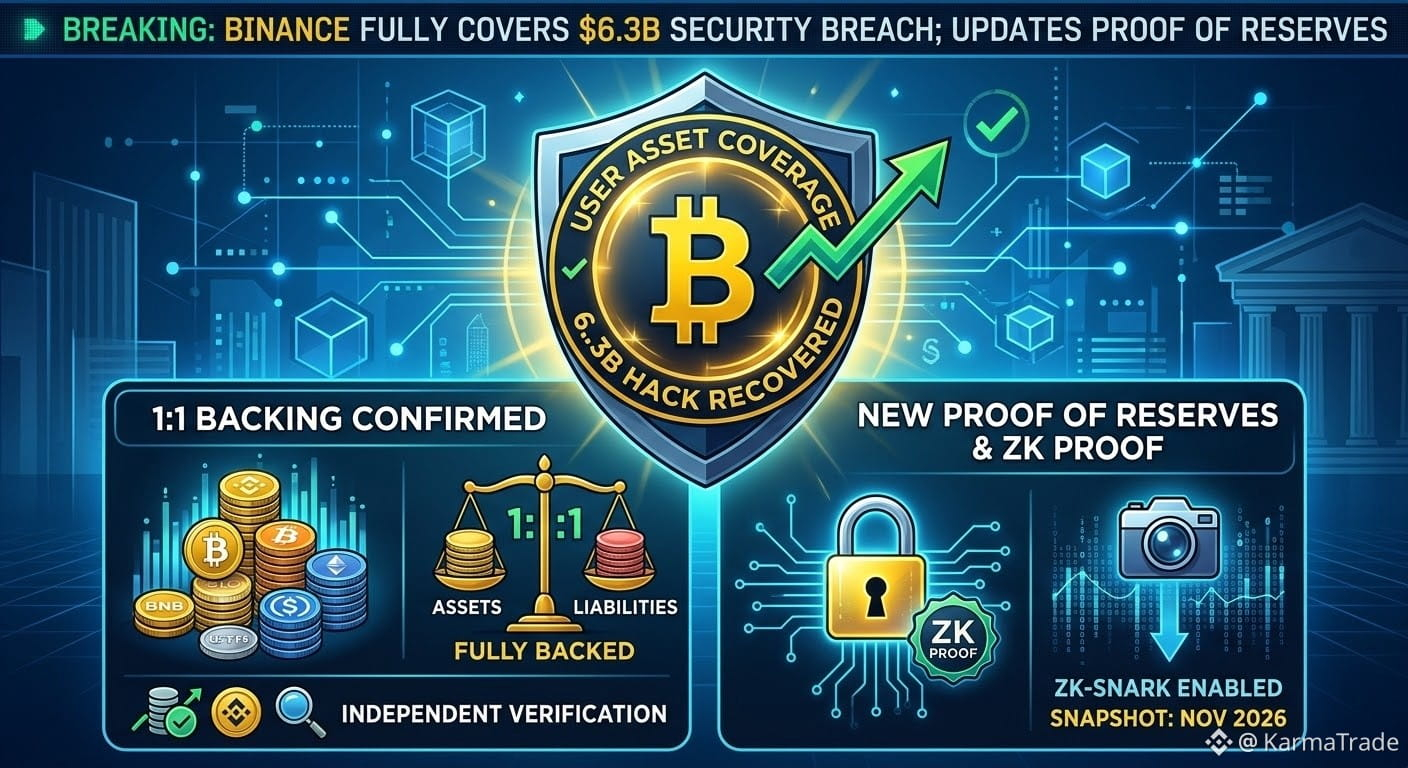
🚨 Binance covers $6.3B hack, updates Proof of Reserves
Binance announces it has fully covered all user assets affected by the recent $6.3B security breach.
The exchange is releasing a new Proof of Reserves snapshot alongside a ZK proof. This allows users to independently verify their holdings are backed by Binance at a 1:1 ratio.
Key updates:
Hack recovery: All affected user assets fully covered by Binance.
Enhanced verification: New Proof of Reserves snapshot and ZK proof enabled.
Transparency: Users can confirm 1:1 backing of platform assets.
$BNB #Binance #CryptoNews #ProofOfReserves #TransparencyMatters
{spot}(BNBUSDT)
🚨 Binance covers $6.3B hack, updates Proof of Reserves
Binance announces it has fully covered all user assets affected by the recent $6.3B security breach.
The exchange is releasing a new Proof of Reserves snapshot alongside a ZK proof. This allows users to independently verify their holdings are backed by Binance at a 1:1 ratio.
Key updates:
Hack recovery: All affected user assets fully covered by Binance.
Enhanced verification: New Proof of Reserves snapshot and ZK proof enabled.
Transparency: Users can confirm 1:1 backing of platform assets.
$BNB #Binance #CryptoNews #ProofOfReserves #TransparencyMatters
1
179

·
--
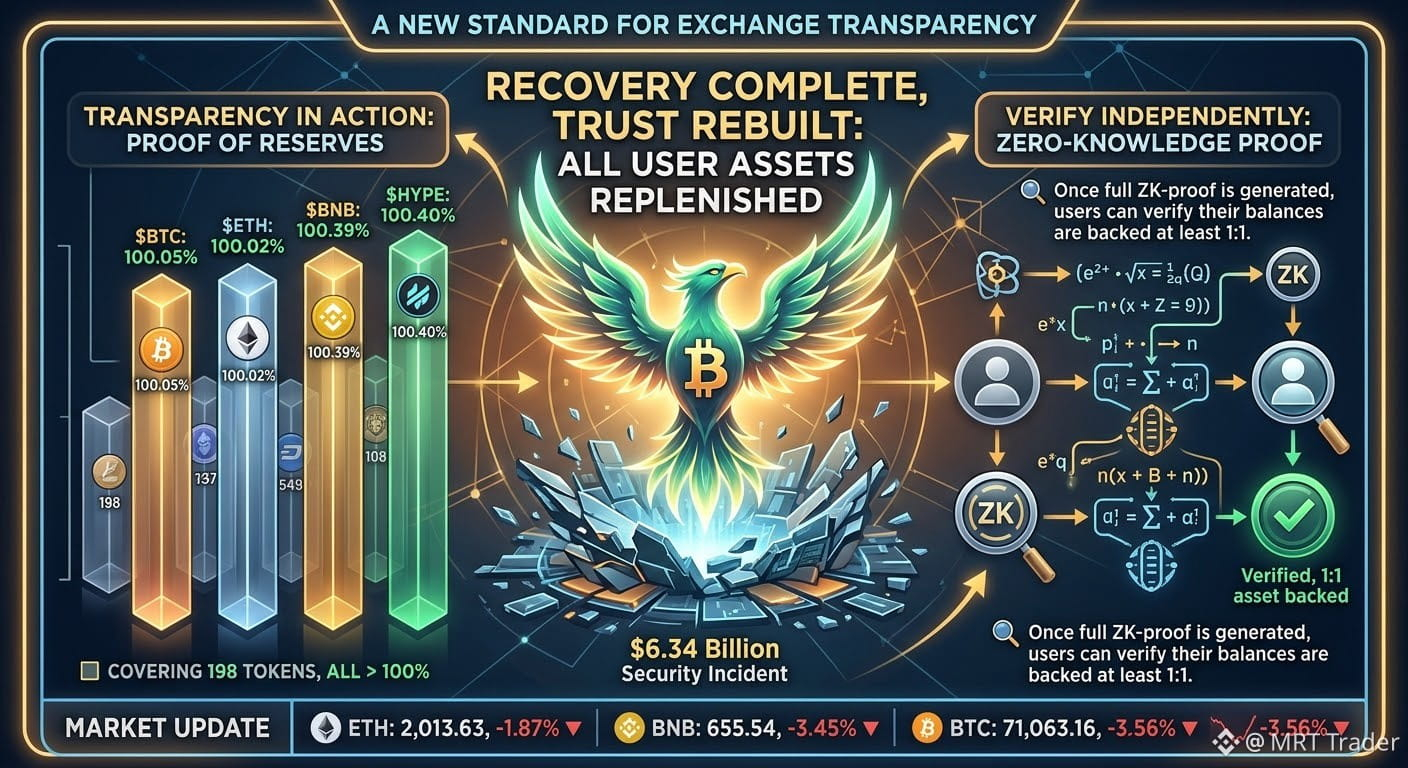
Binance says all user assets affected by the $6.34B security incident have been fully replenished. 🔐
Its new Proof of Reserves snapshot covers 198 tokens, and every reserve ratio is above 100%:
• $BTC : 100.05%
• $ETH : 100.02%
• $BNB : 100.39%
• $HYPE: 100.40%
Once the zero-knowledge proof is generated, users can verify for themselves that their balances are backed at least 1:1. 🔍
Restoring the assets is a big step, but rebuilding trust will take ongoing transparency and stronger security.
#Binance #ProofOfReserves
1
85
·
--
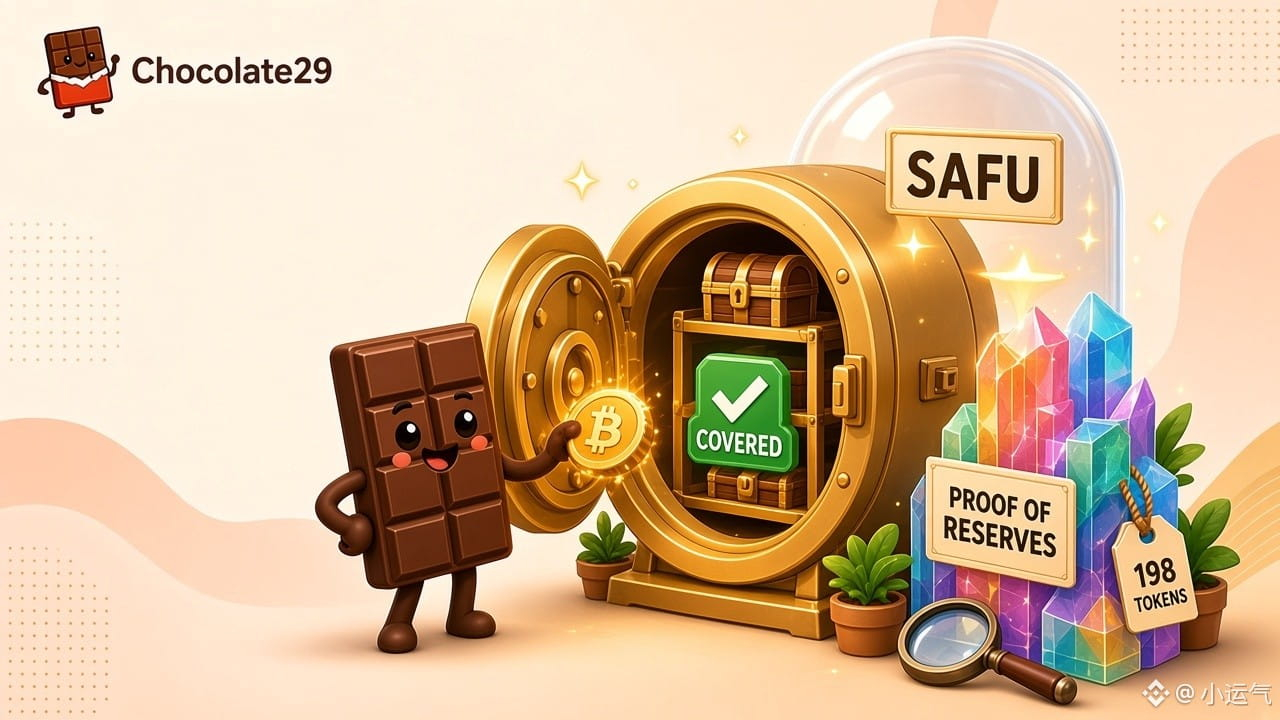
Binance says it has fully covered every asset hit in the October 29, 2026 security incident, and it backed that milestone with its widest reserve snapshot yet.
In a November 12, 2026 announcement, Binance said it committed more than $6.34 billion in company funds, buying affected tokens through market and OTC channels with support from part of SAFU, futures insurance funds above required levels and its corporate treasury. Coverage had stood at about 98% on November 4. Binance also pledged to restore SAFU to roughly $1 billion.
A new Proof of Reserves snapshot taken at 00:00 UTC on November 12 covers 198 tokens, up from 44 in the November 4 round. Once the zero-knowledge proof finishes in about 40 to 50 hours, holders can check minimum 1:1 backing themselves. Withdrawals keep reopening in phases. $BNB
#Binance #ProofOfReserves #SAFU
DYOR. Not financial advice.
105

🚨 FRESH PROOF OF RESERVES PROVES OVER 100 PERCENT BACKING ACROSS $BTC AND MAJOR ASSETS! 📊
Solvency transparency remains the ultimate bedrock of market trust when FUD tries to rattle the order books. The latest reserves snapshot confirms that heavyweights like $BTC and $BNB are backed well above parity, with surplus ratios reinforcing institutional stability. 💡
As the ecosystem shifts toward advanced cryptographic verification like ZK proofs, verifiable asset backing separates noise from true liquidity strength. 📊 When counterparty risk clears, smart money rests easy and focuses purely on charting the next macro leg up. 🌊
Does this transparency update elevate your confidence in current market infrastructure? 🤔
⚠️ Not financial advice. Always manage your risk. 🛡️
🏷️ #BTC #ProofOfReserves #Crypto #Solvency
🔥 💎
4

Binance confirms full coverage of user assets following the $6.3B hack and releases a new Proof of Reserves snapshot to restore market confidence.
#Binance #ProofOfReserves
Binance confirms full coverage of user assets following the $6.3B hack and releases a new Proof of Reserves snapshot to restore market confidence.
#Binance #ProofOfReserves
#Binance #ProofOfReserves
3


·
--
Partly True
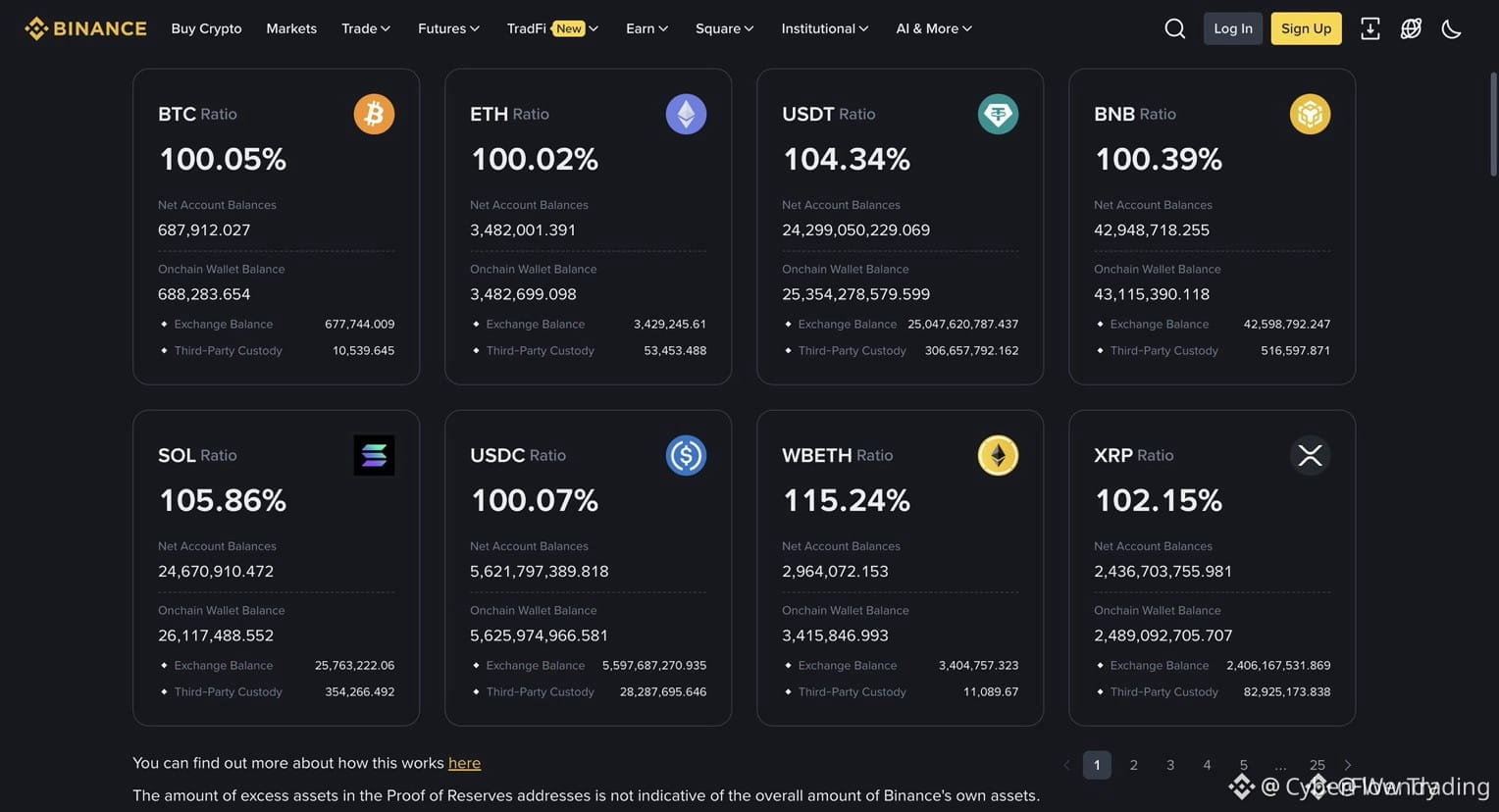
🚨 BINANCE RELEASES UPDATED PROOF OF RESERVES AFTER REPORTED $6.3B EXPLOIT
Binance has published a new reserves snapshot showing over 100% backing for the assets displayed.
📊 Latest reserve ratios:
• $BTC: 100.05%
• $ETH: 100.02%
• $USDT: 104.34%
• $BNB: 100.39%
• $SOL: 105.86%
• $USDC: 100.07%
• $WBETH: 115.24%
• $XRP: 102.15%
The report shows Binance holding more assets than customer net balances for these eight tokens.
The next key step is independent verification through ZK proofs.
Does this update strengthen your confidence in Binance? 👀
#Binance #ProofOfReserves
Square-Creator-1570dd29ca5fd377aa95:
hi sir
1
5
808

·
--
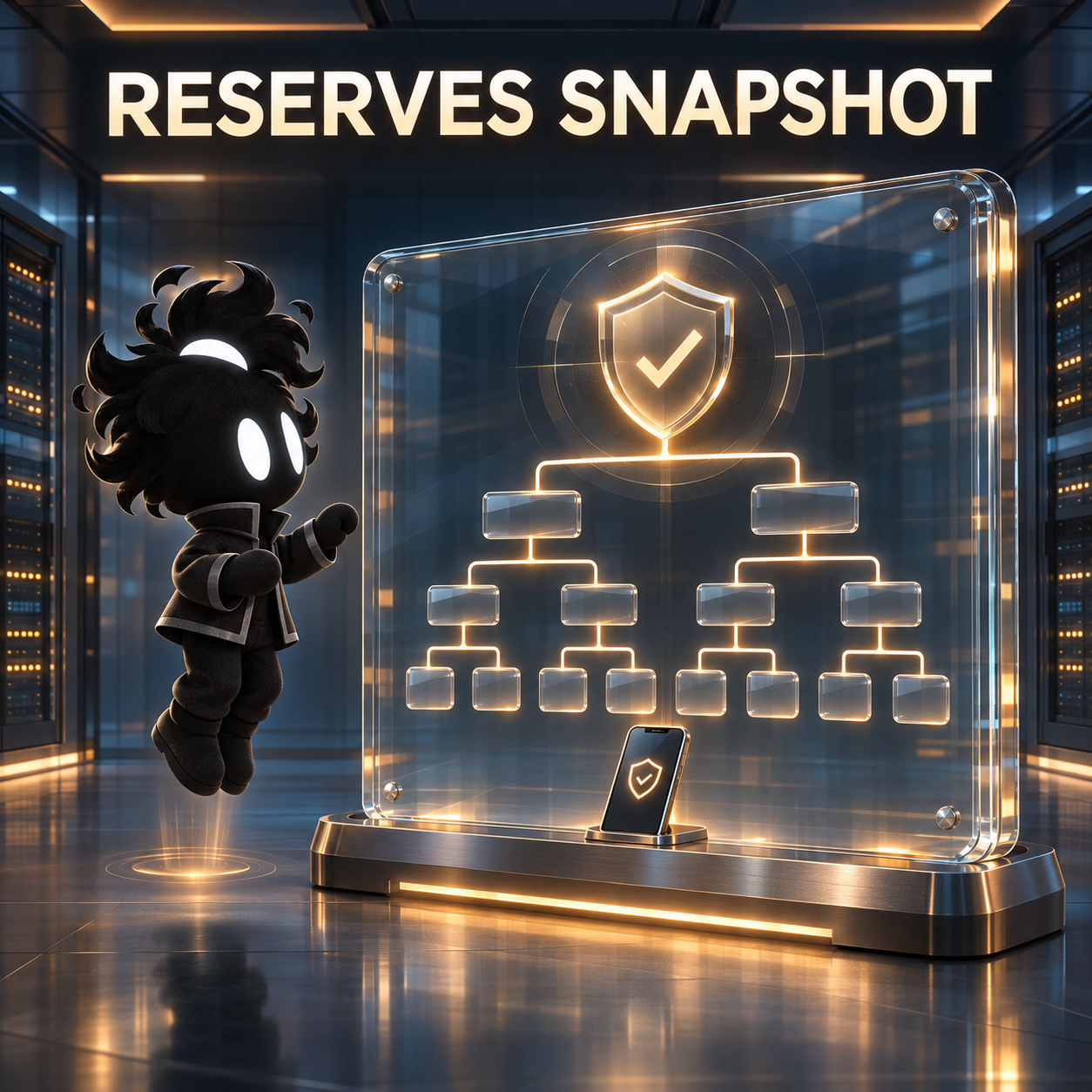
Apart from the judicial freeze we covered earlier, Binance said it had completed covering the affected assets and published a PoR snapshot dated November 12, covering 198 tokens. The full zk proof was still being generated at the time of the announcement, so it hadn’t yet been finally verified. Are you checking your proof of reserves? 🔐📊🧾`nMost traded on Binance at the time of the snapshot (04:00 Istanbul time, Spot): $BTC and $ETH and $SOL —general market monitoring, not directly related to the news. #ProofOfReserves
Apart from the judicial freeze we covered earlier, Binance said it had completed covering the affected assets and published a PoR snapshot dated November 12, covering 198 tokens. The full zk proof was still being generated at the time of the announcement, so it hadn’t yet been finally verified. Are you checking your proof of reserves? 🔐📊🧾`nMost traded on Binance at the time of the snapshot (04:00 Istanbul time, Spot): $BTC and $ETH and $SOL —general market monitoring, not directly related to the news. #ProofOfReserves
159

·
--
Binance publishes a new Proof of Reserves after completing incident coverage
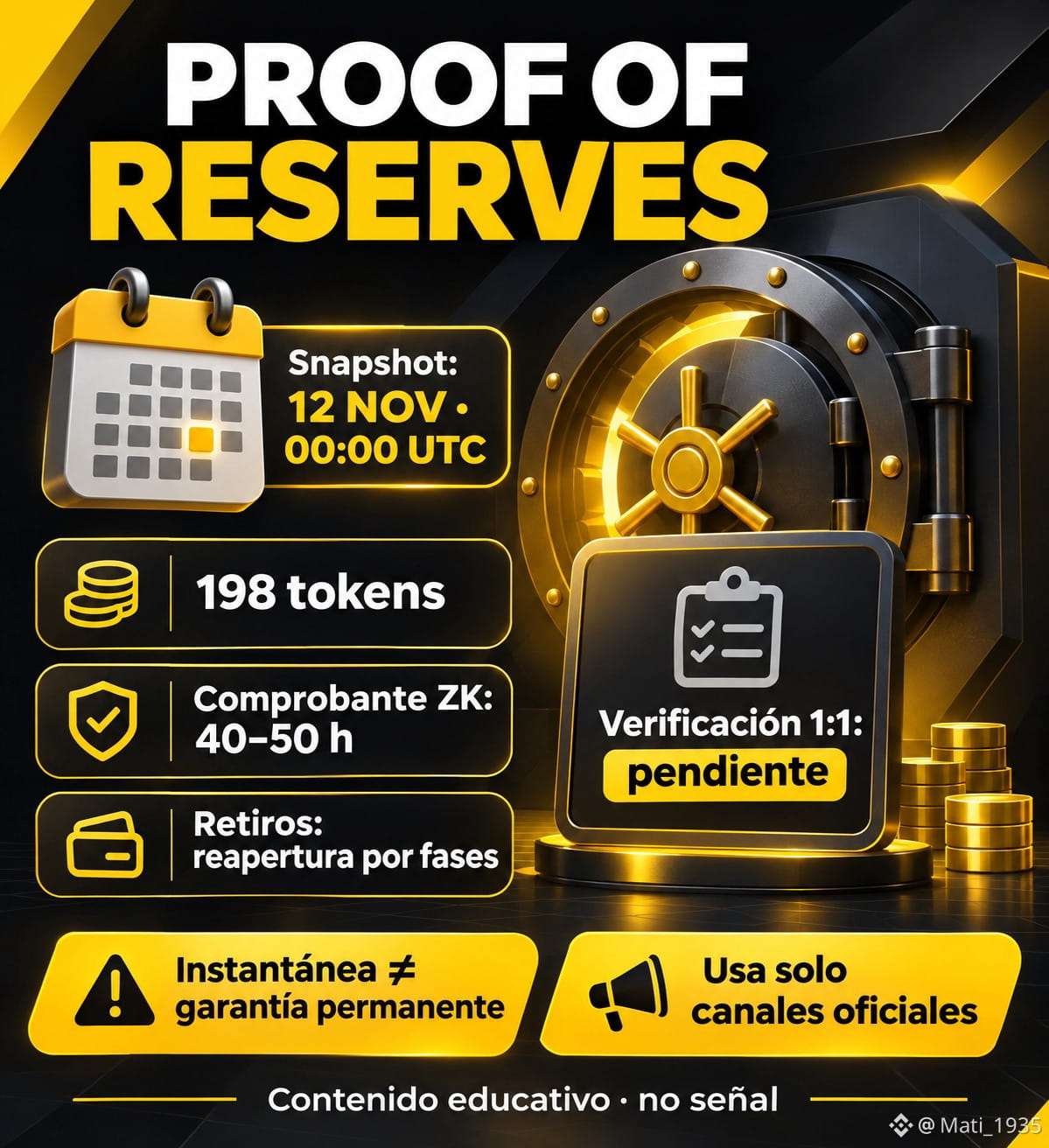
Facts and timing: the Support notice is listed as published on November 12, 2026, at 16:54 UTC; the Square post is dated November 13. Binance says it has completed coverage of the affected assets and committed more than $6.34 billion in corporate funds to cover losses and buy tokens.
The new Proof of Reserves snapshot was taken on November 12 at 00:00 UTC and covers 198 tokens. Binance says the complete zero-knowledge proof will take approximately 40–50 hours to generate; afterward, users of the affected assets will be able to verify whether coverage is at least 1:1. In the meantime, withdrawals will continue reopening in phases.
What this means and what it doesn’t: a snapshot shows reserves and liabilities at a specific point in time; it is not a permanent guarantee and does not replace a review of risks, custody, and withdrawal availability. The 1:1 claim should be checked when the proof is available, not assumed in advance.
Market reading as of 01:43 UTC: BTC is trading at 70,877.43 USDT (-3.783% in 24 hours), ETH at 2,009.40 (-1.969%), and BNB at 654.01 (-3.663%). These are Spot figures for context and do not prove a causal link to the incident or the announcement.
Operational risk: if you hold affected assets, check only official notices, withdrawal status, and the PoR proof once it is published. Avoid rumors, unverified links, and decisions based solely on a snapshot.
$BTC $ETH $BNB
Educational Content. Not financial advice.
#ProofOfReserves #Binance #Security #Bitcoin #CryptoEducation
157

·
--
🚨 HOW $BNB SURVIVED THE ULTIMATE STRESS TEST AND PROVED ITS UNSHAKABLE STRENGTH 🛡️
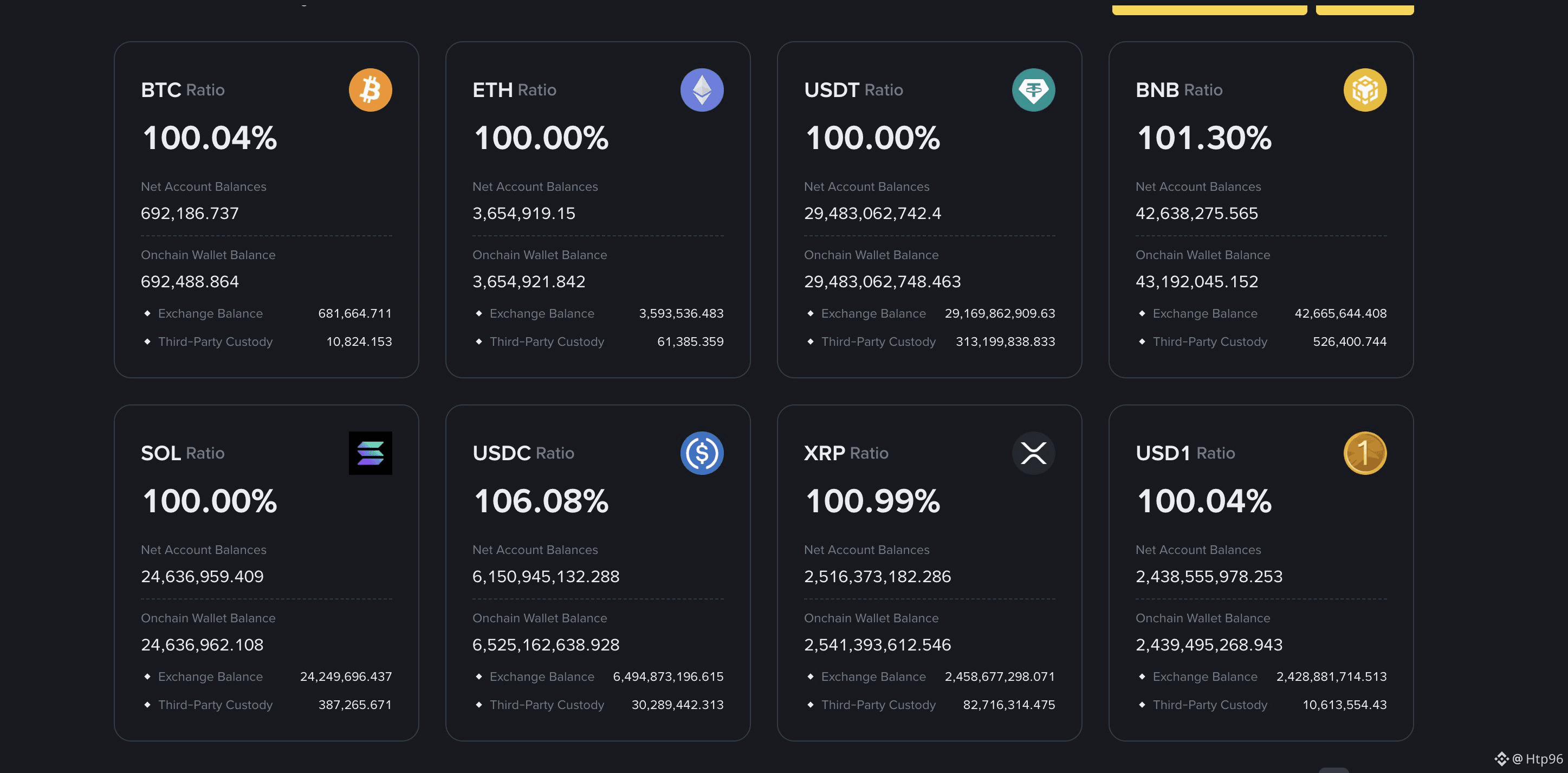
When an unprecedented six-billion-dollar security test hit the ecosystem, institutional grade resilience was put under the microscope. The updated Proof of Reserves confirms every single core asset remains fully backed above 100 percent, with withdrawals reopening seamlessly across networks. 📊
This kind of balance sheet fortress is why market leaders separate themselves from the noise during heavy turbulence. $BNB absorbs these monumental stress tests and emerges with stronger structural integrity than ever before. ⚡
💬 How are you positioning your portfolio now that the market’s biggest solvency test has passed? 👇
⚠️ Not financial advice. Always manage your risk. 🛡️
🏷️ #BNB #Crypto #ProofOfReserves #MarketUpdate
🔥 💎
37
·
--
Binance's recovery keeps moving: six more altcoins are lined up for withdrawals, and users can now check 44-token reserves for themselves.
In a November 6, 2026 update, Binance said it aims to reopen withdrawals for HYPE, INJ, APT, PLASMA, NEAR and LTC "by the end of next week," plus all tokens on networks already back in service, including BNB Smart Chain, Ethereum, Polygon, Arbitrum and Optimism. Each route still passes security checks before going live, and about 98% of the affected assets have already been replenished from Binance's own resources, with users bearing no losses.
The same day, Binance said the zero-knowledge proof for its November 4 Proof of Reserves snapshot is ready. That snapshot covers 44 tokens, up from 10, so holders can verify their balances are backed at least 1:1 on the official PoR page. Steady, transparent progress. $BNB $NEAR
#Binance #ProofOfReserves #Crypto
DYOR. Not financial advice.
271

·
--
Verified
👀 Binance expands its Proof of Reserves coverage!
The latest update reportedly includes 44 tokens.
For crypto investors, transparency is not just a bonus. It's something every major exchange should take seriously.
The more users can verify, the better.
Do you check exchange reserves before keeping your crypto on a platform?
#Binance #ProofOfReserves #Crypto
Life is Race
·
--
$ONE Claim A Big Gift here 🎁🎁🎁🎁🎁🎁🧧🧧🧧🧧🧧✅✅✅✅✅✅
1
519

𝐈 𝐓𝐇𝐎𝐔𝐆𝐇𝐓 𝐌𝐘 𝐌𝐎𝐍𝐄𝐘 𝐖𝐀𝐒 𝐆𝐎𝐍𝐄. 𝐁𝐈𝐍𝐀𝐍𝐂𝐄 𝐉𝐔𝐒𝐓 𝐏𝐑𝐎𝐕𝐄𝐃 𝐌𝐄 𝐖𝐑𝐎𝐍𝐆! 😱💰
I am not gonna lie guys. Last week I was really scared.
When withdrawals stopped, my friends were panicking. Everyone was saying is finished. I was thinking, oh no, my money is gone.
But today I woke up and saw this news and I literally smiled. 😊
says 98% of affected funds are back! 98%! Almost all money is back!
And not only that. They now show Proof of Reserves for 44 tokens. Before it was only 10. Now 44! That is 4 times more transparency.
You know what this means? It means did not run away. They used their own money to buy back almost everything. They took responsibility.
I feel so much better now. I was scared, now I am relieved. My trust is coming back.
What about you? Are you feeling relieved like me? Or are you still scared and keeping money in cold wallet? Tell me honestly in comments, I want to hear your story! 👇💬
$BTC $ETH $BNB
- 𝐅𝐚𝐫𝐳𝐚𝐧𝐚 𝐇𝐚𝐦𝐞𝐞𝐝 𝐎𝐟𝐟𝐢𝐜𝐢𝐚𝐥 •
#Binance #Binance98PercentReplenished #ProofOfReserves
2
11
166
Log in to explore more content
Join global crypto users on Binance Square
⚡️ Get latest and useful information about crypto.
💬 Trusted by the world’s largest crypto exchange.
👍 Discover real insights from verified creators.
Email / Phone number
Trending Topics
1
#WhoWillSucceedJensenHuangatNvidia?
81,433 views
1,115 Discussing
2
#WhatWillDriveCryptoandStocks’NextRebound?
431,655 views
3,022 Discussing
3
#BitcoinActiveSupplyInProfitDropsBelow45%
21,738 views
336 Discussing
4
#KavaSaysAbnormalActivityLimitedToKavaLend
8,507 views
170 Discussing
5
#USSpotXRPETFsSeeLargestWeeklyOutflowIn8Months
7,720 views
161 Discussing
6
#USPPIMissMayEaseBTCPressure
206,752 views
2,048 Discussing
7
#WORPTLetsTouristsConvertCryptoToThaiBaht
2,550 views
50 Discussing
8
#TONStrategyReports$23.97MQ3NetLoss
3,193 views
41 Discussing
9
#PolkadotCommunityApprovesNewStrategyWith97%Vote
18,626 views
244 Discussing
10
#dYdXPlansV9.9UpgradeToShiftUSDCToInjective
11,380 views
197 Discussing