
#binancehack
binancehack
119,008 views
368 Discussing
Hot
Latest
This is WILD — and scary.
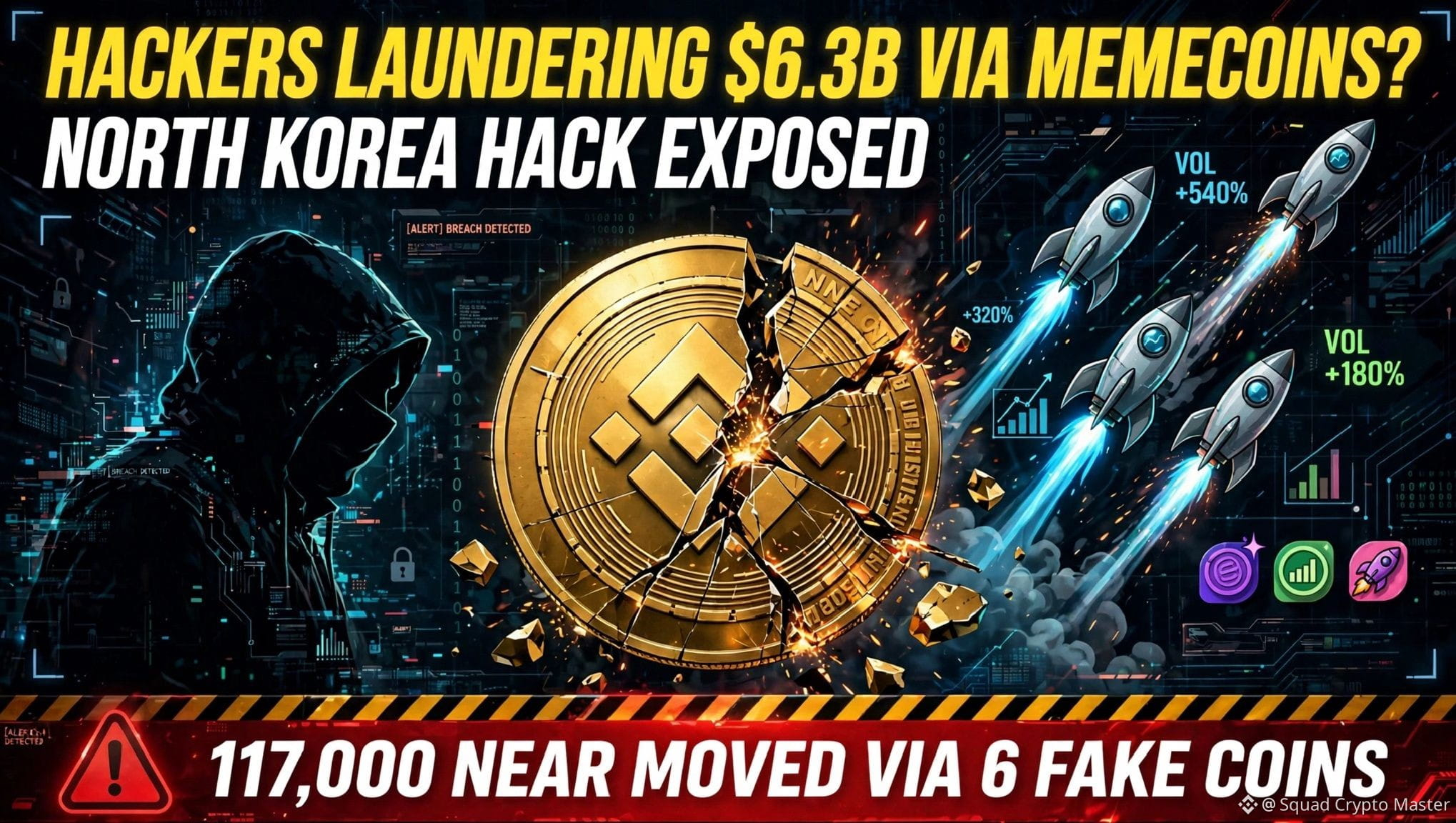
North Korean hackers are reportedly creating their OWN memecoins to launder proceeds from the $6.3 BILLION Binance hack.
According to Elliptic analysis:
📉 Hackers transferred 117,000 NEAR tokens (∼$430,000) through 6 memecoins created between Nov 5-7
📉 They generate FAKE trade volumes to legitimise their gains
📉 One token even uses a picture of Elon Musk
A Spanish report Nov 11 said hackers are now trying to use memecoins because they are being hunted and cannot move the crypto into the formal financial system. Some reports now put the hack figure at $8 BILLION.
This is why you MUST check memecoins before you buy:
❌ Who created it?
❌ Is volume real or wash trading?
❌ Is the Elon / celebrity pic just bait?
If a new memecoin pumps 1000% overnight with no real community — RUN.
Share this. Someone in your feed is about to buy one of these.
#BinanceHack #NorthKorea #Memecoin #CryptoScam #CryptoNews $NEAR

·
--
Six throwaway meme coins on $NEAR, about $90 each to launch, had one job: moving stolen Binance funds.
That's from Elliptic's November 9 report on the laundering of the October 29 hack, the theft Binance put at $6.3B and the FBI tied to North Korea's TraderTraitor.
The trick: mint a token, pair it with NEAR in a DEX pool, buy it with stolen NEAR from one set of wallets, sell it from another. No direct transfer between them. About 117,000 NEAR (around $430K) went through between November 5 and 7, and none of the six tokens has traded since November 8.
Solana saw a variant on November 3: stolen $SOL swapped through existing thinly traded tokens, then into USDC.
Why a $NEAR holder should care: Elliptic counts about 11.8M stolen NEAR ($43.7M) still unmoved. That's roughly half of the last 24 hours' $91M in volume, and every hop shows up on-chain 👀
NEAR sits at $3.665 today, up 1.61% in 24 hours, with Fear & Greed at 29.
The side lesson: a brand-new NEAR meme coin with big volume and only a wallet or two on each side may not be a market at all.
Would you still ape into a fresh meme coin pool after seeing how these were used?
#NEAR #BinanceHack #MemeCoins
Six throwaway meme coins on $NEAR , about $90 each to launch, had one job: moving stolen Binance funds.
That's from Elliptic's November 9 report on the laundering of the October 29 hack, the theft Binance put at $6.3B and the FBI tied to North Korea's TraderTraitor.
The trick: mint a token, pair it with NEAR in a DEX pool, buy it with stolen NEAR from one set of wallets, sell it from another. No direct transfer between them. About 117,000 NEAR (around $430K) went through between November 5 and 7, and none of the six tokens has traded since November 8.
Solana saw a variant on November 3: stolen $SOL swapped through existing thinly traded tokens, then into USDC.
Why a $NEAR holder should care: Elliptic counts about 11.8M stolen NEAR ($43.7M) still unmoved. That's roughly half of the last 24 hours' $91M in volume, and every hop shows up on-chain 👀
NEAR sits at $3.665 today, up 1.61% in 24 hours, with Fear & Greed at 29.
The side lesson: a brand-new NEAR meme coin with big volume and only a wallet or two on each side may not be a market at all.
Would you still ape into a fresh meme coin pool after seeing how these were used?
#NEAR #BinanceHack #MemeCoins
136

Hackers Deploy Custom Meme Coins to Launder Binance Funds
Forensic analysis reveals attackers are minting bespoke meme coins featuring Elon Musk and animal logos to obfuscate the $6.4B Binance exploit proceeds through liquidity pools.
#BinanceHack #BlockchainForensics
Hackers Deploy Custom Meme Coins to Launder Binance Funds
Forensic analysis reveals attackers are minting bespoke meme coins featuring Elon Musk and animal logos to obfuscate the $6.4B Binance exploit proceeds through liquidity pools.
#BinanceHack #BlockchainForensics
Forensic analysis reveals attackers are minting bespoke meme coins featuring Elon Musk and animal logos to obfuscate the $6.4B Binance exploit proceeds through liquidity pools.
#BinanceHack #BlockchainForensics
7
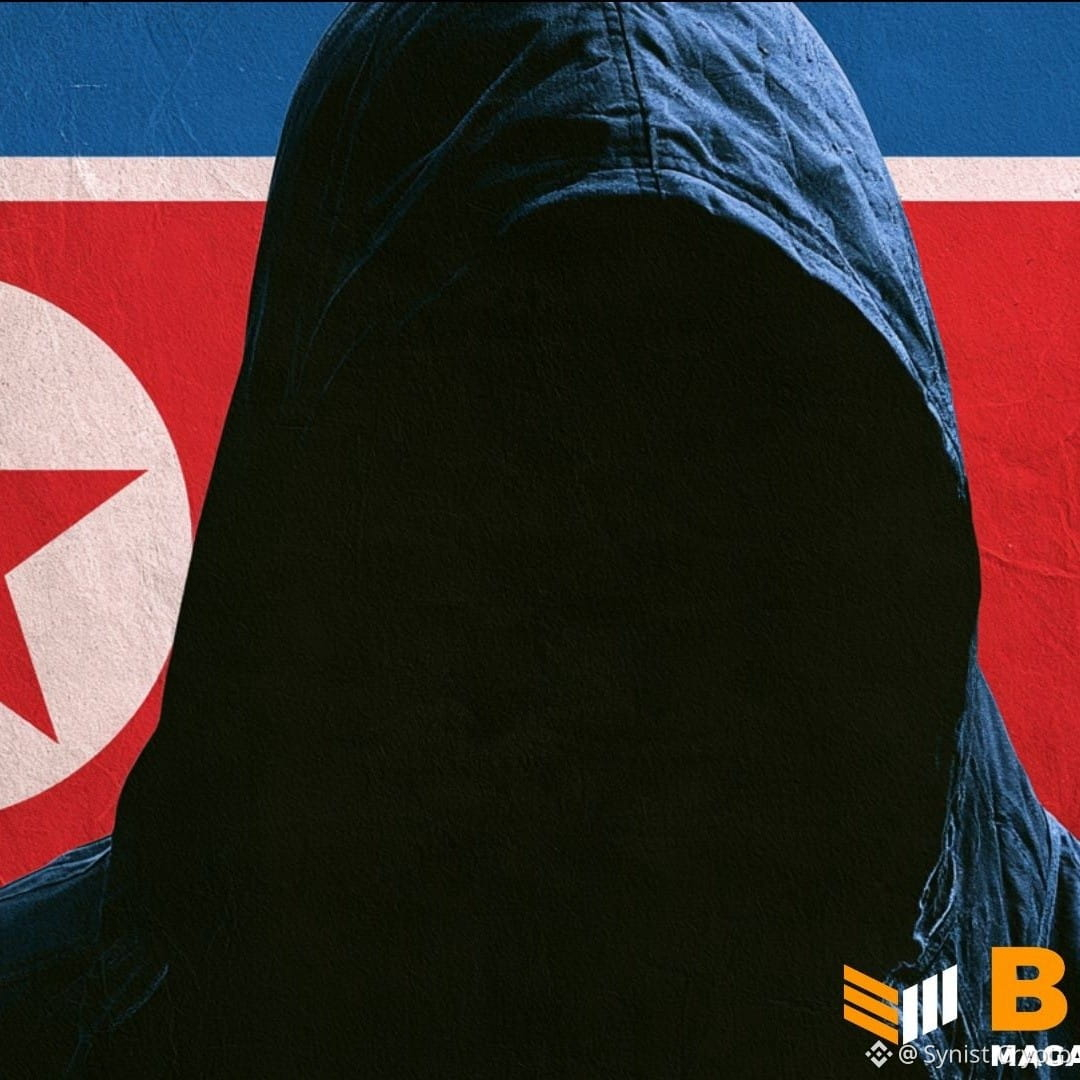
🚨🚨 BREAKING: NORTH KOREA MINTS MEMECOINS TO WASH BINANCE LOOT. 👀
The $6.3B Binance hackers now mint memecoins to wash the loot.
Elliptic caught 6 on NEAR, Nov 5–7, $90 each, $430,000 already through.
One coin shows Elon Musk under an 'Elon 2028 President' banner.
Tiny so far — under 0.01% of the loot.
$BTC $NEAR — would you trust a memecoin you just met? #NorthKoreaHackers #BinanceHack #CryptoNews

107
State sponsored actors are exploiting memecoin liquidity to wash $6.3B stolen from the Binance exploit. This represents a massive escalation in sophisticated laundering tactics within the DeFi ecosystem.
#BinanceHack #CyberSecurity
State sponsored actors are exploiting memecoin liquidity to wash $6.3B stolen from the Binance exploit. This represents a massive escalation in sophisticated laundering tactics within the DeFi ecosystem.
#BinanceHack #CyberSecurity
#BinanceHack #CyberSecurity
5
The $2.85B Binance Hack Triggers UK Regulatory Pressure
The massive $2.85B Binance hack highlights critical gaps in stablecoin freeze protocols and will likely drive aggressive regulatory action in the UK.
#BinanceHack #StablecoinRegulation
The $2.85B Binance Hack Triggers UK Regulatory Pressure
The massive $2.85B Binance hack highlights critical gaps in stablecoin freeze protocols and will likely drive aggressive regulatory action in the UK.
#BinanceHack #StablecoinRegulation
The massive $2.85B Binance hack highlights critical gaps in stablecoin freeze protocols and will likely drive aggressive regulatory action in the UK.
#BinanceHack #StablecoinRegulation
2

·
--
Binance’s $630 Million Hack Exposed an 8-Week Intrusion Period; AI-Assisted Attacks Pose a Systemic Threat
Security firm SEAL disclosed that in the approximately $630 million theft from Binance, hackers had an intrusion window of up to 8 weeks before the funds were transferred. This period far exceeds the typical response timeline for security incidents at exchanges, and means the attackers had ample time to carry out a multistage intrusion.
According to Cointelegraph, SEAL noted that the intrusion pattern in this case was not an isolated incident. The attackers used a multistage approach, remaining undetected for an extended period as they gradually penetrated deeper, before transferring the funds. SEAL linked this pattern to several recent major cryptocurrency thefts, suggesting they may all belong to the same category of systemic, AI-assisted attacks.
This assessment is significant because it shifts the focus from a “single vulnerability” to an “attack methodology.” If multiple incidents do indeed share the same intrusion tactics, the problem is no longer a technical flaw at one exchange, but a common blind spot across the industry in hot wallet risk management. Attackers’ use of lengthy intrusion windows to evade detection is precisely why traditional threshold-based alert systems struggle to identify them in time.
The figures are striking: an 8-week intrusion window alongside $630 million in stolen funds. The longer the period, the more it suggests that internal signing mechanisms and anomalous behavior detection were significantly delayed. However, it should be noted that Binance has not yet responded, and some conclusions still rely on third-party on-chain analysis. The specific details of its internal signing mechanisms remain unclear, and the risk posed by this information asymmetry is real.
At the market level, security incidents of this kind typically affect risk appetite across the sector in the short term. However, no clear price correlation has emerged so far, and the impact has been more on sentiment and confidence. If further cases are confirmed to share the same attack pattern, a reassessment of hot wallet security across the industry could become a key theme.
Countervailing considerations include the possibility that the attribution of a single incident is inaccurate, that more evidence is needed to classify the attacks as AI-assisted, and that Binance’s scale means its actual fund security mechanisms may be more complex than public analyses suggest.
What to watch next: whether Binance responds, whether SEAL can disclose more technical details, and whether additional cases are included in the same analytical framework.
#BinanceHack #CryptoSecurity
The above is a compilation of information and personal analysis, and does not constitute investment advice.
I will continue to monitor key data and technological developments.
91
·
--
Binance’s $6.3 Billion Hack: A Postmortem Reveals a Blind Spot in Hot Wallet Risk Controls
The latest developments in Binance’s $6.3 billion hack are pushing the entire industry toward an awkward crossroads: on-chain evidence clearly shows hot wallets being repeatedly drained, yet no one can prove whether the exchange’s internal signature controls held up.
According to Cointelegraph, experts reviewing the incident noted that blockchain records repeatedly show hot wallets being “emptied,” but to date, no evidence has been established of Binance’s internal signature control mechanisms, and it remains difficult to determine what role the exchange played in the asset transfers. In other words, the attack happened on-chain, but whether the defenses failed—and where—remains shrouded in mystery.
This matters because it strikes at a core issue the crypto industry has long avoided: we tend to treat “on-chain verifiability” as a source of security, but when funds flow out from within an exchange, on-chain evidence cannot answer the most critical questions about internal controls. Hot wallets, which serve as high-frequency channels for the exchange’s day-to-day withdrawals, should be among the most tightly controlled points in its risk management system. Now, however, they have become a black box that regulators and auditors alike struggle to penetrate.
The key facts from this review center on two points: first, the hackers stole as much as $6.3 billion; second, experts openly acknowledged that they could not prove the existence of Binance’s internal signature controls. The former is a publicly verifiable amount; the latter reflects an admitted limit to investigators’ capabilities. When even authoritative bodies cannot clarify the internal mechanisms, the market’s trust anchor is naturally shaken.
It is still difficult to say how the market will react. Some believe that since claims of “North Korean leadership” had already been partly priced in, sentiment may not fluctuate sharply again. But it is also possible that the new uncertainty over “the exchange’s internal controls” will prompt users to reassess the trust premium attached to leading platforms.
One countervailing factor to keep in mind is that experts’ inability to establish evidence of signature controls could actually weaken direct allegations against Binance, making it harder to assign responsibility. At the same time, the narrative of North Korean involvement remains disputed, and the market may have already priced in some of this risk.
What bears watching next is whether investigators can produce concrete evidence of internal controls, and how the market’s valuation of trust in exchanges changes. For users following related assets, the more important thing to monitor from a trading perspective is whether sentiment picks up again, rather than rushing to a conclusion.
#BinanceHack #CryptoSecurity #HotWallet
The above is an overview of information and personal analysis, and does not constitute investment advice.
Follow me for continued coverage of key market developments and data.
85

·
--
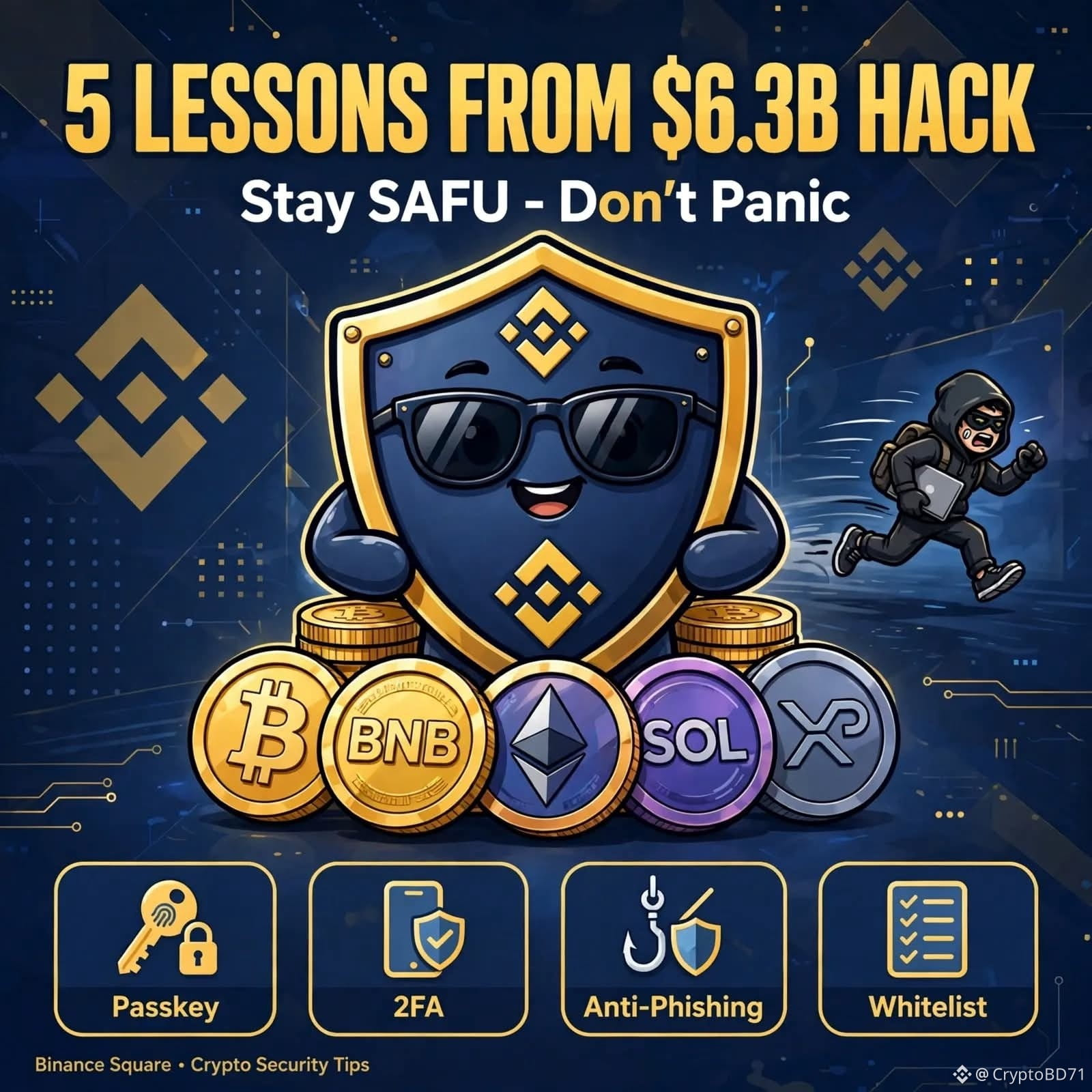
What I Learned From The Binance $6.3B Hack - 5 Lessons For Every Crypto User
$BTC $BNB $ETH $SOL $XRP
The Binance incident on Oct 29 changed how I think about safety. Over $6.3B was stolen in what the FBI attributed to North Korea's TraderTraitor group. It was the largest crypto theft on record.
Here are 5 lessons:
1. Never Keep 100% On One Exchange
If your portfolio is on one CEX, you have a single point of risk. Always diversify.
2. Check Proof-of-Reserves, Not Rumors
Binance released a ZK Proof for its Oct 31 snapshot. 10 tokens - BTC, ETH, USDT, BNB, SOL, USDC, XRP, USD1, RLUSD, ZEC - are backed at least 1:1.
3. Do NOT Panic Withdraw
Phase 1 started Nov 1, Phase 2 on Nov 3 reopened 100+ pairs across 9 networks - BSC, ETH, SOL, XRP, TRON, Arbitrum, Optimism, SUI, Base. Gas fees were very high during panic.
4. Enable ALL Security
Passkey + 2FA + Anti-Phishing Code + Whitelist Address. It takes 5 minutes and can save your portfolio.
5. How Binance Covered The Loss
Binance set aside $6.34B from its own funds. By Oct 31, 90% replenished, by Nov 1 around 95%. Users will not bear the loss.
My Takeaway: Security is about having a system, not a perfect exchange.
What did you do? Panic withdraw or hold? Comment 👇
Is your fund 100% SAFU now?
#BinanceHack #BinanceSecurity #CryptoSafety #Bangladesh #SAFU🙏 #Write2Earn #CryptoNews #BTC
1
2
345

I'm not reading this as another hack headline — it's a progress report on the laundering.
Arkham-tracked wallets tied to the Binance hack now hold 182,443 $SOL, about $16.9 million — 18.8% of the 970,522 SOL stolen, so about 81% has moved on, Cointelegraph and CryptoBreaking report.
Lookonchain's Wednesday route: split SOL across wallets, sell for USDC, bridge to Ethereum, buy ETH, then swap into BTC through THORChain. That last step reopened this week — THORChain restored swaps Wednesday after Saturday's halt over an Ethereum reorg refund bug, which Chainalysis says had slowed the laundering.
Binance says it replenished 98% of affected tokens and will absorb losses; the FBI attributes the attack to North Korea's TraderTraitor and urged THORNode operators to block linked funds, an attribution Pyongyang denies.
$BTC near $78,445 (+1.8%/24h) on Binance spot is context, not a reaction. So the race is about the remaining fifth. What would convince you the trail is closing — a freeze, a seizure, or the wallets going quiet? DYOR.
#BinanceHack #THORChain #Solana #CryptoSecurity
I'm not reading this as another hack headline — it's a progress report on the laundering.
Arkham-tracked wallets tied to the Binance hack now hold 182,443 $SOL , about $16.9 million — 18.8% of the 970,522 SOL stolen, so about 81% has moved on, Cointelegraph and CryptoBreaking report.
Lookonchain's Wednesday route: split SOL across wallets, sell for USDC, bridge to Ethereum, buy ETH, then swap into BTC through THORChain. That last step reopened this week — THORChain restored swaps Wednesday after Saturday's halt over an Ethereum reorg refund bug, which Chainalysis says had slowed the laundering.
Binance says it replenished 98% of affected tokens and will absorb losses; the FBI attributes the attack to North Korea's TraderTraitor and urged THORNode operators to block linked funds, an attribution Pyongyang denies.
$BTC near $78,445 (+1.8%/24h) on Binance spot is context, not a reaction. So the race is about the remaining fifth. What would convince you the trail is closing — a freeze, a seizure, or the wallets going quiet? DYOR.
#BinanceHack #THORChain #Solana #CryptoSecurity
9

🚨 THE BIGGEST ROBBERY IN CRYPTO HISTORY! 😱 What you need to know about the Binance attack
Attention, community! The eyes of the financial world are on the historic $6.3 billion hack that Binance suffered a few days ago. The FBI has directly named the North Korean group TraderTraitor as responsible, and the way they got in will send chills down your spine! 🥶
They didn't hack the blockchain directly; they used fake job interviews and hidden malware to trick the platform's engineers and breach its withdrawal systems. A masterful social engineering move!
But here's the real lesson in resilience: Binance proved why it's king. Thanks to its reserve funds (SAFU) and treasury, the company has already replenished nearly 98% of the affected assets. Users' funds are 100% safe, and withdrawals are operating completely normally again. That's what it means to stand by your community! 🛡️💼
What do you think of Binance's response to this historic crisis? 👇 Does seeing it respond with its own funds give you more confidence? Like this post, share it, and leave a comment so we can discuss it together on Binance Square! 🚀🔥
#BinanceHack #CryptoSecurity #BinanceSquare #WriteToEarn #CryptoNoticias
1
1.3k

The $6.3 billion Binance hack is heating up again! North Korea’s TraderTraitor group has continued to “launder money” through THORChain, converting assets from Solana to Ether and then Bitcoin. A massive flow of funds is moving through DeFi, beyond anyone’s control.
They’re exploiting THORChain’s cross-chain swap feature to evade every attempt by centralized exchanges to freeze the funds. THORChain is becoming a powerful tool for these “under-the-radar” transactions.
This activity surged again after the Ethereum incident in late October. Almost immediately, $RUNE of THORChain pumped 10.6% to $0.637, signaling a sharp rise in fund flows and protocol fees.
Despite moving a large amount, the hackers still haven’t cashed out much. Experts believe they’ll use OTC brokers to gradually “dump” the funds over the coming months.
How will the community respond to this news?
#Crypto #BinanceHack
$RUNE $ETH $BTC
1
341
·
--
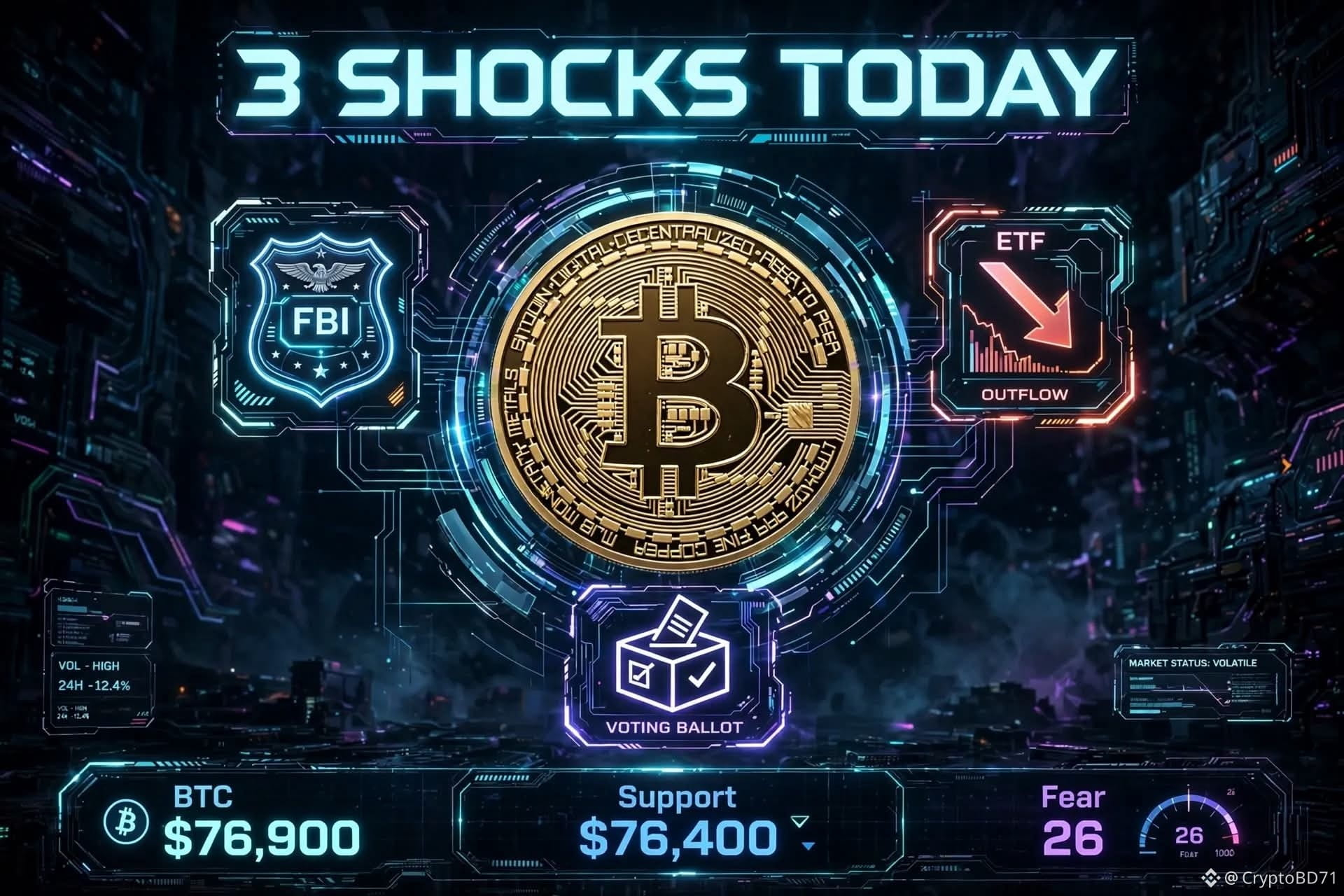
BREAKING: 3 SHOCKS HITTING BITCOIN TODAY - Nov 3, 2026
$BTC is fighting at $76,900 after crashing to $76,388. Why market in Extreme Fear?
1 BINANCE $6.3B HACK FBI SAYS
FBI says North Korea's "TraderTraitor" group hacked $BNB exchange on Oct 29. Binance resumed withdrawals today from 04:00 UTC for 103 assets ($BTC, $ETH, $XRP, $SOL live) Users withdrew $4.72B since Sunday Binance says they covered 90%+ of loss & Funds are SAFU
2. ETF BLOODBATH - $398.6M OUTFLOW:
US Spot Bitcoin ETFs saw $398.62M outflow yesterday. BlackRock IBIT alone lost $405.3M. Total 2-day outflow crossed $1.04B. $ETH ETFs also bleeding.
🗳️ 3. US MIDTERM ELECTIONS TODAY:
Today is US Midterm Election Day. History shows BTCweak in midterm years. Will history repeat?
📊 KEY LEVELS TO WATCH:
Support: $76,400 -> $75,000
Resistance: $78,000 -> $79,500
Fear & Greed Index: 26 (Fear)
Liquidation: 94K+ traders wiped, $362M in 24h
Are you BUYING BTC $ETH $SOL this fear or WAITING for $75K? Comment! 👇
Source: FBI Statement Oct 31, Binance Recovery Update #6. NFA.
$ETH BNB $XRP $SOL #Bitcoin #BinanceHack #Binance #CryptoNews #ETF #BinanceSquare #CryptoBD71
BREAKING: 3 SHOCKS HITTING BITCOIN TODAY - Nov 3, 2026
$BTC is fighting at $76,900 after crashing to $76,388. Why market in Extreme Fear?
1 BINANCE $6.3B HACK FBI SAYS
FBI says North Korea's "TraderTraitor" group hacked $BNB exchange on Oct 29. Binance resumed withdrawals today from 04:00 UTC for 103 assets ($BTC , $ETH, $XRP , $SOL live) Users withdrew $4.72B since Sunday Binance says they covered 90%+ of loss & Funds are SAFU
2. ETF BLOODBATH - $398.6M OUTFLOW:
US Spot Bitcoin ETFs saw $398.62M outflow yesterday. BlackRock IBIT alone lost $405.3M. Total 2-day outflow crossed $1.04B. $ETH ETFs also bleeding.
🗳️ 3. US MIDTERM ELECTIONS TODAY:
Today is US Midterm Election Day. History shows BTCweak in midterm years. Will history repeat?
📊 KEY LEVELS TO WATCH:
Support: $76,400 -> $75,000
Resistance: $78,000 -> $79,500
Fear & Greed Index: 26 (Fear)
Liquidation: 94K+ traders wiped, $362M in 24h
Are you BUYING BTC $ETH $SOL this fear or WAITING for $75K? Comment! 👇
Source: FBI Statement Oct 31, Binance Recovery Update #6. NFA.
$ETH BNB $XRP $SOL #Bitcoin #BinanceHack #Binance #CryptoNews #ETF #BinanceSquare #CryptoBD71
1
4
945
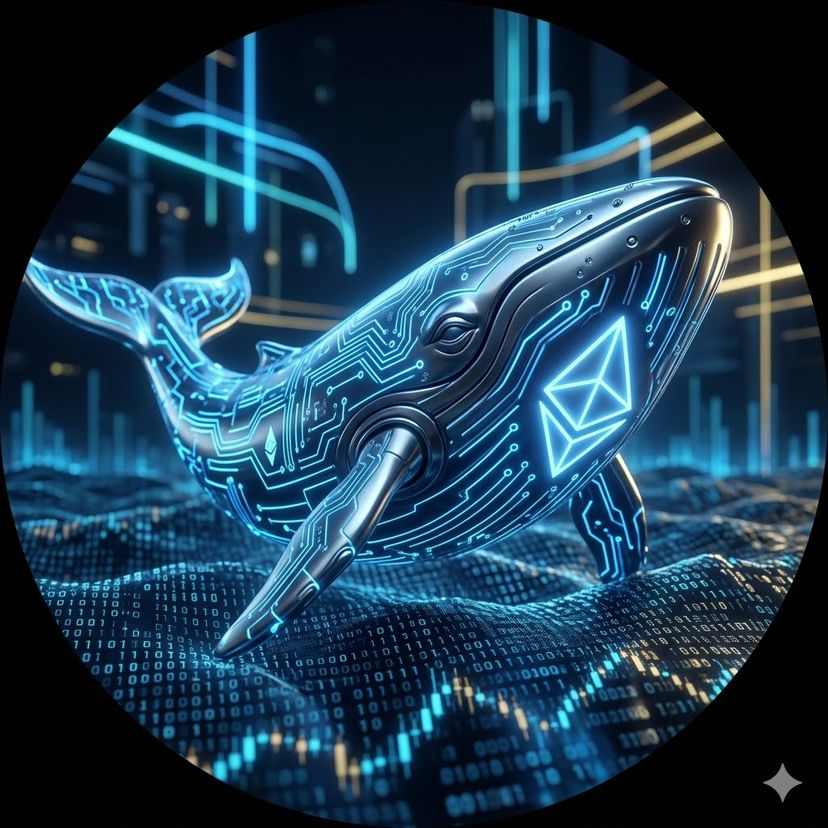
🔥 **BINANCE HACKED FOR $6.3 BILLION: HOW HAMSTERS GOT SCAMMED THROUGH A FAKE JOB INTERVIEW!** 💸💀🤡
North Korean hackers (Lazarus) scammed a top Binance engineer like a total amateur: he downloaded a virus-infected test assignment onto his work computer disguised as a «dream job»! 🛑
🧠 **ANATOMY OF THE FAIL:**
* 🎣 **Phishing:** Fake recruiters gained access to the systems through downloaded malware.
* 🤖 **AI hack:** The attackers used the exchange’s internal AI tools to hack the computers of two wallet engineers.
* ⚡️ **Attack:** On October 29, they used Ethereum’s EIP-7702 feature to withdraw $6.3 billion in 20 minutes!
📊 **WHAT HAPPENED TO THE MONEY?**
* 🏦 **$2.85 billion frozen**, and Binance covered 98% of the tokens from its own reserves. Users were unaffected!
* 🕵️♂️ **The FBI confirmed:** North Korea was behind it.
#BinanceHack #Ethereum #LazarusGroup #CryptoCrash #RealityCheck 💩$ETH
{spot}(ETHUSDT)
🔥 **BINANCE HACKED FOR $6.3 BILLION: HOW HAMSTERS GOT SCAMMED THROUGH A FAKE JOB INTERVIEW!** 💸💀🤡
North Korean hackers (Lazarus) scammed a top Binance engineer like a total amateur: he downloaded a virus-infected test assignment onto his work computer disguised as a «dream job»! 🛑
🧠 **ANATOMY OF THE FAIL:**
* 🎣 **Phishing:** Fake recruiters gained access to the systems through downloaded malware.
* 🤖 **AI hack:** The attackers used the exchange’s internal AI tools to hack the computers of two wallet engineers.
* ⚡️ **Attack:** On October 29, they used Ethereum’s EIP-7702 feature to withdraw $6.3 billion in 20 minutes!
📊 **WHAT HAPPENED TO THE MONEY?**
* 🏦 **$2.85 billion frozen**, and Binance covered 98% of the tokens from its own reserves. Users were unaffected!
* 🕵️♂️ **The FBI confirmed:** North Korea was behind it.
#BinanceHack #Ethereum #LazarusGroup #CryptoCrash #RealityCheck 💩$ETH


2
1
315


·
--
News about North Korea infiltrating cryptocurrency companies, including the alleged vulnerability that enabled the cyberattack on Binance.
According to a report by Decrypt, the North Korean government has been using social engineering techniques and phishing attacks to infiltrate cryptocurrency companies. Several vulnerabilities have been reported, including one that allowed access to Binance systems.
For traders, this news is important because it highlights the need to implement additional security measures to protect their accounts and assets. North Korea's infiltration of cryptocurrency companies is a reminder that security is crucial in the world of cryptocurrency.
The question is: How do you think cryptocurrency companies can prevent future attacks by North Korea and other cybercriminals?
#BinanceHack #CoreaDelNorte #Ciberseguridad #Criptomonedas #CryptoSecurity
1.4k
·
--
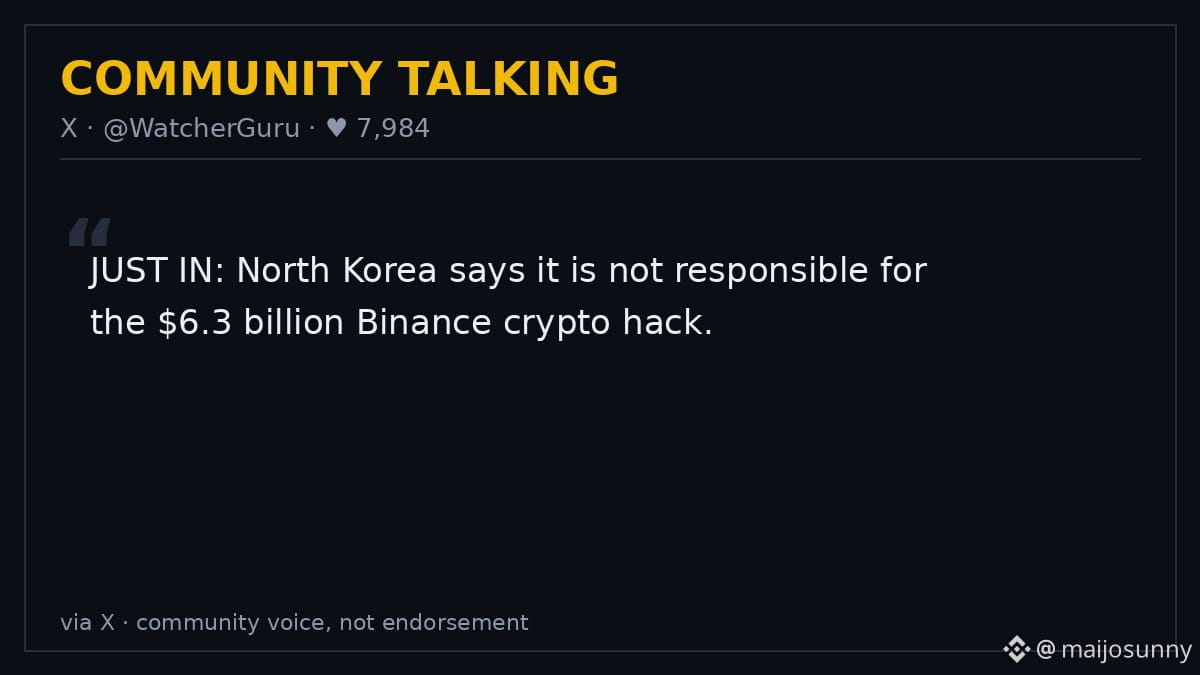
Traders on X are sharing one denial today: North Korea says it was not behind the $6.3B Binance hack, calling the FBI claim fabrication (WatcherGuru, 7,984 likes).
Why it matters: the FBI blamed TraderTraitor on Oct 31, saying stolen funds were being swapped into $ETH. Pyongyang now calls it a political provocation and hints at the US, without evidence. A denial is not the same as a resolution, so the $6.3B recovery path stays disputed.
Whose attribution do you trust, and what evidence would change your mind? 👇
Not financial advice. DYOR.
#BinanceHack #crypto
Traders on X are sharing one denial today: North Korea says it was not behind the $6.3B Binance hack, calling the FBI claim fabrication (WatcherGuru, 7,984 likes).
Why it matters: the FBI blamed TraderTraitor on Oct 31, saying stolen funds were being swapped into $ETH . Pyongyang now calls it a political provocation and hints at the US, without evidence. A denial is not the same as a resolution, so the $6.3B recovery path stays disputed.
Whose attribution do you trust, and what evidence would change your mind? 👇
Not financial advice. DYOR.
#BinanceHack #crypto
126

🚀 Today’s headline: The fallout from the Binance hack and the decline in Bitcoin and Ethereum ETFs 📰
A recent report said that Bitcoin and Ethereum exchange-traded funds are seeing outflows following the latest incident, contributing to a slight drop in prices. It seems investors are quickly reassessing how they allocate risk and may be wondering how much the hack will affect market confidence.
In my view, this dip could be an opportunity to evaluate our security strategies and update our portfolios, but the question remains whether the withdrawals are temporary or will turn into a sustained trend. What do you think these movements mean for the overall DeFi climate?
🧐
Not investment advice.
#BTC #CryptoNews #BinanceHack #ETF #Ethereum

51

·
--
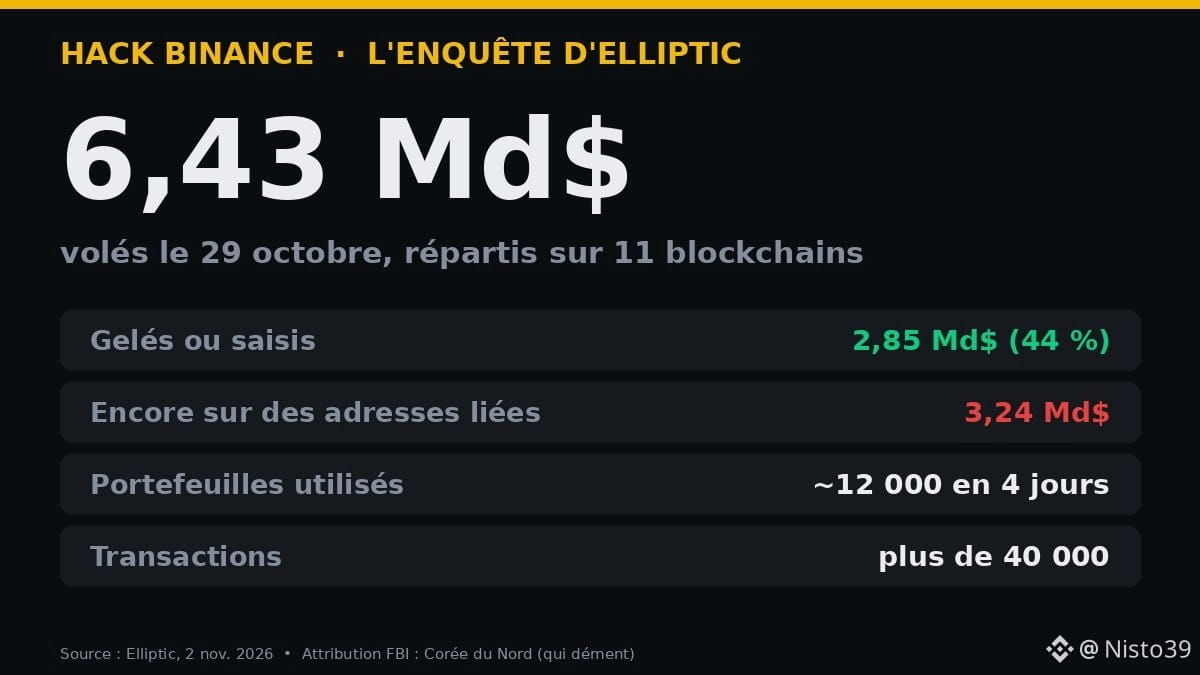
🕵️ Binance hack: where did the money go? Analytics firm Elliptic published its investigation on Monday, November 2.
🔎 Key figures (Elliptic):
• $6.43 billion stolen on October 29, across 11 blockchains
• In less than 4 days: around 12,000 wallets and more than 40,000 transactions, meaning a new wallet every 25 seconds. Software-automated money laundering
• $2.85 billion (44%) frozen or seized
• Around $3.24 billion still in addresses linked to the theft, mostly in $BTC and $ETH
• Almost none of it has yet been converted into spendable money
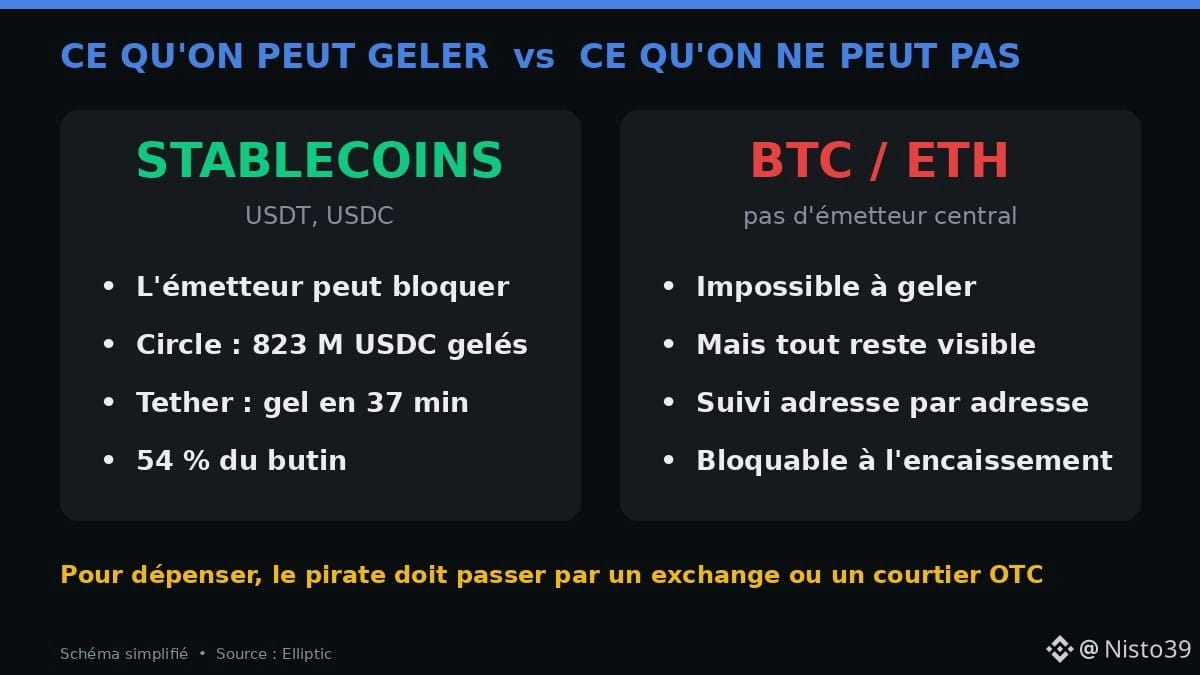
👉 Why was some of it able to be frozen? 54% of the loot was in stablecoins. Tether and Circle can block their tokens: Circle froze the 823 M USDC before any exchange, and Tether froze the USDT on Ethereum 37 minutes after it arrived.
👉 Why not the rest? Nobody can “freeze” BTC or ETH on the blockchain. But everything remains visible: to cash out, the hacker has to go through an exchange or an OTC broker (over-the-counter sale). That’s where they can be stopped.
The FBI attributes the attack to North Korea, which denies it.
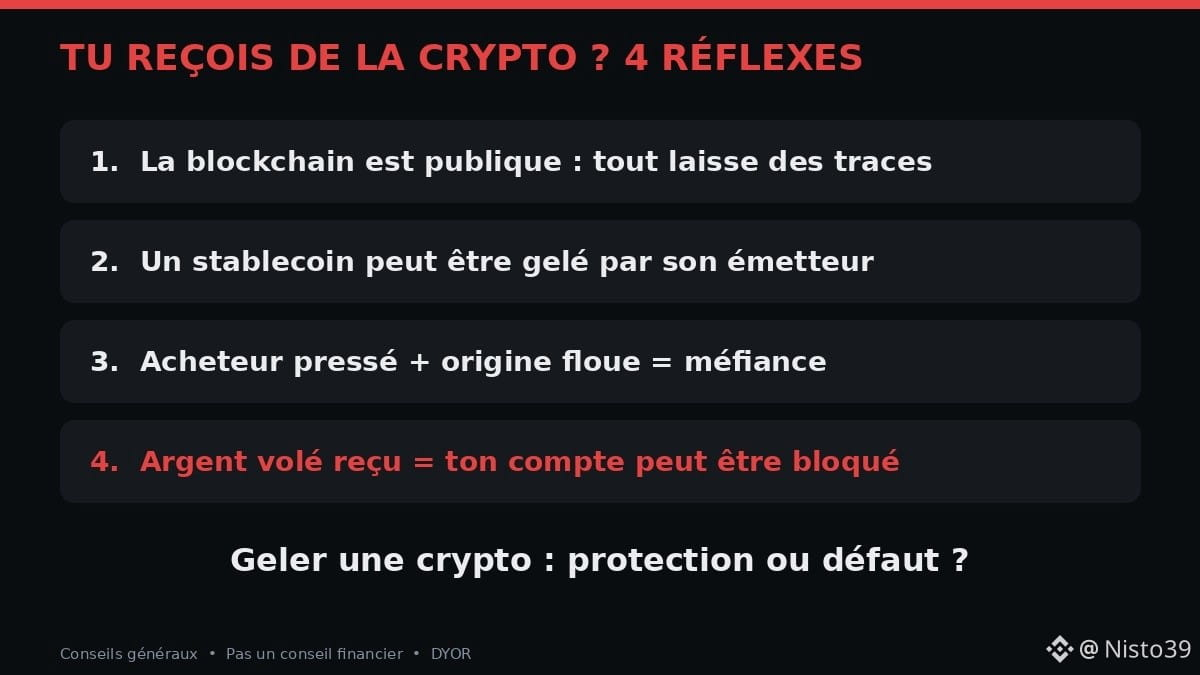
🛒 Bintou, a pagne seller in Abidjan, receives a crypto payment from a stranger. Her rules of thumb:
1. The blockchain is public: dirty money leaves traces
2. A stablecoin can be frozen by its issuer
3. An overly hasty buyer, with a round amount and vague origins: be wary
4. Accepting stolen money can get your own account blocked
Not financial advice. DYOR.
In your opinion, is a crypto that can be frozen a safeguard or a flaw? 👇
#BinanceHack #Elliptic #CryptoAfrique #Stablecoin #CryptoSecurity
155

·
--
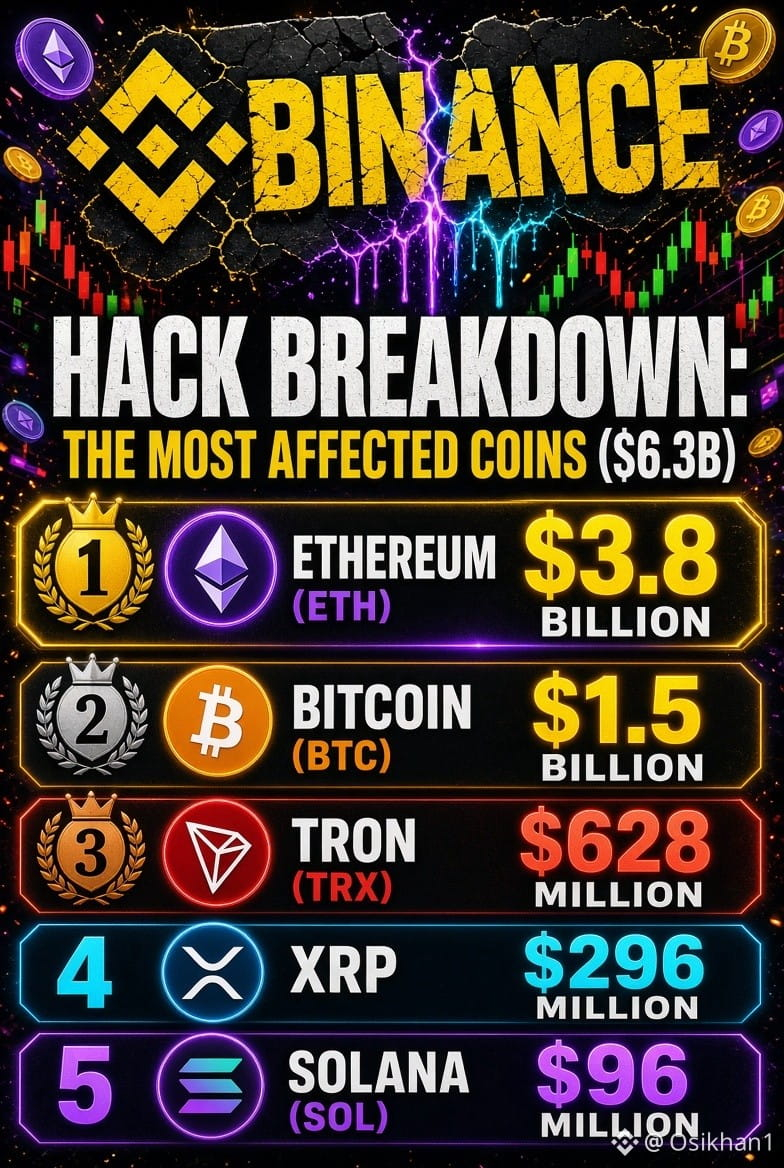
🚨 Binance Hack Breakdown: The Most Affected Coins ($6.3B) 🚨
The biggest crypto heist in history just hit hard. Here’s where the money went 👇
🥇 Ethereum ($ETH) — ~$3.8 Billion
🥈 Bitcoin ($BTC) — ~$1.5 Billion
🥉 Tron ($TRX) — ~$628 Million
4️⃣ $XRP — ~$296 Million
5️⃣ $Solana (SOL) — ~$96 Million
➕ Smaller amounts across ARB, OP, BASE, AVAX, MATIC & more
💎 USDT & USDC also took heavy hits (big portions already frozen)
Binance has committed to covering 100% of user losses.
Funds are being restored. Stay sharp out there. 🔐
#BinanceHack #CryptoNews #ETH #BTC #safu #BinanceSquareTalks #BinanceSquareFamily
1
305

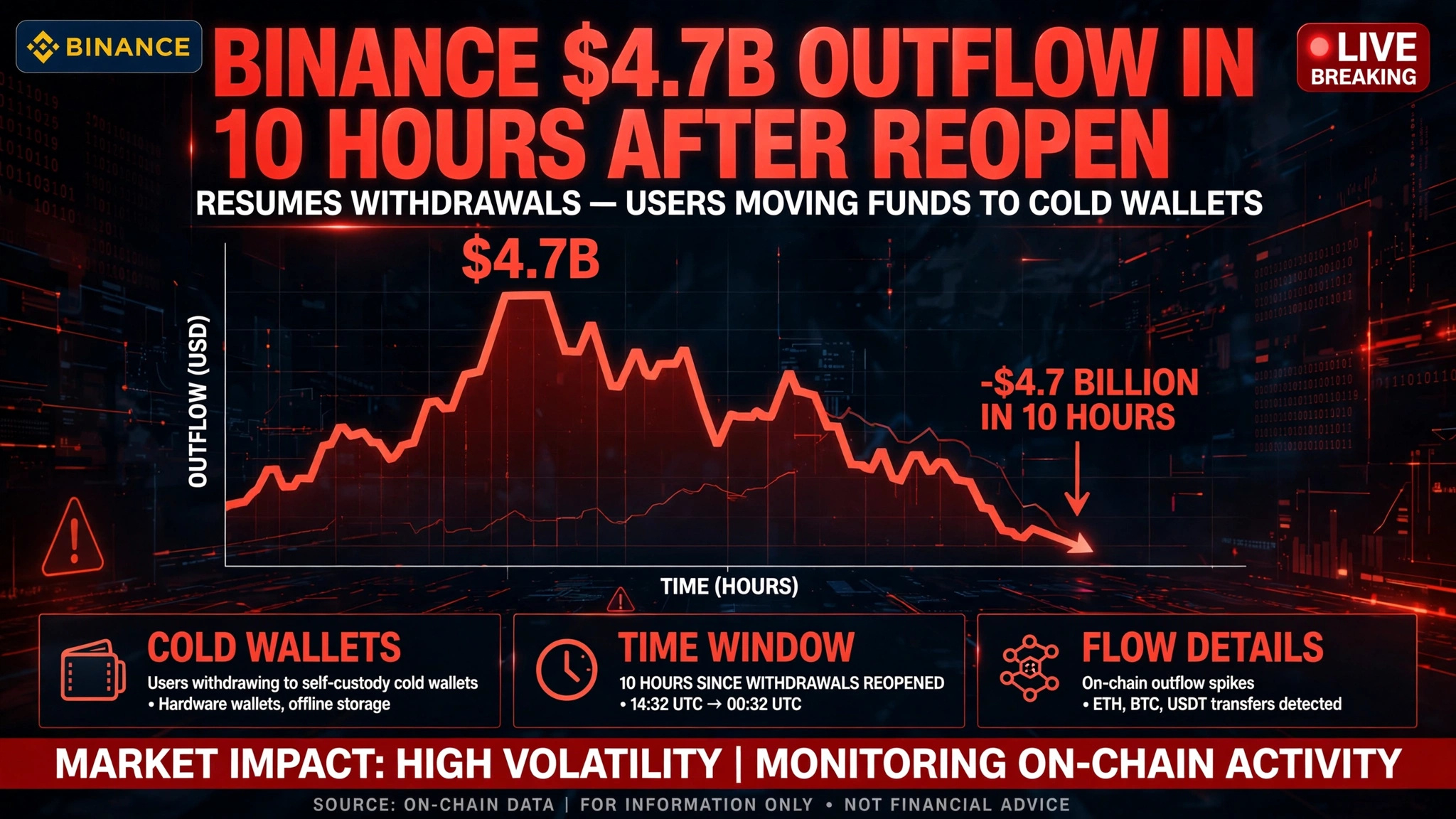
🚨 HOT TODAY 2/11: BINANCE RESUMES WITHDRAWALS — USERS WITHDRAW A NET $4.7 BILLION!
According to VnExpress and tintucbitcoin this morning, 2/11
- Binance resumed deposits and withdrawals on 1/11 after a $6.3 billion hack
- Between 6:00 and 15:30 UTC on 1/11, or 13:00 to 22:30 Hanoi time
- The total value of assets withdrawn from the exchange reached $4.6 billion
- Deposits totaled just $1 billion, meaning net outflows of $3.64 billion in less than 10 hours
According to DefiLlama, net outflows were even higher, reaching $5.81 billion
BTC is holding around $78,021 after withdrawals resumed
Have you withdrawn your funds to a cold wallet yet?
#BinanceHack #RutTien #BTC #BreakingNews
200
Log in to explore more content
Join global crypto users on Binance Square
⚡️ Get latest and useful information about crypto.
💬 Trusted by the world’s largest crypto exchange.
👍 Discover real insights from verified creators.
Email / Phone number
Trending Topics
1
#HotCPIDecemberHikePriced
113,356 views
1,340 Discussing
2
#AnthropicRejectsIPODelayValuationinQuestion
235,258 views
1,990 Discussing
3
#CanNvidiaEarningsEaseMarketConcerns?
40,986 views
610 Discussing
4
#BitcoinFiveWeeklyLosses
570,633 views
3,517 Discussing
5
#TrumpMediaAdds1510BTCInQ3
12,438 views
170 Discussing
6
#TradFiForBeginners
439,348 views
2,881 Discussing
7
#NvidiaInvestigatesAfterHuang’sAffairApology
534,408 views
3,270 Discussing
8
#ADPWeeklyEstimateShowsUSPrivatePayrollsUp19750
19,786 views
308 Discussing
9
#BitcoinSpotETFsPost$201MNetOutflowForThirdStraightDay
3,200 views
39 Discussing
10
#CryptoLiquidationsReach$1.16BIn24Hours
81,971 views
88 Discussing