
#hack
hack
1.5M views
1,410 Discussing
Hot
Latest

·
--
🚨 $KAVA DOWN 40% AFTER A HACK TARGETS KAVA LEND!
MILLIONS IN KAVA WERE MOVED TO BNB CHAIN AND SOLD.
MAJOR EXCHANGES HAVE NOW SUSPENDED KAVA WITHDRAWALS.
$AKE $BULLA
{spot}(KAVAUSDT)
#KavaSaysAbnormalActivityLimitedToKavaLend #KAVA #Hack #CryptoNewss
🚨 $KAVA DOWN 40% AFTER A HACK TARGETS KAVA LEND!
MILLIONS IN KAVA WERE MOVED TO BNB CHAIN AND SOLD.
MAJOR EXCHANGES HAVE NOW SUSPENDED KAVA WITHDRAWALS.
$AKE $BULLA
#KavaSaysAbnormalActivityLimitedToKavaLend #KAVA #Hack #CryptoNewss
MILLIONS IN KAVA WERE MOVED TO BNB CHAIN AND SOLD.
MAJOR EXCHANGES HAVE NOW SUSPENDED KAVA WITHDRAWALS.
$AKE $BULLA
#KavaSaysAbnormalActivityLimitedToKavaLend #KAVA #Hack #CryptoNewss


Binance BiBi:
I see! The post claims KAVA dropped about 40% after a hack allegedly targeted Kava Lend, says millions of KAVA were moved to BNB Chain and sold, and states that major exchanges have suspended KAVA withdrawals. Also, quick safety note: there is NO official cryptocurrency token on behalf of BiBi or Binance AI, so any “BiBi/Binance AI” token claims are scams—please only trust official Binance channels.
2
1
720

🚨 Binance Hack Update: Laundering via $NEAR Memecoins
What happened: Elliptic says North Korea-linked hackers moved about $430K from the Oct 29 Binance theft through six newly created memecoins on NEAR (launched Nov 5–7).
How it worked: about 117K NEAR was cycled through self-controlled liquidity pools. The coordinated trades made the stolen funds look like ordinary trading profits.
Context:
• The Oct 29 hack totaled about $6.3–6.4B, the largest in crypto history
• Chainalysis attributes it to North Korea's TraderTraitor group
• About $2.8B had been frozen as of Nov 3
• Separately, the FBI disrupted infrastructure behind "FaceStealer," a North Korea-linked deepfake scam tied to $400M+ in thefts over 18 months. The FBI said it has no information linking it to the Binance hack.
• 2026 hack losses: ~$8.78B (DefiLlama), already a record year
What to watch next: further freezes and recovery updates from Binance, and new laundering routes flagged by analytics firms.
#CryptoSecurity #Hack #Binance #NEAR
177

Article
US moves to disrupt North Korean crypto theft, seize $1.2B in Binance fundsThe U.S. Department of Justice (DOJ) announced coordinated actions on Thursday to disrupt North Korea’s record-breaking virtual currency theft, including obtaining court authorization to seize over $1.2 billion stolen from cryptocurrency exchange Binance.
The actions target two separate operations attributed to North Korean state-sponsored cybercriminals: a social engineering campaign dubbed “FaceStealer” and the Theft 6.3B in virtual assets from Binance in late October, the DOJ said in a press Realse Thursday.
As part of the FaceStealer operation, the U.S. Attorney’s Office for the Central District of California announced the disruption of cloud-based infrastructure used by North Korean cybercriminals.
Authorities have attributed the activity to North Korean groups publicly tracked under Several names , including Sapphire Sleet, UNC1069, Dangerous Password, CryptoCore, APT38, BlueNoroff and Stardust Chollima.
The social engineering campaign has resulted in the theft of more than $400 million in cryptocurrency over the past 18 months, primarily by targeting individuals in the cryptocurrency and Web3 industries who develop and maintain open-source software.
“The North Korean regime relies on proceeds from large-scale cryptocurrency theft to fund its illicit weapons program, stealing billions of dollars in recent years,” FBI Cyber Branch Operations Director Brett Leatherman said, according to the press release.
“The FBI remains committed to identifying, disrupting, and imposing cost on North Korean actors targeting the virtual asset community,” he added.
The FBI seized more than 900 webcam videos secretly recorded from victims under a federal warrant, and also released a Public adv detailing how the scheme works on Thursday.
The North Korean actors typically initiate attacks by inviting targets to seemingly legitimate video meetings through platforms such as Zoom and Microsoft Teams, an approach often used... by North Korean cybercriminals to deliver malware.
To establish trust, the attackers play prerecorded webcam footage of people the victims may recognize, according to the advisory.
The cybercrime group also uses artificial intelligence to create deepfake videos of prominent cryptocurrency industry figures in order to deceive targets.
Once a target joins the meeting, the attackers introduce a fabricated technical problem and instruct victims to install an update or run code, secretly infecting their devices with malware and gaining access to cryptocurrency wallets, communications accounts and external networks.
Over the past two years, North Korean cybercriminals have Increasingly employed this tactic, known as “ClickFix,” to deceive unsuspecting victims through fake prompts requesting software patches or updates.
The FBI said perpetrators sometimes waited months or more than a year before stealing cryptocurrency, monitoring wallet balances until they increased. After hijacking earlier victims’ communication accounts, the attackers also used their contact lists and chat histories to identify and approach additional targets.
Beyond direct cryptocurrency theft, the bureau warned that the FaceStealer malware is increasingly being used to target open/Source software developers and maintainers, potentially enabling attacks on Software Supp Chains.
For example, the group compromised the maintainer of a JavaScript library with tens of millions of weekly downloads earlier this year, but the attack was caught before causing widespread harm, the FBI said.
$BTC #Hack
{spot}(BTCUSDT)
US moves to disrupt North Korean crypto theft, seize $1.2B in Binance funds
The U.S. Department of Justice (DOJ) announced coordinated actions on Thursday to disrupt North Korea’s record-breaking virtual currency theft, including obtaining court authorization to seize over $1.2 billion stolen from cryptocurrency exchange Binance.
The actions target two separate operations attributed to North Korean state-sponsored cybercriminals: a social engineering campaign dubbed “FaceStealer” and the Theft 6.3B in virtual assets from Binance in late October, the DOJ said in a press Realse Thursday.
As part of the FaceStealer operation, the U.S. Attorney’s Office for the Central District of California announced the disruption of cloud-based infrastructure used by North Korean cybercriminals.
Authorities have attributed the activity to North Korean groups publicly tracked under Several names , including Sapphire Sleet, UNC1069, Dangerous Password, CryptoCore, APT38, BlueNoroff and Stardust Chollima.
The social engineering campaign has resulted in the theft of more than $400 million in cryptocurrency over the past 18 months, primarily by targeting individuals in the cryptocurrency and Web3 industries who develop and maintain open-source software.
“The North Korean regime relies on proceeds from large-scale cryptocurrency theft to fund its illicit weapons program, stealing billions of dollars in recent years,” FBI Cyber Branch Operations Director Brett Leatherman said, according to the press release.
“The FBI remains committed to identifying, disrupting, and imposing cost on North Korean actors targeting the virtual asset community,” he added.
The FBI seized more than 900 webcam videos secretly recorded from victims under a federal warrant, and also released a Public adv detailing how the scheme works on Thursday.
The North Korean actors typically initiate attacks by inviting targets to seemingly legitimate video meetings through platforms such as Zoom and Microsoft Teams, an approach often used... by North Korean cybercriminals to deliver malware.
To establish trust, the attackers play prerecorded webcam footage of people the victims may recognize, according to the advisory.
The cybercrime group also uses artificial intelligence to create deepfake videos of prominent cryptocurrency industry figures in order to deceive targets.
Once a target joins the meeting, the attackers introduce a fabricated technical problem and instruct victims to install an update or run code, secretly infecting their devices with malware and gaining access to cryptocurrency wallets, communications accounts and external networks.
Over the past two years, North Korean cybercriminals have Increasingly employed this tactic, known as “ClickFix,” to deceive unsuspecting victims through fake prompts requesting software patches or updates.
The FBI said perpetrators sometimes waited months or more than a year before stealing cryptocurrency, monitoring wallet balances until they increased. After hijacking earlier victims’ communication accounts, the attackers also used their contact lists and chat histories to identify and approach additional targets.
Beyond direct cryptocurrency theft, the bureau warned that the FaceStealer malware is increasingly being used to target open/Source software developers and maintainers, potentially enabling attacks on Software Supp Chains.
For example, the group compromised the maintainer of a JavaScript library with tens of millions of weekly downloads earlier this year, but the attack was caught before causing widespread harm, the FBI said.
$BTC #Hack
1
109

·
--
US DOJ Moves to Seize $1.2B Stolen from Binance in North Korean Hack
The US Justice Department has won court authorization to seize or restrain more than $1.2B in crypto stolen from Binance, blaming North Korean military hackers known as TraderTraitor for the Oct 29 theft. Over $2.7B has been frozen so far. Binance puts total losses near $6.3B and says victims are fully repaid. The DOJ also seized cloud infrastructure behind FaceStealer, a video-call scam that stole $400M+ in crypto over 18 months.
$BTC $BNB #Binance #DOJ #Crypto #Hack
Not financial advice.

2


·
--
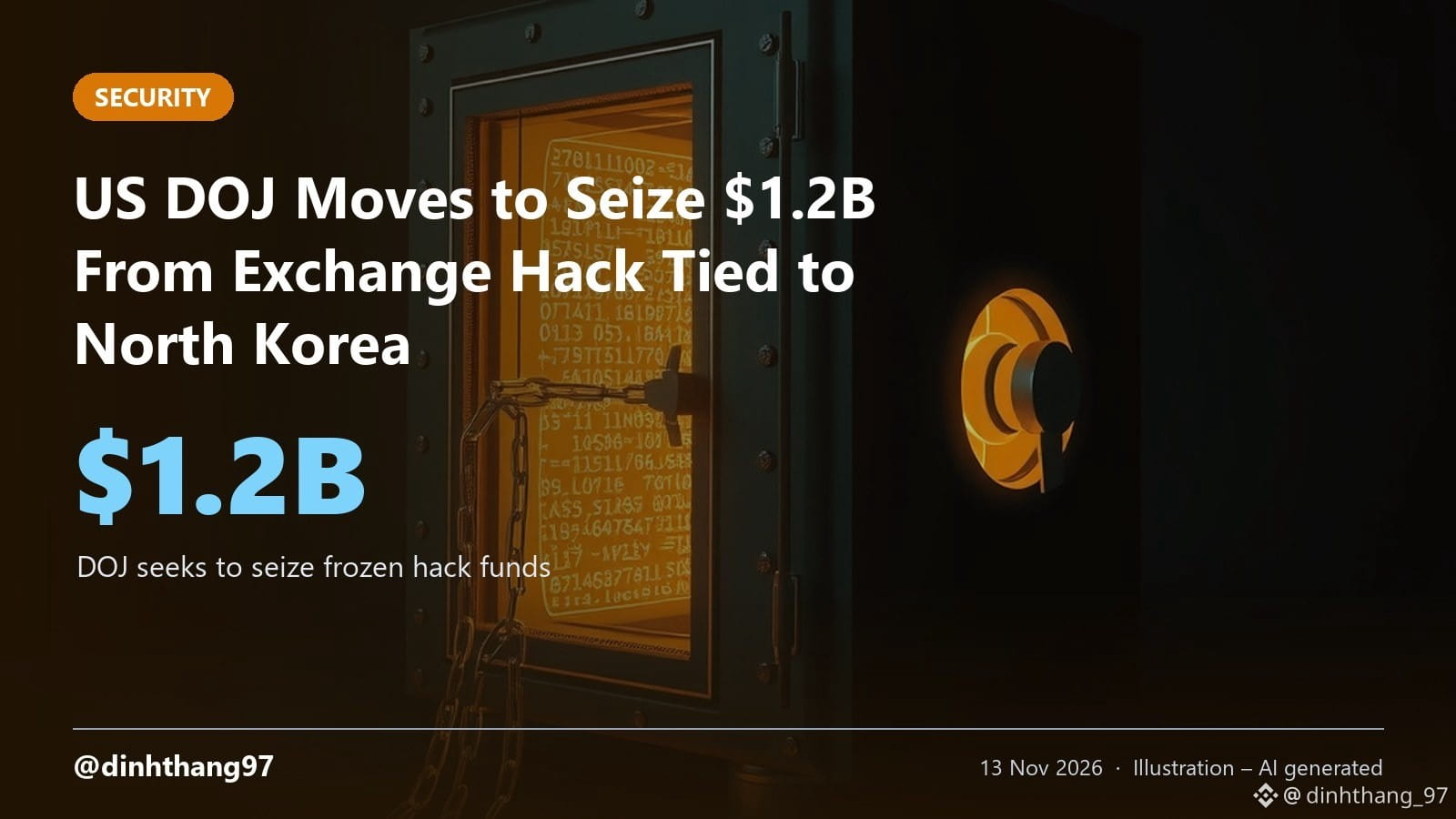
US DOJ Moves to Seize $1.2B From Exchange Hack Tied to North Korea
• DOJ won court authority to seize $1.2B+ frozen after the Oct. 29 exchange hack ($6B+ stolen)
• FBI attributes the attack to a North Korea-linked group; $2.7B+ has been frozen in total
• Separately, agents seized FaceStealer infrastructure: fake Zoom/Teams calls with deepfakes that stole $400M+ in 18 months
Good for recovery, but attackers keep adapting. A "please install this to fix the call" request is the new phishing, so verify contacts on another channel. Not financial advice, DYOR.
#Hack
227

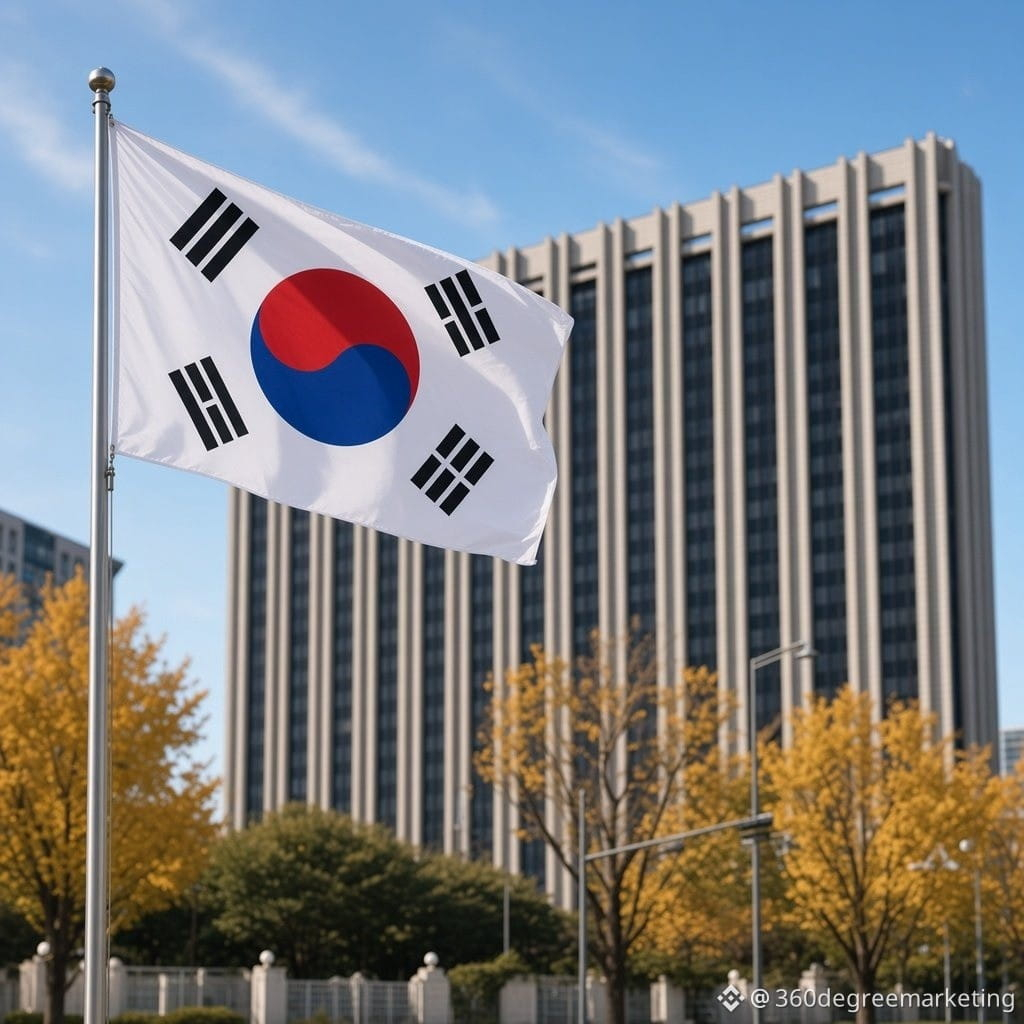
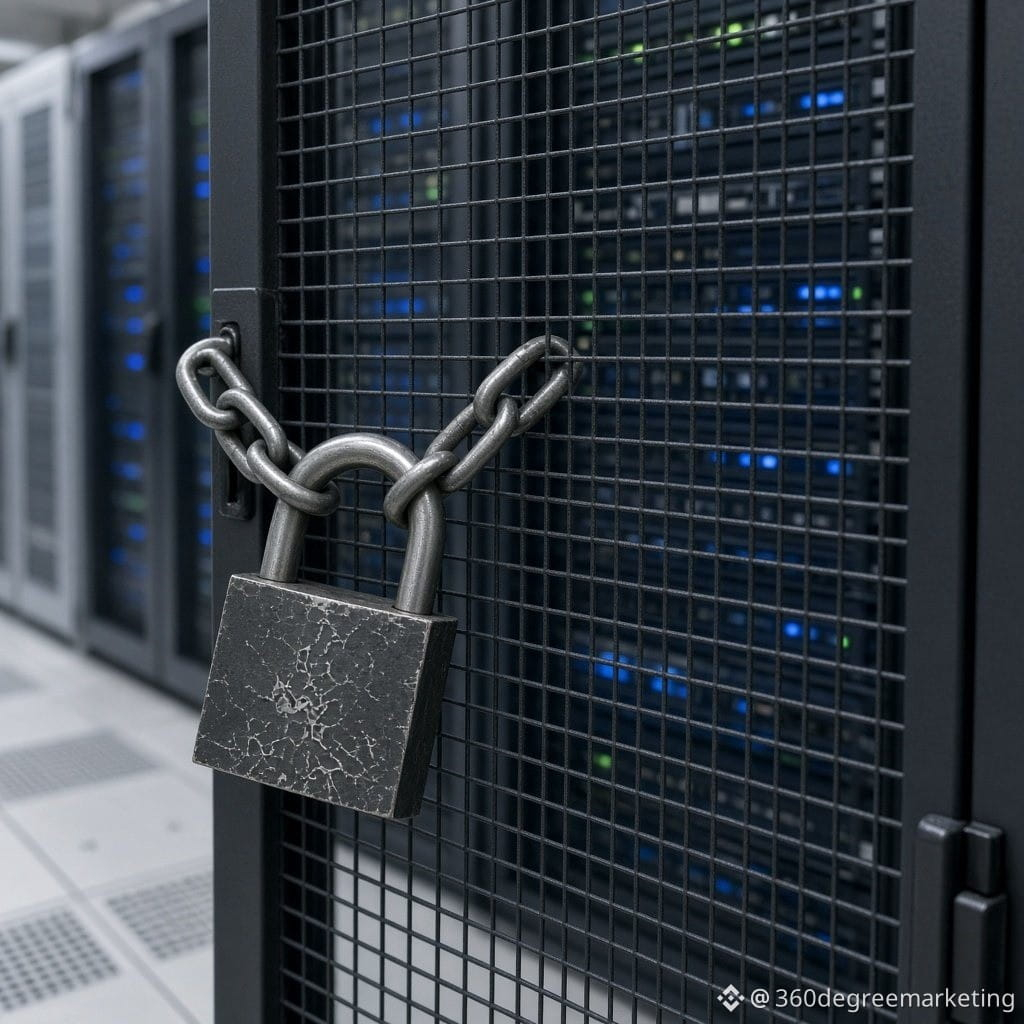
South Korea to Let Crypto Exchanges Freeze Withdrawals When Hacks Are Suspected.
The Financial Services Commission said Thursday it will issue a no-action letter letting exchanges preemptively block deposits and withdrawals when a hack is suspected, since current law allows it
#Crypto #Hack
South Korea to Let Crypto Exchanges Freeze Withdrawals When Hacks Are Suspected.
The Financial Services Commission said Thursday it will issue a no-action letter letting exchanges preemptively block deposits and withdrawals when a hack is suspected, since current law allows it
#Crypto #Hack
The Financial Services Commission said Thursday it will issue a no-action letter letting exchanges preemptively block deposits and withdrawals when a hack is suspected, since current law allows it
#Crypto #Hack
1
16

Do you know these memecoins? Have you seen them before?
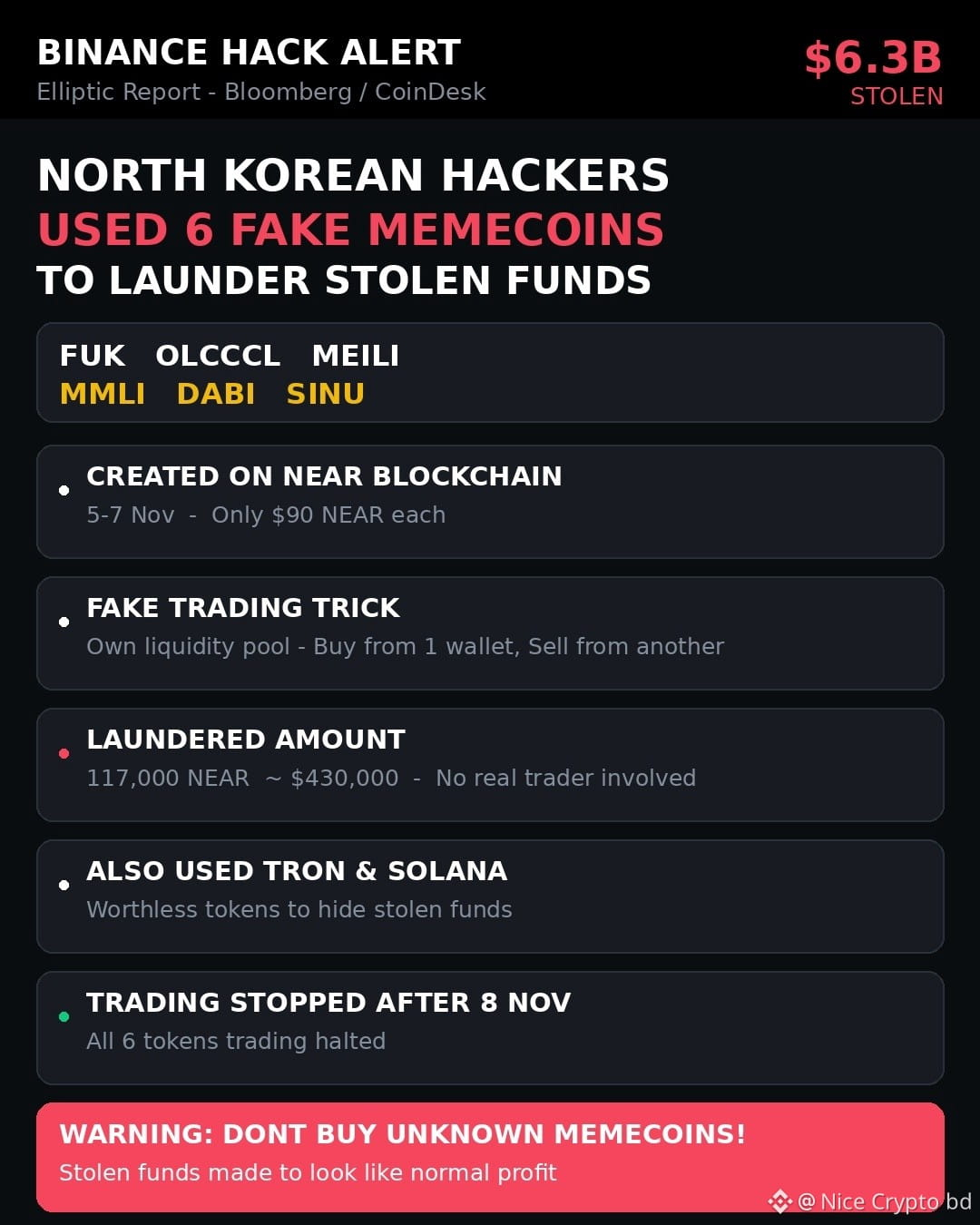
⚡ Shocking! North Korean hackers laundered Binance's $6.3B hack using 6 fake memecoins on $NEAR .
⚡ Tokens: FUK, OLCCCL, MEILI, MMLI, DABI & SINU — created between 5-7 Nov with just $90 worth of NEAR each.
⚡ They made their own liquidity pools, bought with one wallet set & sold from another to fake trading profit.
⚡ Around 117,000 NEAR (∼$430,000) was laundered through these 6 tokens — no real trader was involved.
⚡ They also used Tron & Solana with worthless tokens to hide the stolen funds, says Elliptic report.
⚡ Goal was simple: make stolen crypto look like normal trading profit to fool investigators — Stay safe, don't buy unknown memecoins!
$BNB
#SafeInvestingWithBinance
#Hack
{spot}(BNBUSDT)
{spot}(NEARUSDT)
Do you know these memecoins? Have you seen them before?
⚡ Shocking! North Korean hackers laundered Binance's $6.3B hack using 6 fake memecoins on $NEAR .
⚡ Tokens: FUK, OLCCCL, MEILI, MMLI, DABI & SINU — created between 5-7 Nov with just $90 worth of NEAR each.
⚡ They made their own liquidity pools, bought with one wallet set & sold from another to fake trading profit.
⚡ Around 117,000 NEAR (∼$430,000) was laundered through these 6 tokens — no real trader was involved.
⚡ They also used Tron & Solana with worthless tokens to hide the stolen funds, says Elliptic report.
⚡ Goal was simple: make stolen crypto look like normal trading profit to fool investigators — Stay safe, don't buy unknown memecoins!
$BNB
#SafeInvestingWithBinance
#Hack
2
1.4k

Important update on the October 29 incident.
The U.S. Department of Justice has obtained a court order to seize/freeze more than $1.2 billion in cryptocurrency stolen in the attack on Binance. This is part of more than $2.7 billion in funds already frozen/intercepted.
Key facts to remember:
The attack has been attributed to the North Korean group TraderTraitor
The amount stolen was approximately $6–6.4 billion (the largest in crypto history)
Binance promptly covered all user losses using its own funds and reserves
Withdrawals resumed in phases, and the platform continued operating as usual
The DOJ notes that, together with its partners, it managed to stop approximately half of the stolen funds before they moved further along the chain. Efforts to track and block the remaining assets are ongoing.
For users, this is a sign that even in the face of an attack on this scale, Binance met its obligations to customers and maintained operations.
We’re monitoring further regulatory actions and updates on the recovery of funds.
#crypto #Hack
906
·
--
$891 million in stolen funds transferredAccording to monitoring by Onchain Lens, the Binance hacker has transferred or laundered nearly $900 million in stolen funds. Of the total estimated stolen funds of $6.34 billion: $891.37 million has likely been transferred or laundered; $2.85 billion remains under the hacker’s control; and $2.6 billion has been frozen. Over the past 2 to 3 days, the hacker has been actively moving funds via THORChain and Chainflip.#Binance #Hack $BNB $BTC
$891 million in stolen funds transferred
According to monitoring by Onchain Lens, the Binance hacker has transferred or laundered nearly $900 million in stolen funds. Of the total estimated stolen funds of $6.34 billion: $891.37 million has likely been transferred or laundered; $2.85 billion remains under the hacker’s control; and $2.6 billion has been frozen. Over the past 2 to 3 days, the hacker has been actively moving funds via THORChain and Chainflip.#Binance #Hack $BNB $BTC
801


·
--
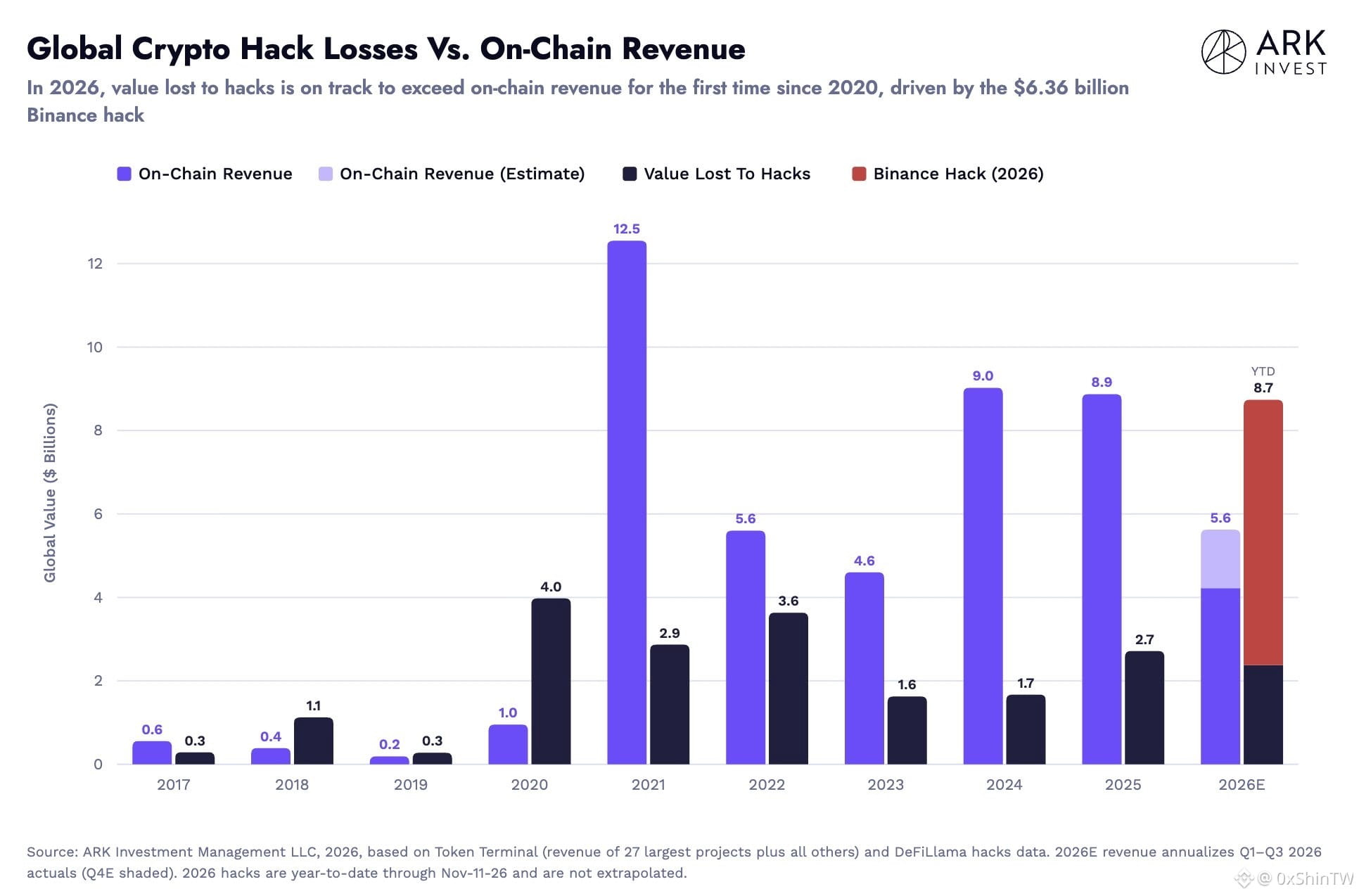
Since 2017, the crypto industry has lost $26.9M to hacks and generated $47M in on-chain revenue.
Which means that for every dollar the industry earns from on-chain transactions, 57 cents are stolen.
The Binance hack alone resulted in losses of $6.36M—more than the total on-chain revenue for all of 2026.
But if you think about it further, the real bottleneck in hacks isn't the security of the technology itself. It's that most people still don't understand or care about keeping their own assets secure.
Security is the bottleneck. And ironically, that's not even counting the rug pulls nobody calls hacks.
#Binance #crypto #Hack #TradingSignals #IndonesiaCrypto
94

Article
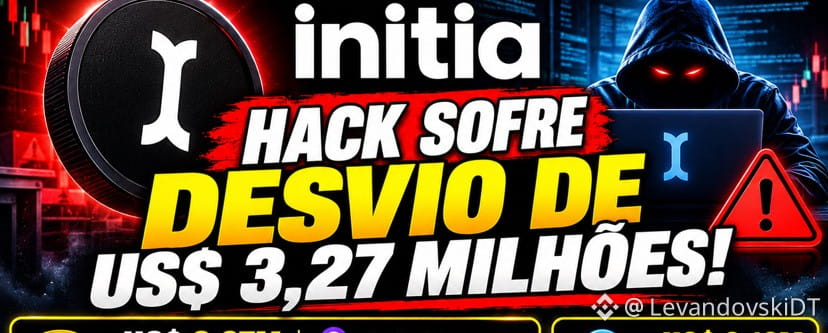
🚨 INITIA SUFFERS AN ATTACK AND LOSES US$ 3.27 MILLION!Initia confirmed a security breach following the compromise of cloud credentials. The attack enabled fraudulent transfers across five Rollups, while another US$ 2.16 million remained temporarily locked on the network.
The team promises to fully replenish the affected reserves and is already working to strengthen security, but there is still no timeline for recovery.
⚠️ Could this incident affect investor confidence in Initia?
I’d like to hear your thoughts!
🚨 INITIA SUFFERS AN ATTACK AND LOSES US$ 3.27 MILLION!
Initia confirmed a security breach following the compromise of cloud credentials. The attack enabled fraudulent transfers across five Rollups, while another US$ 2.16 million remained temporarily locked on the network.
The team promises to fully replenish the affected reserves and is already working to strengthen security, but there is still no timeline for recovery.
⚠️ Could this incident affect investor confidence in Initia?
I’d like to hear your thoughts!
The team promises to fully replenish the affected reserves and is already working to strengthen security, but there is still no timeline for recovery.
⚠️ Could this incident affect investor confidence in Initia?
I’d like to hear your thoughts!
3
3.6k
🚨 ALERT: An ongoing exploit has drained ~$292K from Ankr’s Ethereum bridge, per Blockaid.
#Ethereum $ETH #Hack
🚨 ALERT: An ongoing exploit has drained ~$292K from Ankr’s Ethereum bridge, per Blockaid.
#Ethereum $ETH #Hack
#Ethereum $ETH #Hack
61

·
--
🚨 BREAKING NEWS: North Korean hackers created their own memecoins to launder money from the $6.3 billion Binance hack!
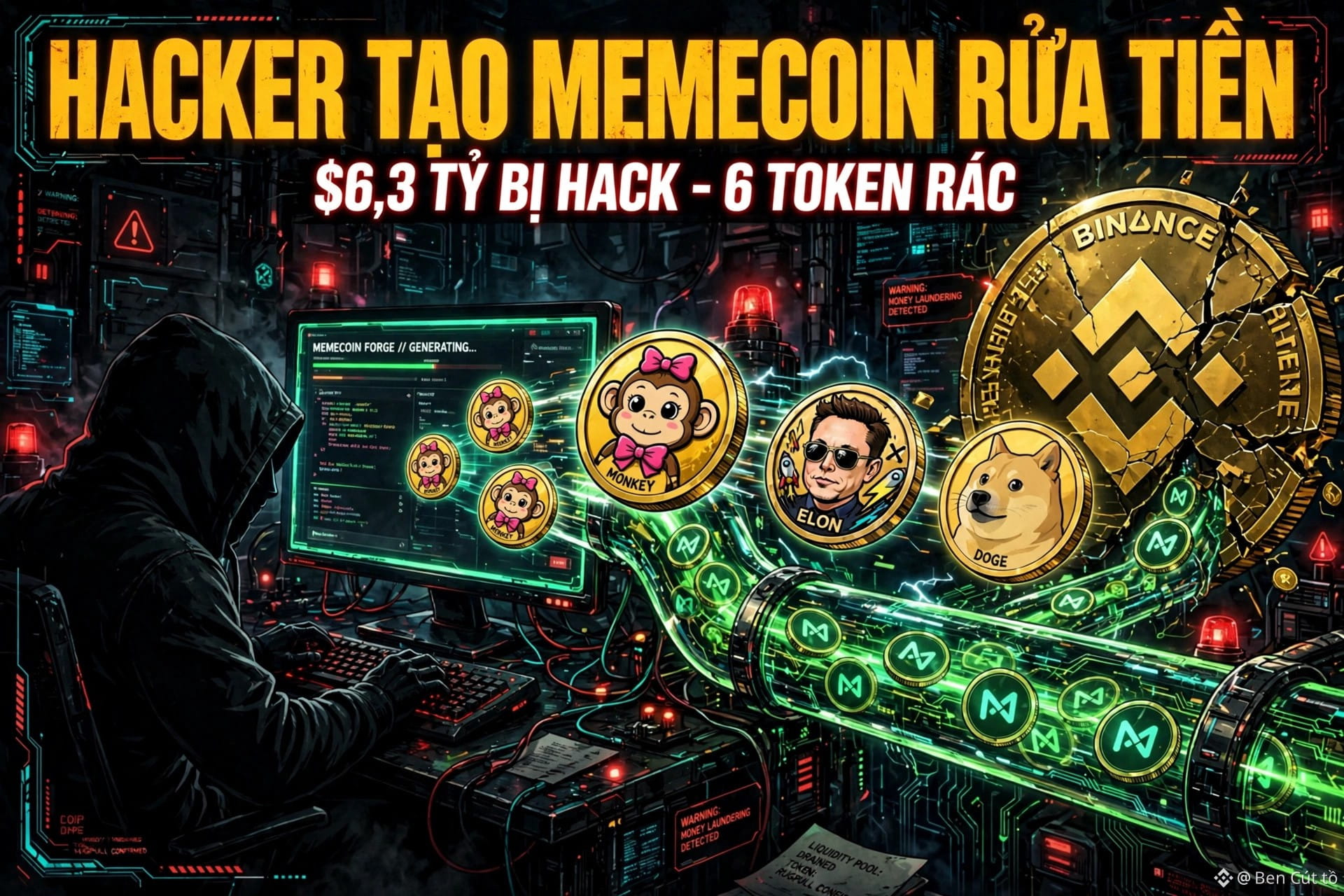
Elliptic has just exposed their latest scheme: from Nov. 5–7, the TraderTraitor group created 6 memecoins on $NEAR —FUK, MEILI, SINU... Each token cost only about $90 to create. Then they bought and sold them among themselves through liquidity pools to turn stolen funds into “trading profits.”
117,000 NEAR (about $430,000) passed through these 6 junk tokens. But this is still less than 0.01% of the total amount stolen — 11.8 million NEAR (about $43.7 million) remains untouched.
Binance $BNB said it has recovered about 98% of the losses. But this homemade memecoin laundering scheme shows that hackers are getting more creative — and more dangerous than ever.
Be careful with unfamiliar memecoins. Follow me — I post here first.
#Binance #Hack #NEAR
Tony Dong 2020:
Đây là đâu ben
1
3
5.9k

·
--
Feed-Creator-77f209622:
последний гвоздь в крышку гроба osmo and cosmos /atom/
1
1
478

·
--
The FBI just named who it blames for the record $6.34B Binance hack: North Korea's TraderTraitor group.
TRM Labs says DPRK-linked hackers have stolen $12.8B in digital assets since 2017.
That means roughly half of all their lifetime haul came from one incident. Security, not price, is the story driving exchange sentiment right now.
Watch for: proof-of-reserves updates, withdrawal behavior, and whether users shift more funds to self-custody.
Do you keep most of your crypto on an exchange or in self-custody? Why?
$BNB $BTC
#Binance #CryptoSecurity #Hack #Square
17
·
--
🚨 BREAKING: Brazil’s BIGGEST crypto exchange just had its hot wallets completely drained!
Mercado Bitcoin froze withdrawals starting Nov 2, after hackers drained 36,042 ETH deposit addresses in just 4.5 hours — with estimated losses of $40–46 million, spanning at least 10 blockchains.
Today, Nov 9, the exchange has reopened... but ONLY for viewing balances. Deposits, withdrawals, and trading are still completely locked, with no reopening date announced. Tether has already managed to freeze more than 4.5 million USDT.
The twist: $BTC barely moved — still hovering around $76,000, just above the 200-day moving average. Has the market become numb to hacks, or is the storm still waiting to break?
The exchange promises to compensate users out of its own pocket. Believe it if you want.
Save this — next time an exchange says “absolute security,” remember this story.
Follow me; I post here first. 🔥
#Bitcoin #Hack

3
3.5k
·
--
#Hack
In Cybersecurity and Computing
A hack is a technique, method, or procedure designed to modify the normal operation of a computer system, device, or program, often to achieve an objective that its creators did not originally or intentionally anticipate.
Hardware and Device Modifications
In the field of electronics and physical devices, a hack refers to adapting or modifying equipment (such as video game consoles, phones, development boards, or household appliances) to unlock hidden features, change the operating system (firmware), or repair components using alternative parts.
Everyday Use: “Lifehacks”
Outside of pure technology, the word became popular as “lifehack,” referring to household tricks, shortcuts, or clever methods that make everyday life more efficient and easier by using resources already on hand.
It is very important to separate myth from reality: the blockchain itself is extremely difficult to hack due to its decentralized and cryptographic structure. However, the crypto ecosystem is surrounded by applications, platforms, and users, and that is where attackers find vulnerabilities to exploit.
Attacks on Exchanges and Centralized Platforms
Although cryptocurrencies are decentralized, millions of users store their money on centralized exchange platforms (exchanges).
Exploitation of “Bridges” (Cross-Chain Bridges)
Bridges are protocols that allow cryptocurrencies to be transferred from one blockchain to another (for example, moving funds from Ethereum to BNB Chain).
Phishing and Theft of Users’ Private Keys
At the individual level, the vast majority of “hacks” do not happen by breaking the network’s security, but by deceiving people.
99

·
--
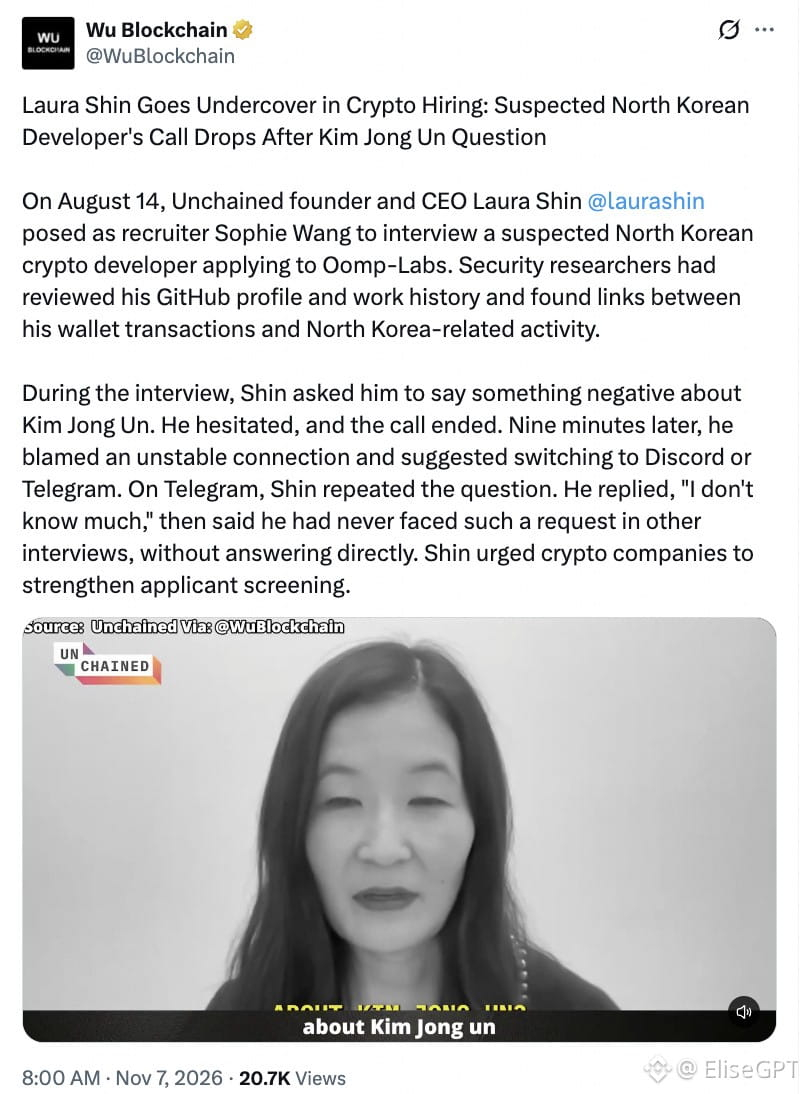
This sounds made up, but it actually happened😂😂
Back in August, Unchained founder Laura Shin posed as a recruiter to interview a suspected North Korean crypto developer.
During the interview, she asked him to say something negative about Kim Jong Un. He stumbled over his words, then the call cut out. Afterward, he kept coming up with excuses to avoid answering.
So is “say something bad about Kim Jong Un” about to become a standard question in remote job interviews? 🤣 The new screening test for North Korean hackers, lol #AI #Hack

User-6279aa89:
Follow me and I’ll follow you back; let’s grow together on Binance Square. newbies
8
51
46.5k

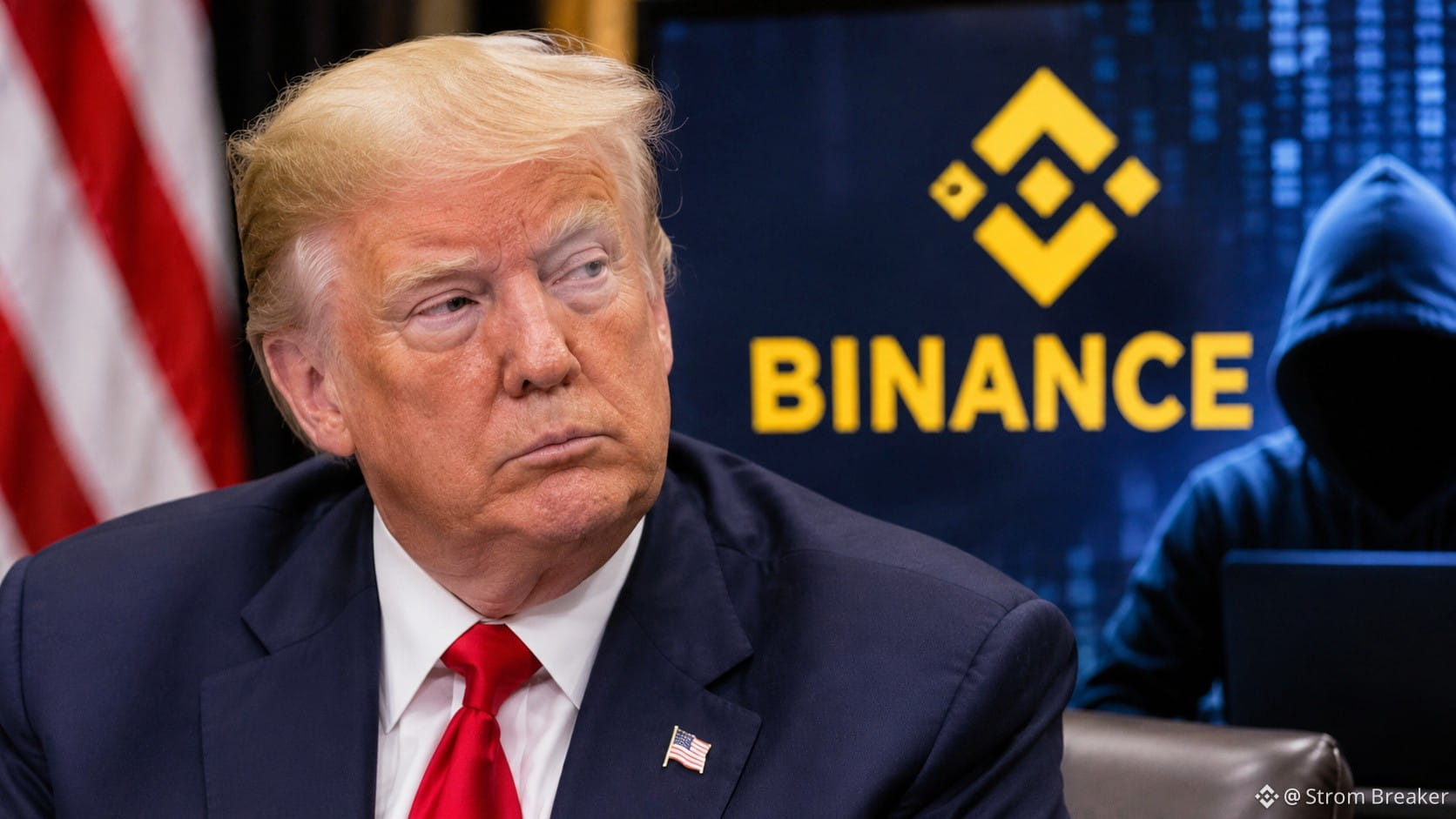
Trump Responds to Binance Hack Investigation
U.S. President Donald Trump is reportedly looking into the recent Binance hack, according to Bloomberg.
The development brings additional attention to the security incident and could raise questions about crypto exchange security, cybersecurity risks, and the protection of digital assets.
As the situation develops, the market will be watching closely for further details and any potential regulatory response.
Crypto security remains a major issue for the industry.
#Binance / #Hack / #TRUMP
2
806
Log in to explore more content
Join global crypto users on Binance Square
⚡️ Get latest and useful information about crypto.
💬 Trusted by the world’s largest crypto exchange.
👍 Discover real insights from verified creators.
Email / Phone number
Trending Topics
1
#WhoWillSucceedJensenHuangatNvidia?
81,433 views
1,108 Discussing
2
#WhatWillDriveCryptoandStocks’NextRebound?
431,655 views
3,015 Discussing
3
#BitcoinActiveSupplyInProfitDropsBelow45%
21,738 views
330 Discussing
4
#KavaSaysAbnormalActivityLimitedToKavaLend
8,507 views
166 Discussing
5
#USSpotXRPETFsSeeLargestWeeklyOutflowIn8Months
7,720 views
159 Discussing
6
#USPPIMissMayEaseBTCPressure
206,752 views
2,041 Discussing
7
#WORPTLetsTouristsConvertCryptoToThaiBaht
2,550 views
49 Discussing
8
#TONStrategyReports$23.97MQ3NetLoss
3,193 views
41 Discussing
9
#PolkadotCommunityApprovesNewStrategyWith97%Vote
18,626 views
242 Discussing
10
#dYdXPlansV9.9UpgradeToShiftUSDCToInjective
11,380 views
195 Discussing