
#aster
aster
15.4M views
30,592 Discussing
Hot
Latest

·
--
Looking for your next trade execution? $ASTER has aligned into a structured long setup with defined target zones.
⚡ $ASTER — LONG SETUP
📍 Entry: 0.623403 – 0.627181
🎯 TP1: 0.634738
🎯 TP2: 0.639775
🎯 TP3: 0.647332
🛑 Stop Loss: 0.619625
Trade here 👇
📌 Trade management rules: see pinned post.
What's your take on $ASTER at these levels? Drop your thoughts below and follow for more trade setups!
#WriteToEarn #ASTER #CryptoTrading #BinanceSquare #Crypto
2
345

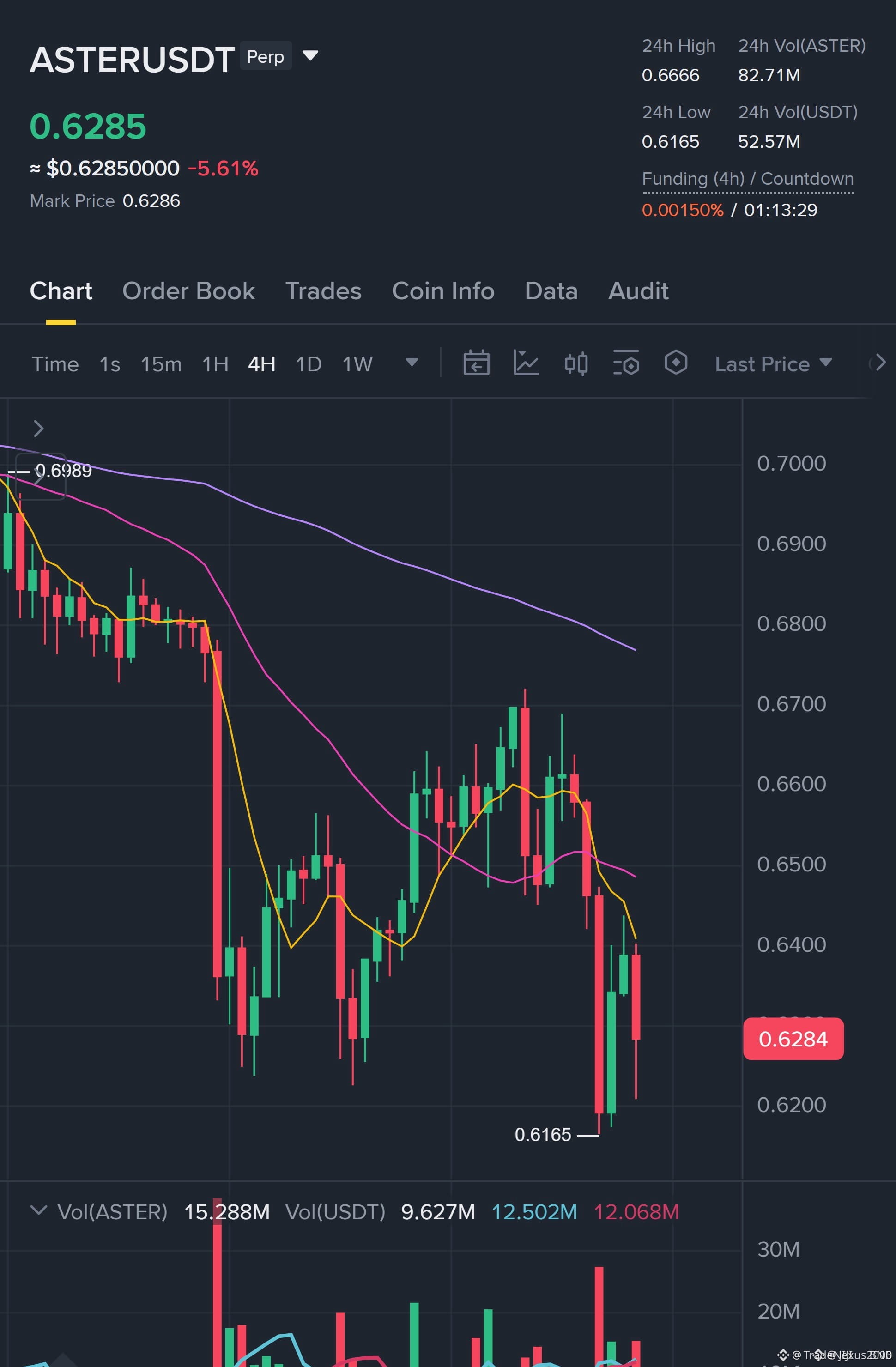
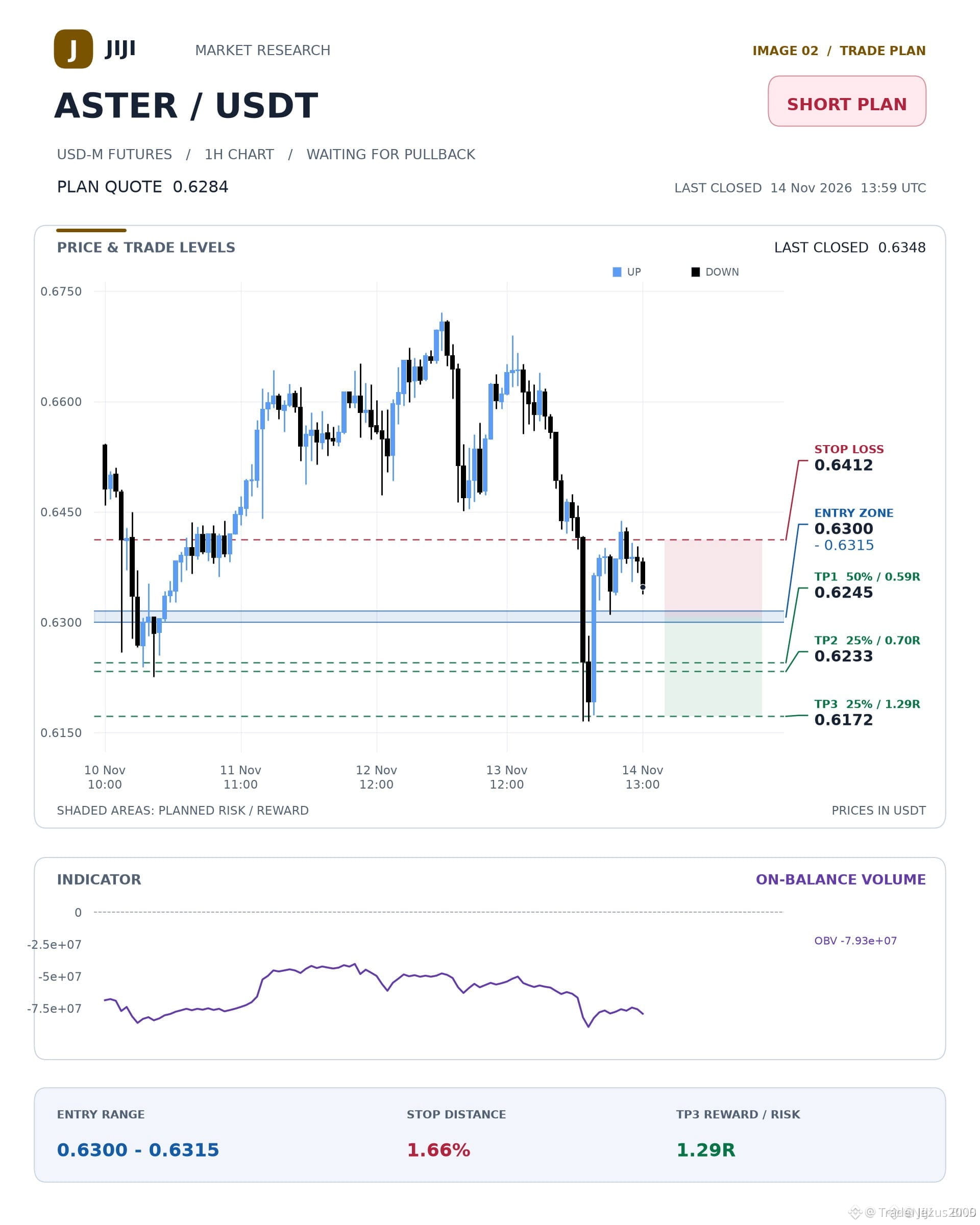
🔴 $ASTER SHOWING BEARISH EMA STACK AS SMART MONEY TARGETS LOWER LIQUIDITY ZONES 📉
Entry: 0.63 - 0.6315 ⚡
Target: 0.6172 🚀
Stop Loss: 0.6412 ⚠️
The four-hour and one-hour moving average stacks remain firmly bearish, reflecting persistent institutional distribution. 📊 With the one-hour relative strength index hovering around forty-one and directional indicators confirming downside momentum, price is drifting into our optimal entry zone. ⚡ We are watching for a confirmed fifteen-minute candle close before execution, minding potential support interference near the lower swing levels. 📌
💬 Are you positioning for this continuation down to the lower targets, or waiting for a deeper structural sweep? 👇
⚠️ Not financial advice. Always manage your risk. 🛡️
🏷️ #ASTER #ShortSetup #Crypto #PriceAction
📉 🦈
3

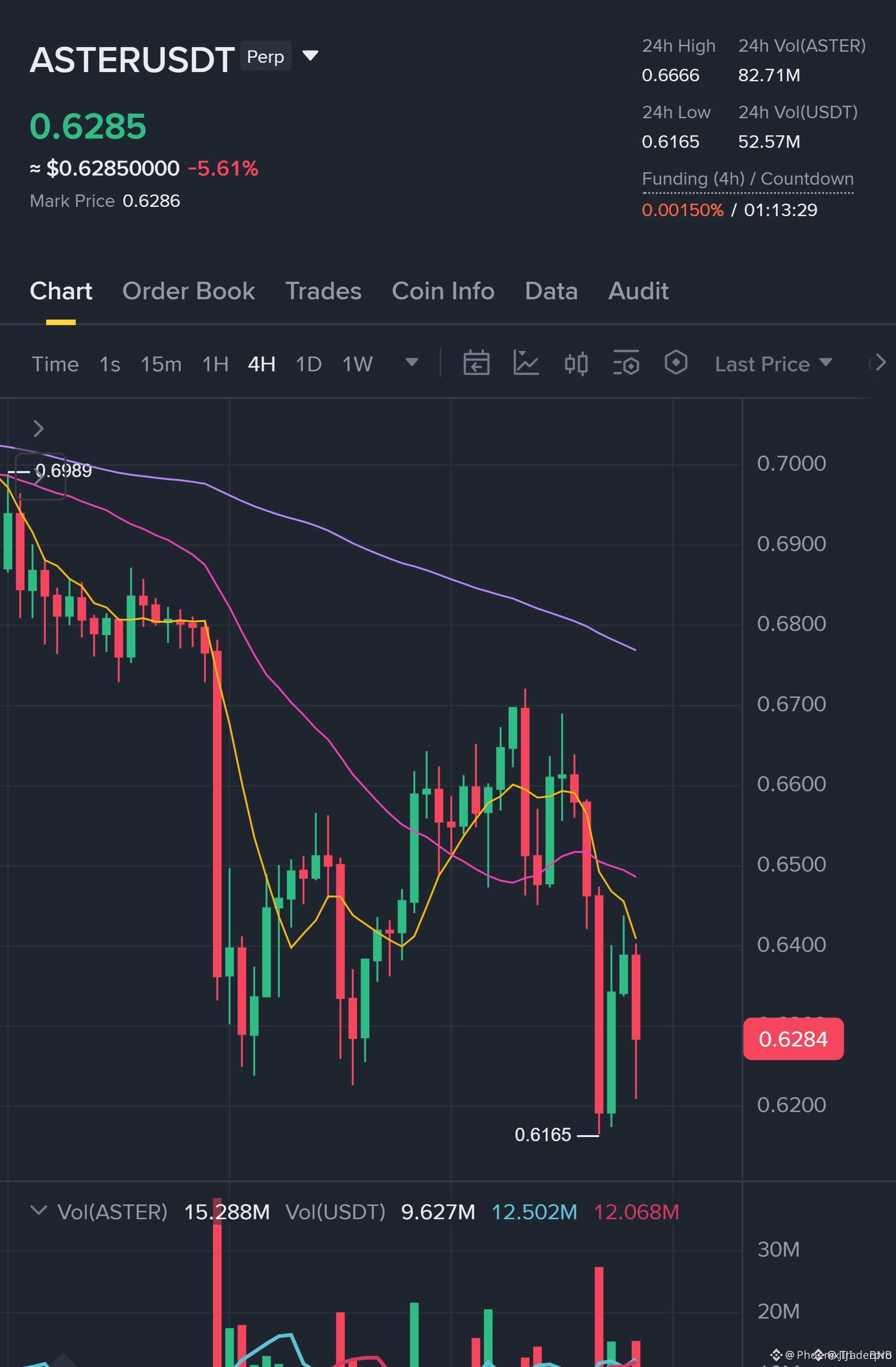
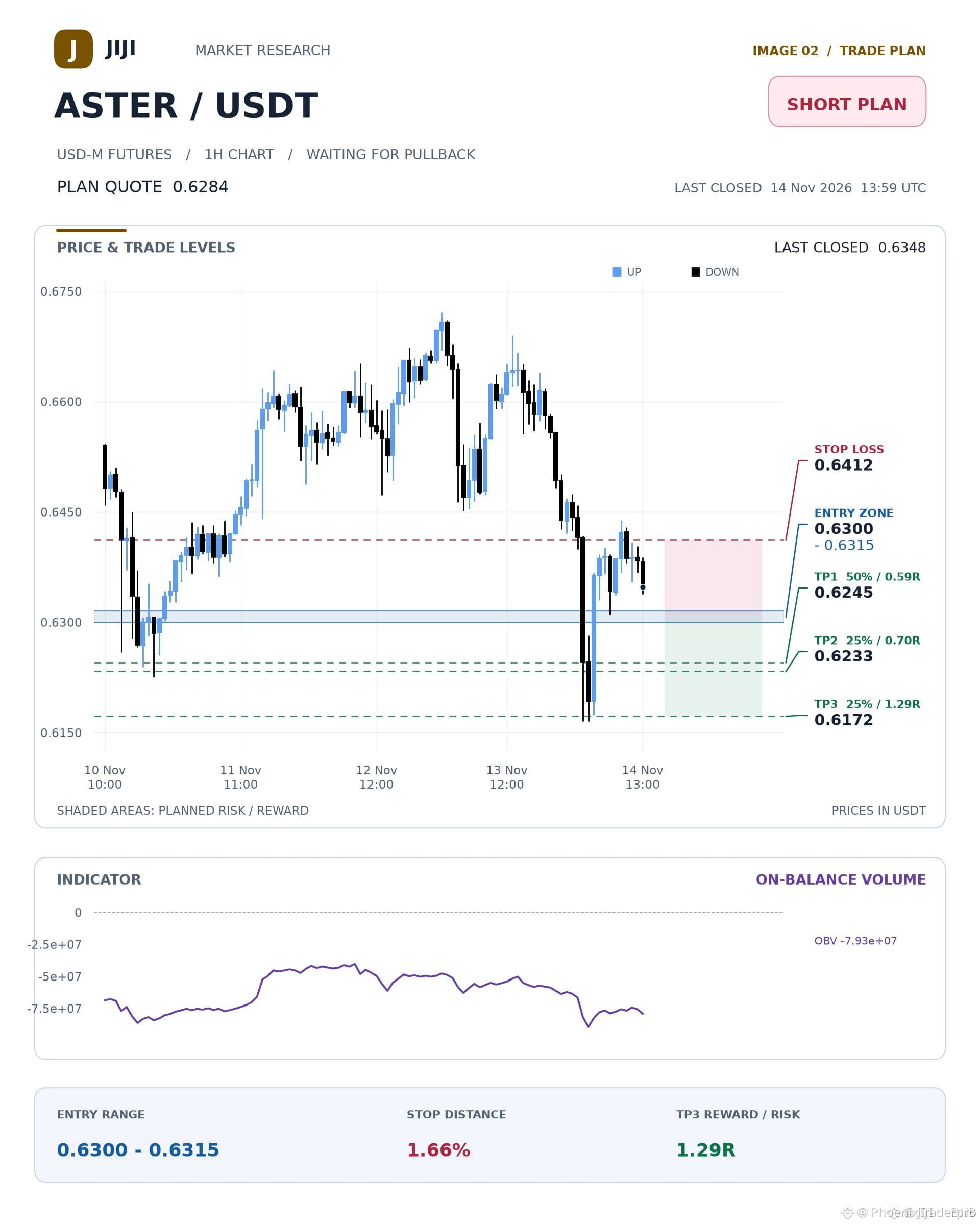
🔴 $ASTER BEARS ARE LINING UP FOR A CLEAN PULLBACK ENTRY INTO RESISTANCE! 📉
Entry: 0.63 – 0.6315 ⚡
Target: 0.6172 🚀
Stop Loss: 0.6412 ⚠️
The four-hour chart is firmly locked in a bearish exponential moving average stack, keeping sellers firmly in the driver seat. Momentum indicators on the lower timeframes confirm persistent downside pressure as price drifts toward our inflection zone. 📊
We are patiently waiting for a retest into the upper boundary and a confirmed fifteen-minute candle closure before committing capital. Watch out for intermediate support clusters near the lows that could temporarily stall momentum before reaching the final objective. ⚡
Are you fading this relief bounce immediately or waiting for confirmation on the lower timeframe? 🤔
⚠️ Not financial advice. Always manage your risk. 🛡️
🏷️ #ASTER #ShortSetup #CryptoTrading #MarketPullback
📉 🦈
20


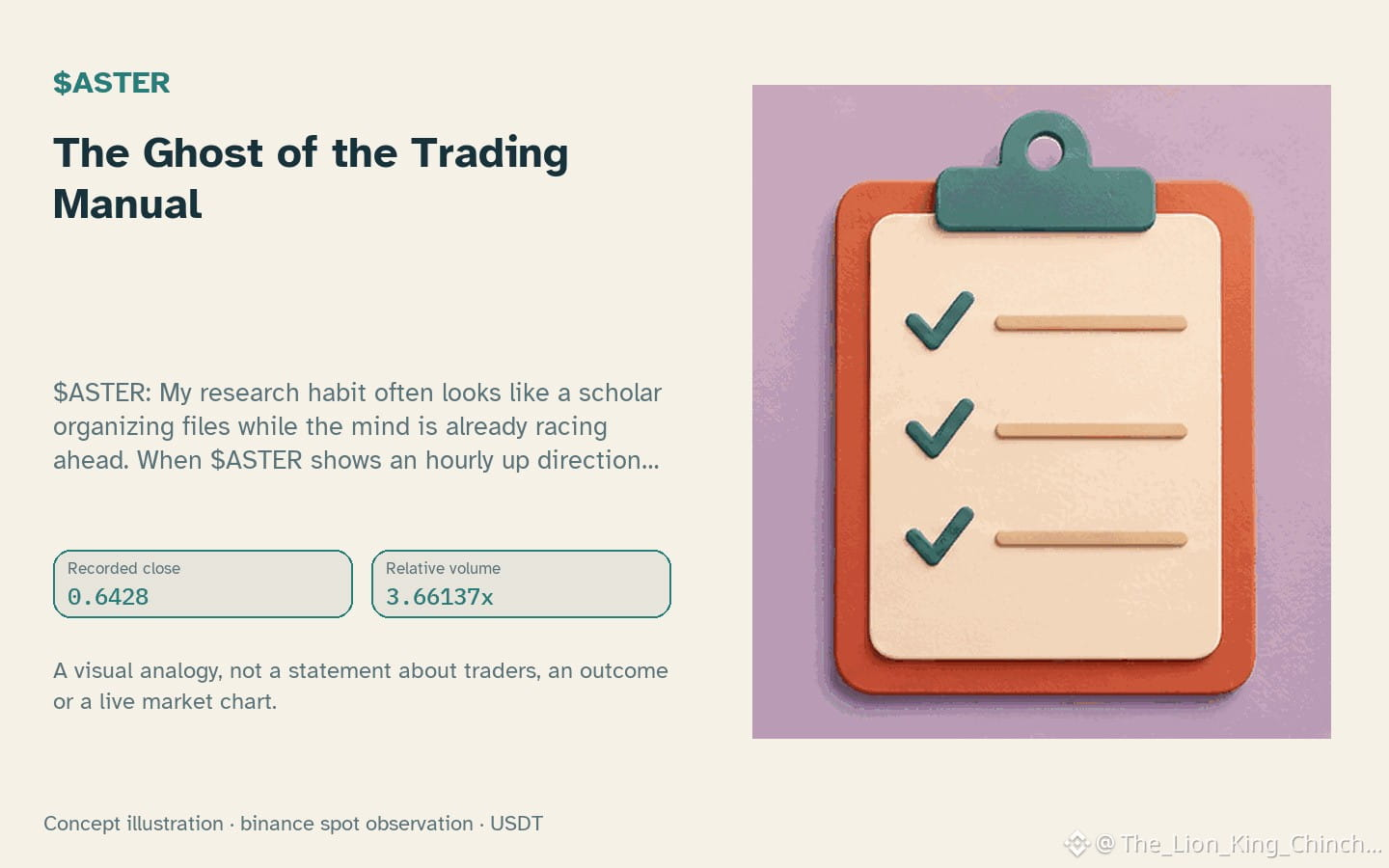
$ASTER: The Ghost of the Trading Manual
$ASTER: My research habit often looks like a scholar organizing files while the mind is already racing ahead. When $ASTER shows an hourly up direction with volume above its baseline, it is tempting to imagine the checklist is already finished. In this hypothetical scenario, the excitement takes the car keys while the actual rules stay behind on the desk. This tension between a calm watchlist and a rushing pulse is where most research errors begin.
Consider the mechanism of a fast candle. A sudden move above resistance 0.6412 might look like a clear signal, but it could also be a temporary deviation without a closed-candle foundation. A useful rule is to wait for the candle to close to verify the strength of the move. If the RSI 61.3 is already high, the shortcut of entering early ignores the possibility of a mean reversion. Daily change -2.98823% provides context, yet it does not guarantee the next hour follows the same path.
Where the analogy fails is in assuming every fast move is an error. A move could sustain, but the risk is unmeasured without the checklist. One way to reassess is to watch if the price returns below 0.6412. If the candle closes back within the previous range, the initial move may lack the volume support 3.66x baseline to maintain its trajectory.
Probabilistic market research, not a recommendation or guaranteed return.
Watchlist contrast: $BTC has hourly direction up and volume above its baseline; $NIGHT has hourly direction up and volume above its baseline. This alone does not establish correlation.
A useful rule or a familiar shortcut?
#ASTER #BTC #NIGHT #LearnCrypto #CryptoLearning
$ASTER : The Ghost of the Trading Manual
$ASTER : My research habit often looks like a scholar organizing files while the mind is already racing ahead. When $ASTER shows an hourly up direction with volume above its baseline, it is tempting to imagine the checklist is already finished. In this hypothetical scenario, the excitement takes the car keys while the actual rules stay behind on the desk. This tension between a calm watchlist and a rushing pulse is where most research errors begin.
Consider the mechanism of a fast candle. A sudden move above resistance 0.6412 might look like a clear signal, but it could also be a temporary deviation without a closed-candle foundation. A useful rule is to wait for the candle to close to verify the strength of the move. If the RSI 61.3 is already high, the shortcut of entering early ignores the possibility of a mean reversion. Daily change -2.98823% provides context, yet it does not guarantee the next hour follows the same path.
Where the analogy fails is in assuming every fast move is an error. A move could sustain, but the risk is unmeasured without the checklist. One way to reassess is to watch if the price returns below 0.6412. If the candle closes back within the previous range, the initial move may lack the volume support 3.66x baseline to maintain its trajectory.
Probabilistic market research, not a recommendation or guaranteed return.
Watchlist contrast: $BTC has hourly direction up and volume above its baseline; $NIGHT has hourly direction up and volume above its baseline. This alone does not establish correlation.
A useful rule or a familiar shortcut?
#ASTER #BTC #NIGHT #LearnCrypto #CryptoLearning
35

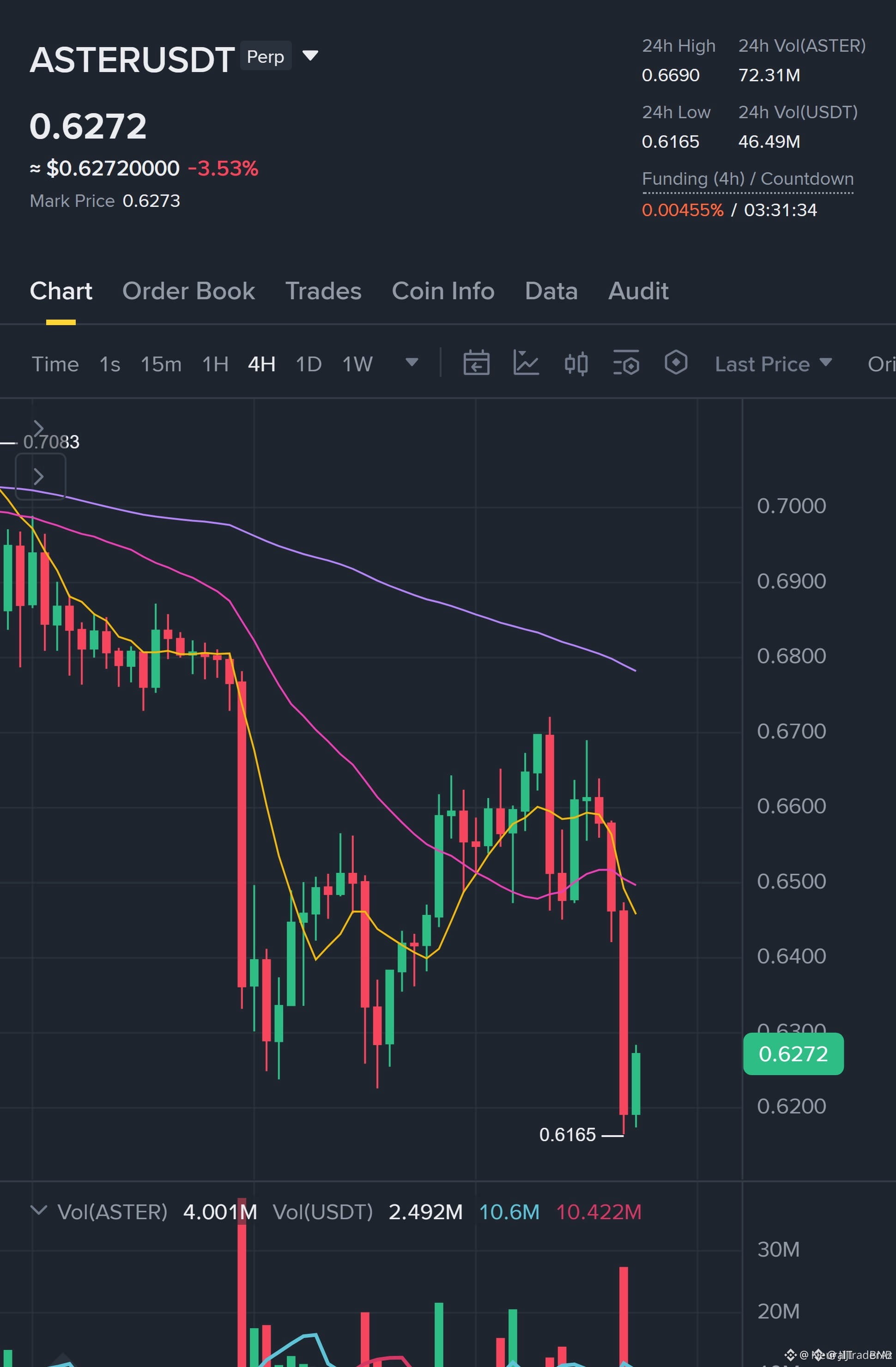
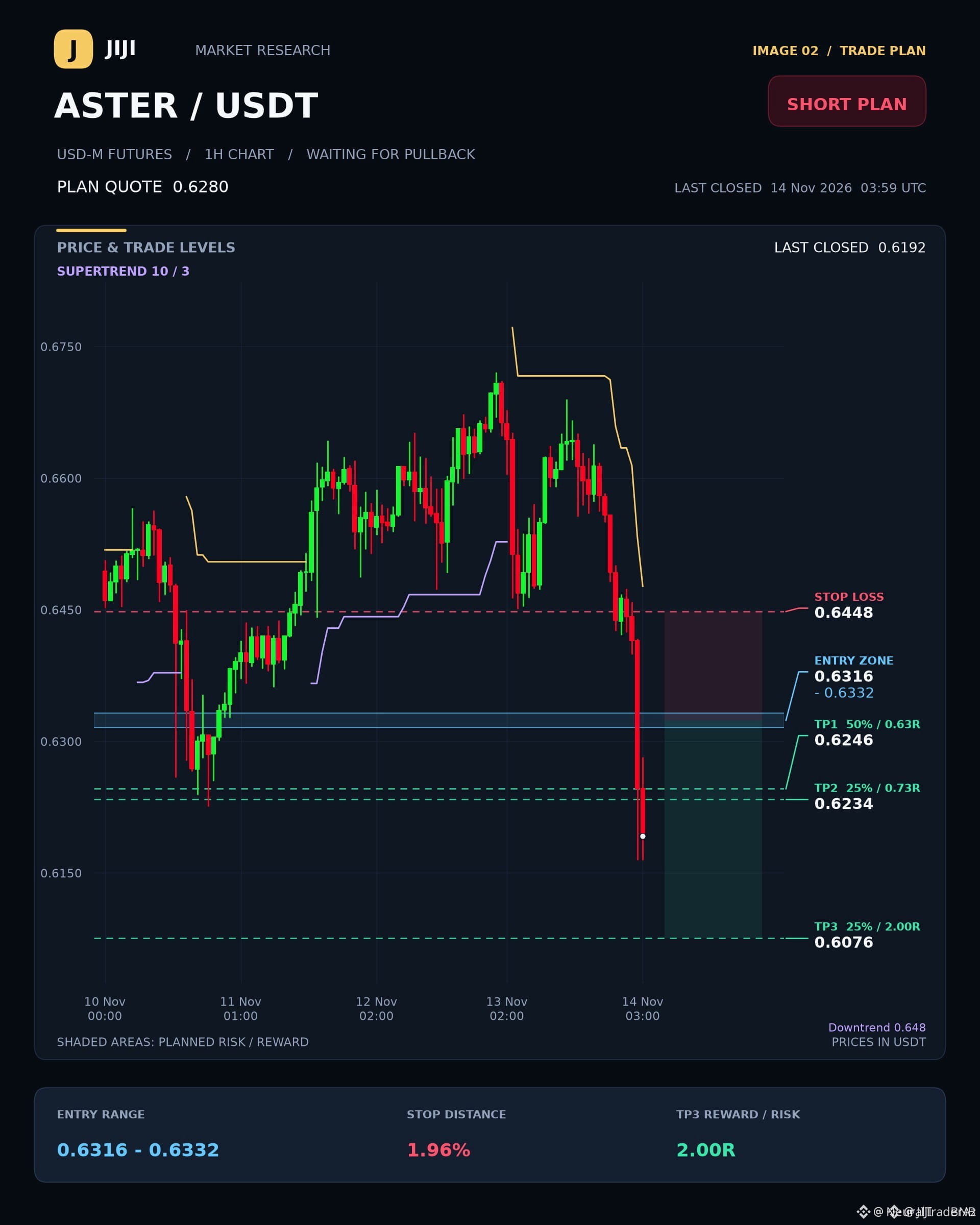
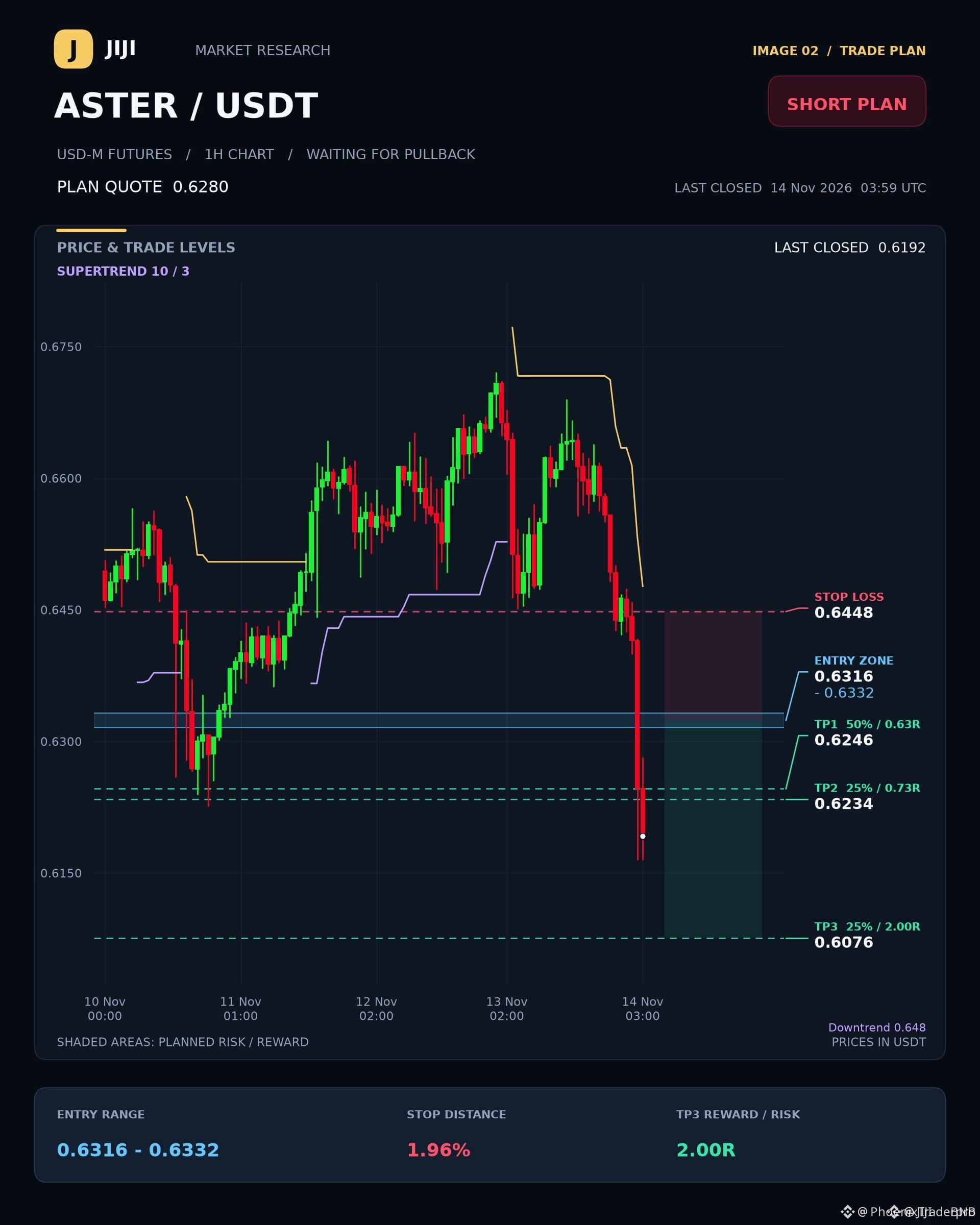
🔴 $ASTER NEARING A CRITICAL DISTRIBUTION BLOCK AS MOMENTUM EXPANDS 📉
Entry: 0.6316 – 0.6332 ⚡
Target: 0.6246 🚀
Stop Loss: 0.6448 ⚠️
Price action is currently extended, sitting 4.2 ATR below the 1h EMA50, which introduces the probability of an intermediate mean reversion bounce before structural continuation. 📊
We are waiting for a confirmed closed 15m candle inside the designated supply zone before committing institutional capital to this short thesis. 🔍
💬 Are you anticipating an immediate rejection off this resistance zone or waiting for the reclaim test? 👇
⚠️ Not financial advice. Always manage your risk. 🛡️
🏷️ #ASTER #ShortSetup #Derivatives #OrderFlow
🦈 📉
5

·
--
Verified
🔥 ASTER Just Got Its First WLFI Buyback — 21 Million Tokens Purchased!
Aster is gaining attention after World Liberty Financial reportedly completed its first WLFI buyback through Aster DEX.
Here's what happened:
• Around 21 million WLFI tokens were purchased in less than 72 hours.
• The purchases were made through Aster using a public BNB Chain wallet.
• The wallet previously received a $10 million USD1 deposit.
• The reported purchases were worth roughly $1 million.
• WLFI has not announced a fixed budget or schedule for future buybacks.
Why it matters: Aster is becoming part of a major project's buyback activity. However, these are WLFI purchases, not ASTER buybacks.
Can this bring more attention and activity to Aster DEX?
$ASTER
{future}(ASTERUSDT)
.
.
.
#Aster #DeFi
Not financial advice. DYOR.
🔥 ASTER Just Got Its First WLFI Buyback — 21 Million Tokens Purchased!
Aster is gaining attention after World Liberty Financial reportedly completed its first WLFI buyback through Aster DEX.
Here's what happened:
• Around 21 million WLFI tokens were purchased in less than 72 hours.
• The purchases were made through Aster using a public BNB Chain wallet.
• The wallet previously received a $10 million USD1 deposit.
• The reported purchases were worth roughly $1 million.
• WLFI has not announced a fixed budget or schedule for future buybacks.
Why it matters: Aster is becoming part of a major project's buyback activity. However, these are WLFI purchases, not ASTER buybacks.
Can this bring more attention and activity to Aster DEX?
$ASTER
.
.
.
#Aster #DeFi
Not financial advice. DYOR.

1
772
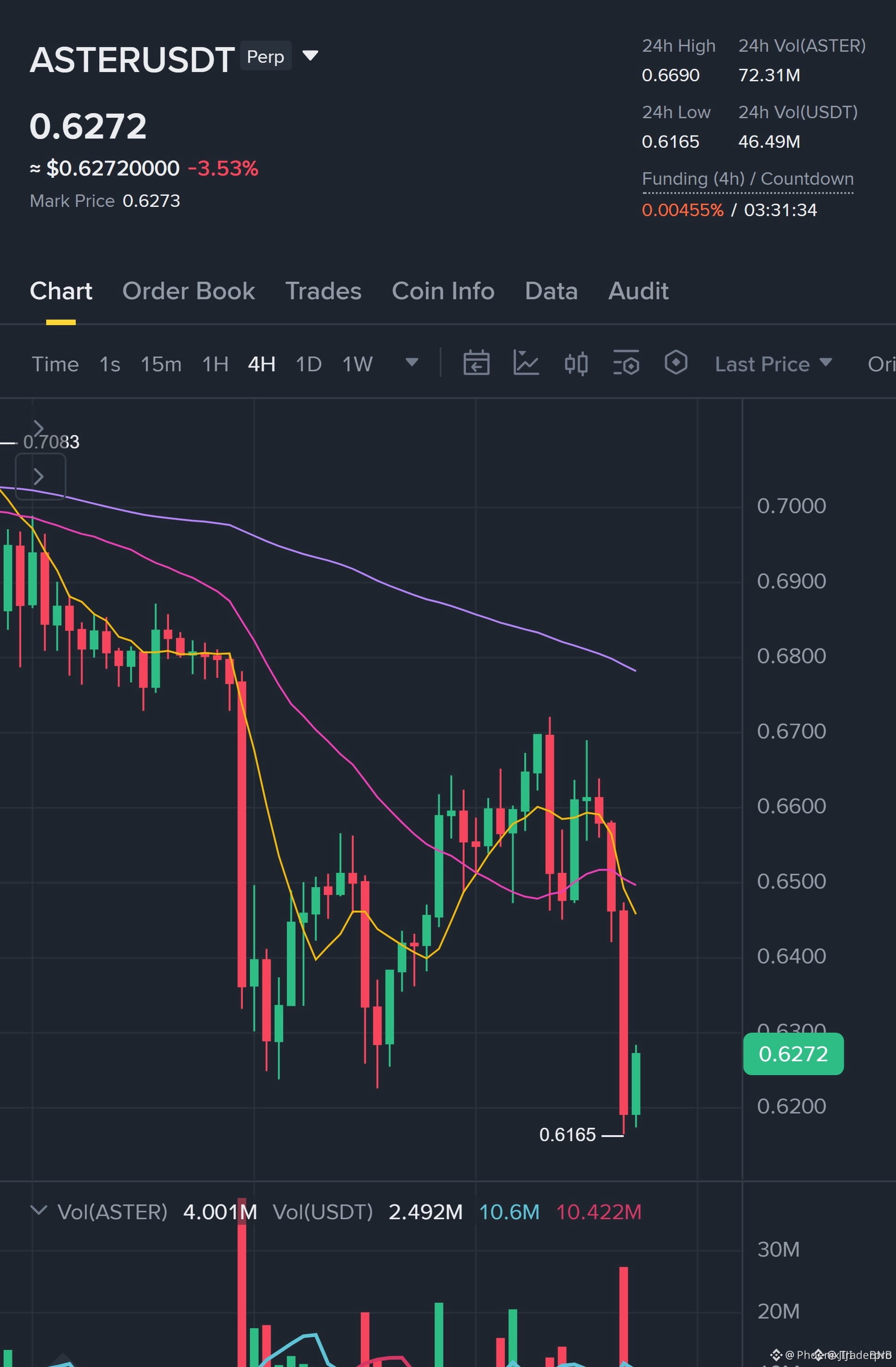
🔴 $ASTER SITTING 4.2 ATR BELOW EMA50 AS BEARS TIGHTEN THE GRIP! 📉
Entry: 0.6316 - 0.6332 ⚡
Target: 0.6246 🚀
Stop Loss: 0.6448 ⚠️
📊 Price action shows extreme stretch with the 1h timeframe sitting deep below the key moving average, signaling that a relief bounce could precede continuation. ⚡
🔍 Smart money is watching closely for a confirmed 15-minute candle close inside the zone to validate institutional order flow before committing capital. 📌
💬 Are you fading the initial counter-trend bounce or waiting for structural confirmation to join the downside wave? 👇
⚠️ Not financial advice. Always manage your risk. 🛡️
🏷️ #ASTER #ShortSetup #Crypto #PriceAction #Trading
📉 🦈
6
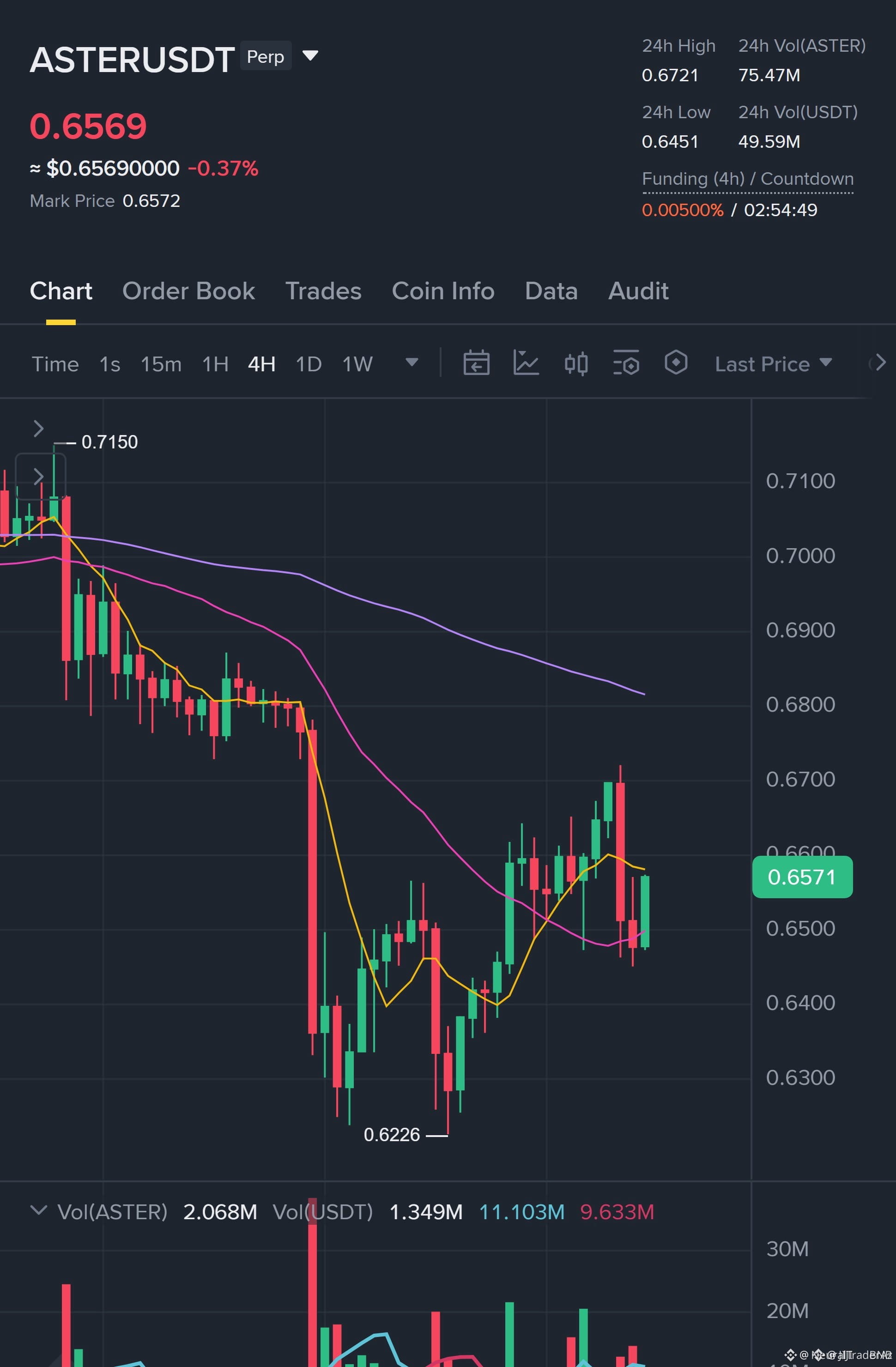
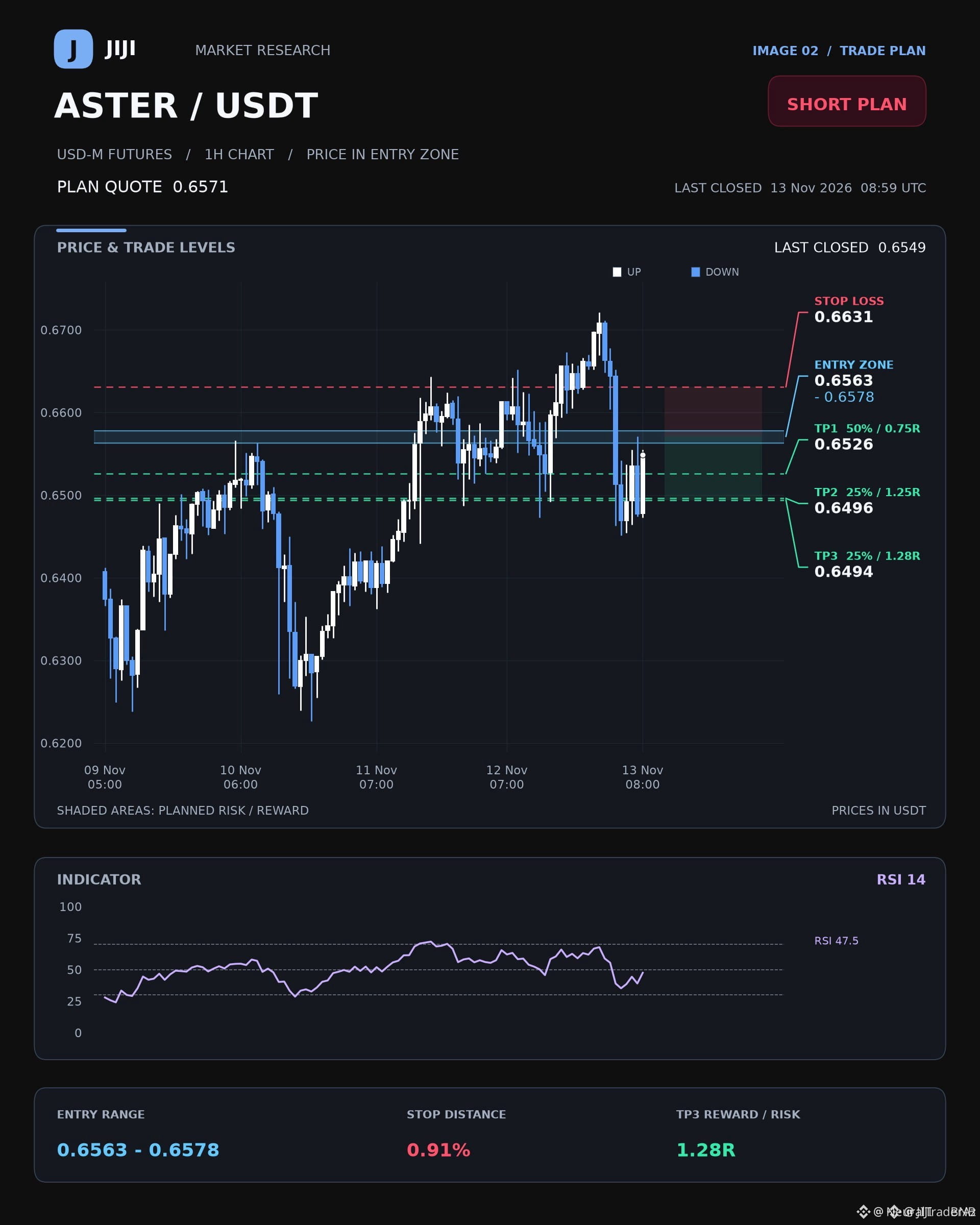
🐻 $ASTER BEARISH EMA STACK PRESSURES RESISTANCE AS SMART MONEY HUNTS LIQUIDITY 📉
Entry: 0.6563 ⚡
Target: 0.6494 🎯
Stop Loss: 0.6631 ⚠️
The four-hour structure exhibits a clean bearish EMA stack with the fifty and two hundred periods aligning downward, while fifteen-minute directional indicators confirm persistent selling pressure beneath the premium zone. 📊
Although minor friction exists near initial targets due to execution costs, the overarching order flow clearly favors distribution as momentum metrics like ADX validate trend strength. ⚡
Are you waiting for a confirmed candle closure below the recent swing low before initiating short exposure? 🤔
⚠️ Not financial advice. Always manage your risk. 🛡️
🏷️ #ASTER #ShortSetup #CryptoFutures #MarketStructure
🦈 📉
16

·
--
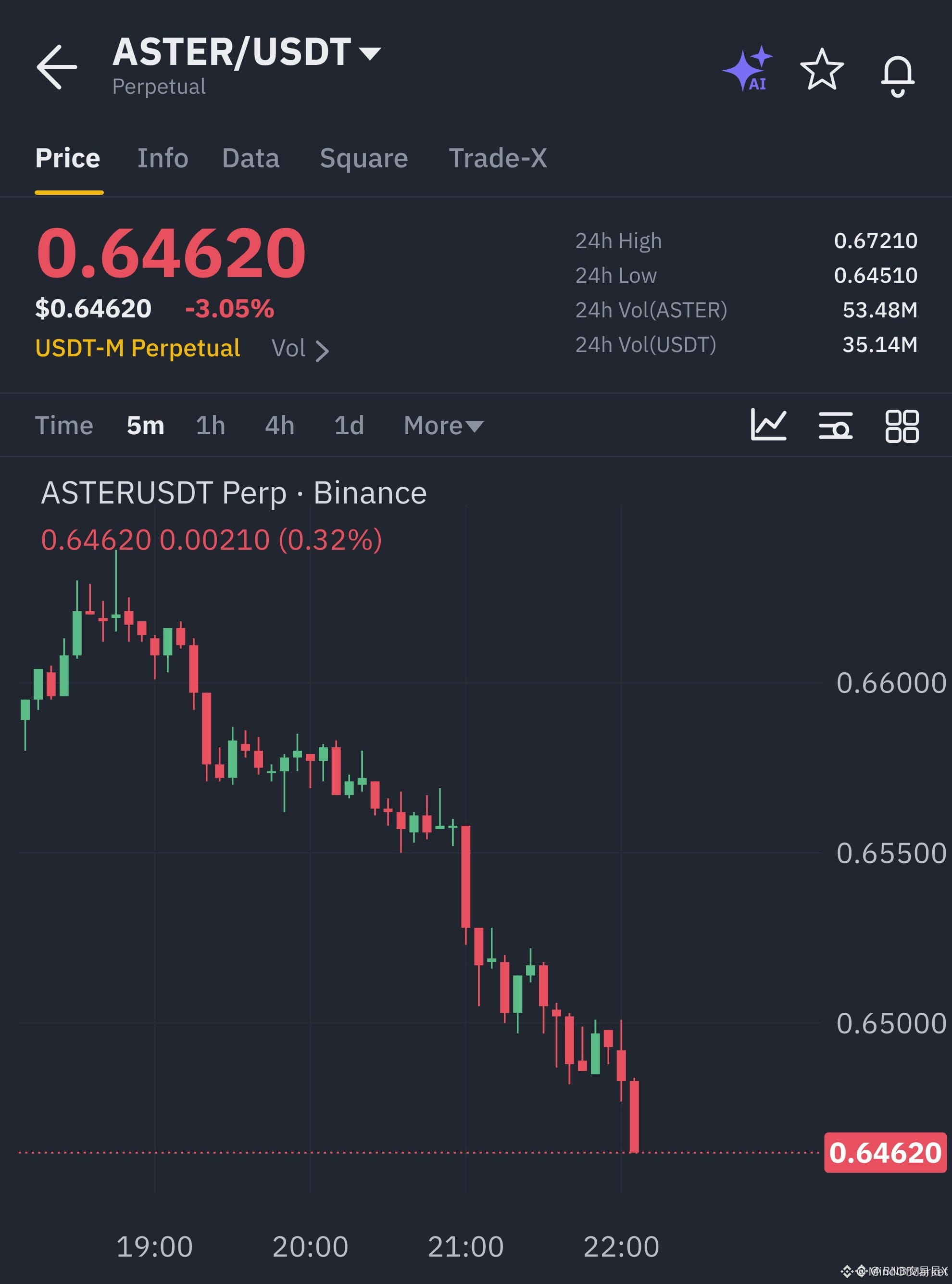
🦈 $ASTER SHORT LIQUIDITY SWEEP EXECUTED CLEANLY AS ALL TARGETS SECURED! 🎯
Entry: 0.652100 ⚡
Target: 0.647240 🚀
Institutional order flow dictated this move as sell-side liquidity beneath the range was systematically hunted. Price cleanly delivered into the final inefficiencies, validating the bearish market structure breakdown. 📊
While broader altcoin tracking across $INJ and $NEAR shows consolidating behavior, this distribution phase on $ASTER played out textbook style. 💡
💬 Did you capture this downward expansion or were you caught on the wrong side of the order book? 👇
⚠️ Not financial advice. Always manage your risk. 🛡️
🏷️ #ASTER #ShortSetup #SmartMoney #LiquidityHunt
🦈 🔒
3
·
--
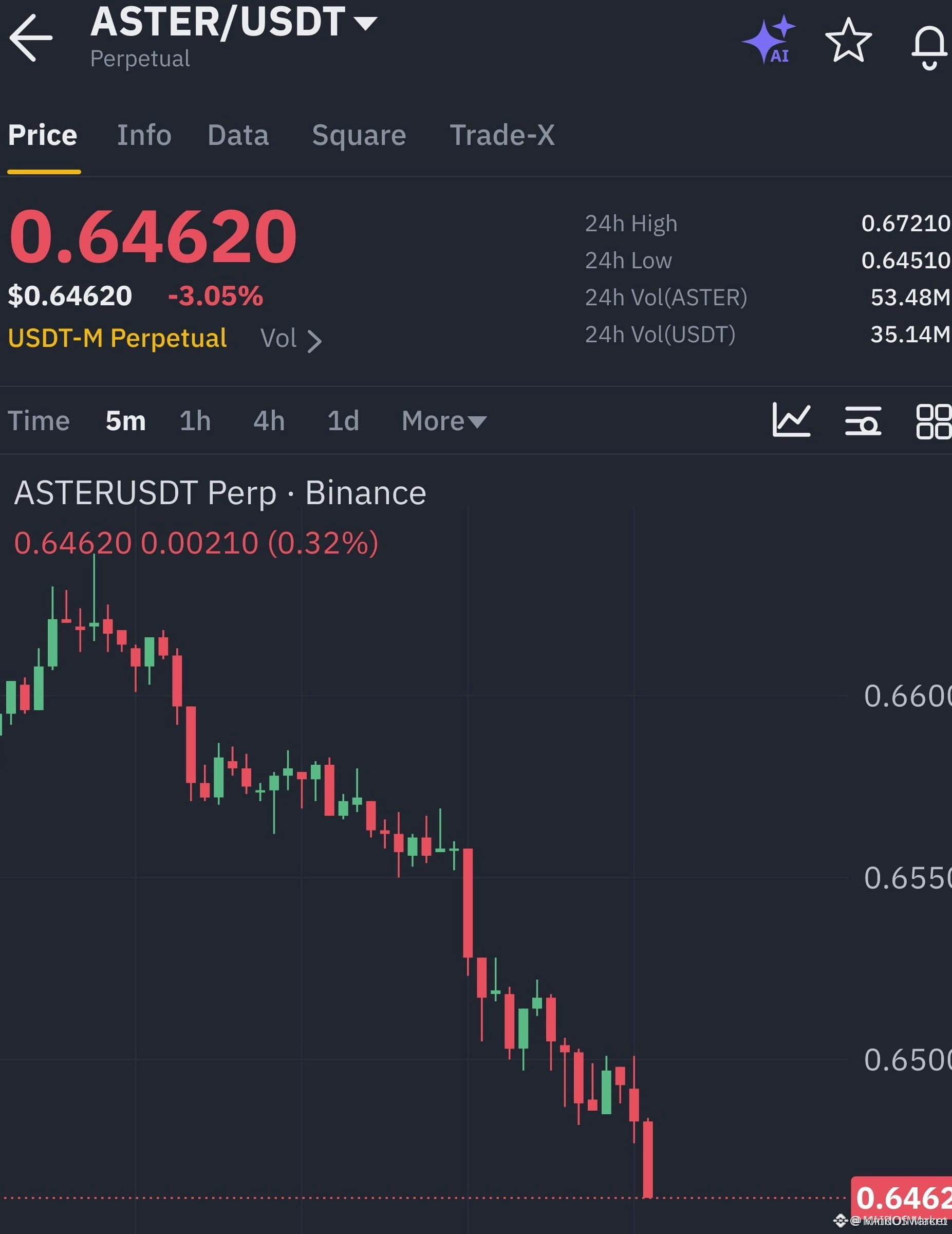
🚨 $ASTER SHORT LIQUIDITY HUNT EXECUTED WITH SURGICAL PRECISION! 🦈
Entry: 0.652100 ⚡
The institutional distribution phase around the 0.652100 threshold tested market resolve before order flow aggressively tilted in our favor. Patience through the localized chop rewarded the short bias as trapped liquidity cleared down to capture the structured 0.75 percent markdown. 📊
Now scanning order books across $INJ and $NEAR to identify the next high-probability displacement zone or liquidity sweep setup. 💡
💬 Are you currently positioning with the trend or waiting for a structural reversal? 👇
⚠️ Not financial advice. Always manage your risk. 🛡️
🏷️ #ASTER #ShortSetup #OrderFlow #Crypto
🔥 🦈
4

·
--
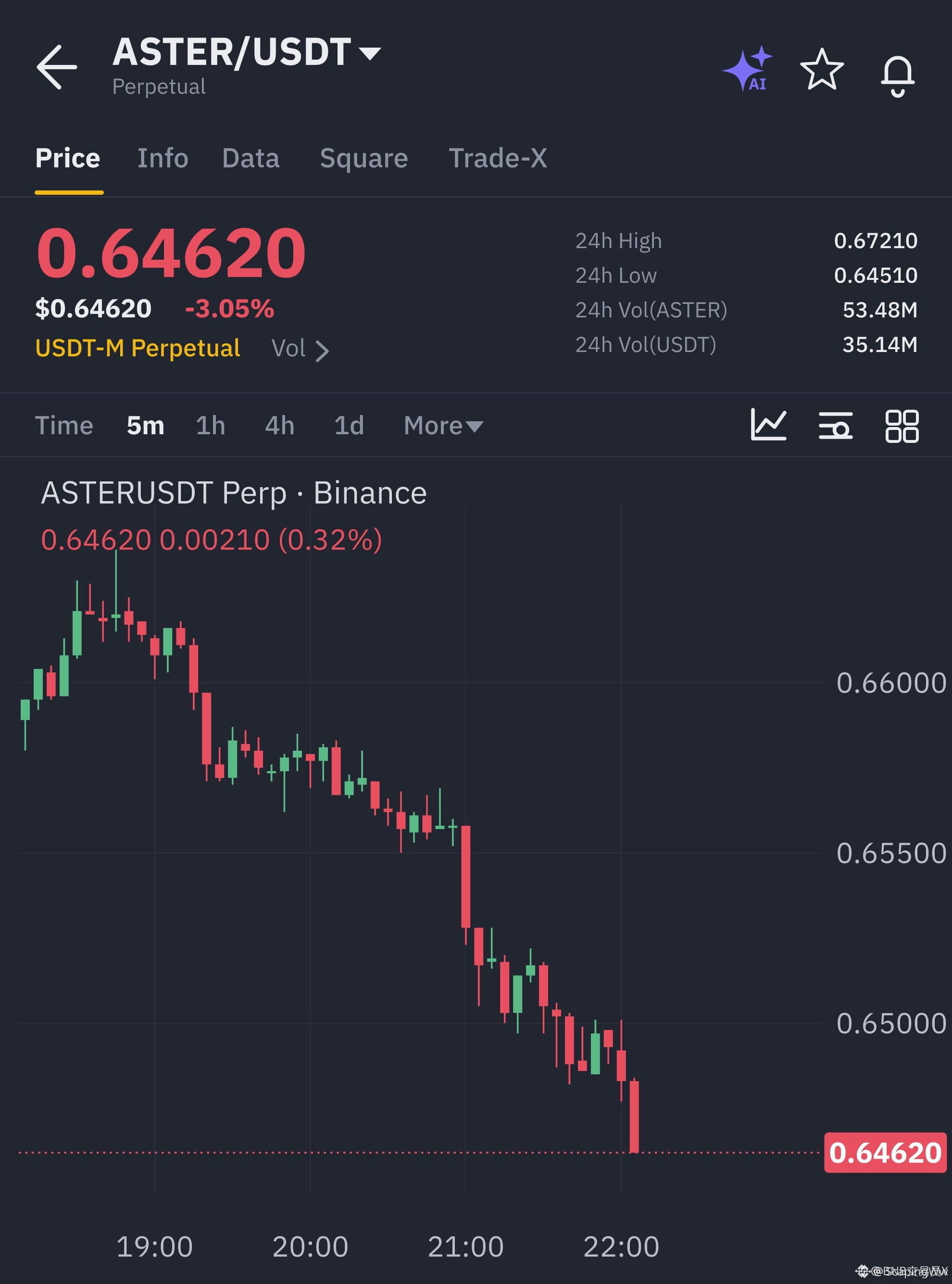
📉 $ASTER SHORT SETUP SMASHES EVERY SINGLE TARGET CLEANLY! 🎯
Entry: 0.652100 ⚡
Target: 0.647240 🎯
Sellers stepped in right at the resistance shelf and systematically crushed the order book down to our final objective. 📊 Momentum stayed heavy on the lower timeframes as institutional liquidity dried up beneath the breakdown level. ⚡
Precision execution turns patient setups into clean payouts when the macro trend aligns with order flow. 💡 Are you locking in profits here or waiting for a retest before the next leg unfolds? 👇
⚠️ Not financial advice. Always manage your risk. 🛡️
🏷️ #ASTER #INJ #NEAR #ShortSetup #PriceAction
🔥 💎
19
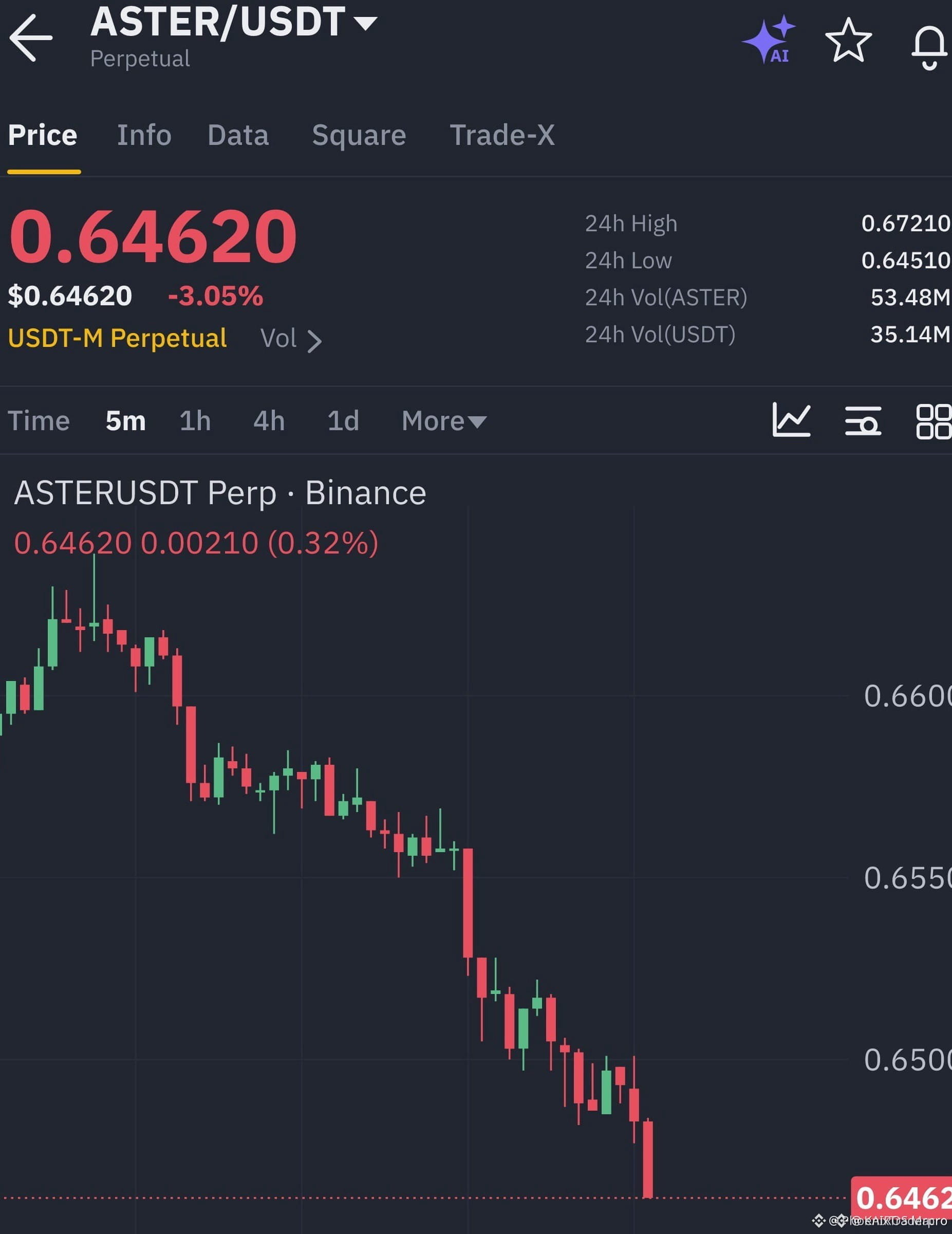
🚨 SURVIVED THE BEAR TRAP ON $ASTER TO CLINCH A NAIL-BITING SHORT WIN! 💥
Entry: 0.652100 ⚡
That short setup at 0.652100 nearly shook me out before momentum finally rolled over. Order flow looked shaky for a moment, testing every ounce of patience while sellers wrestled for control against stubborn bids. 📊
Sticking to the plan paid off as the sequence cascaded through all targets to bank a clean expansion. ⚡ Now I am keeping a sharp eye on $INJ and $NEAR to spot the next high-probability rotation. 🤔 Are you riding momentum or waiting on the sidelines for a cleaner reclaim? 👇
⚠️ Not financial advice. Always manage your risk. 🛡️
🏷️ #ASTER #ShortSetup #OrderFlow #Crypto #INJ
🔥 💎
16
·
--
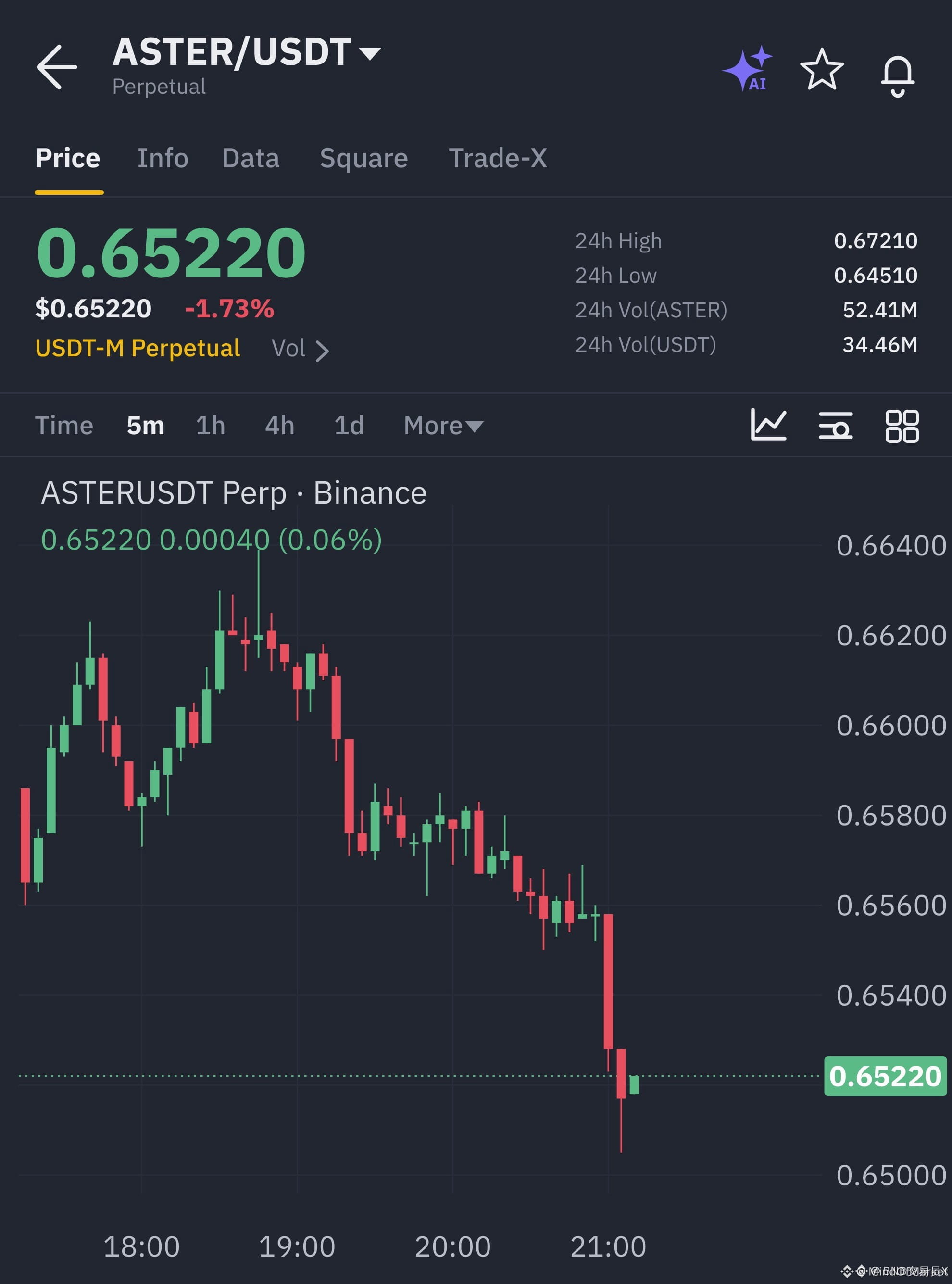
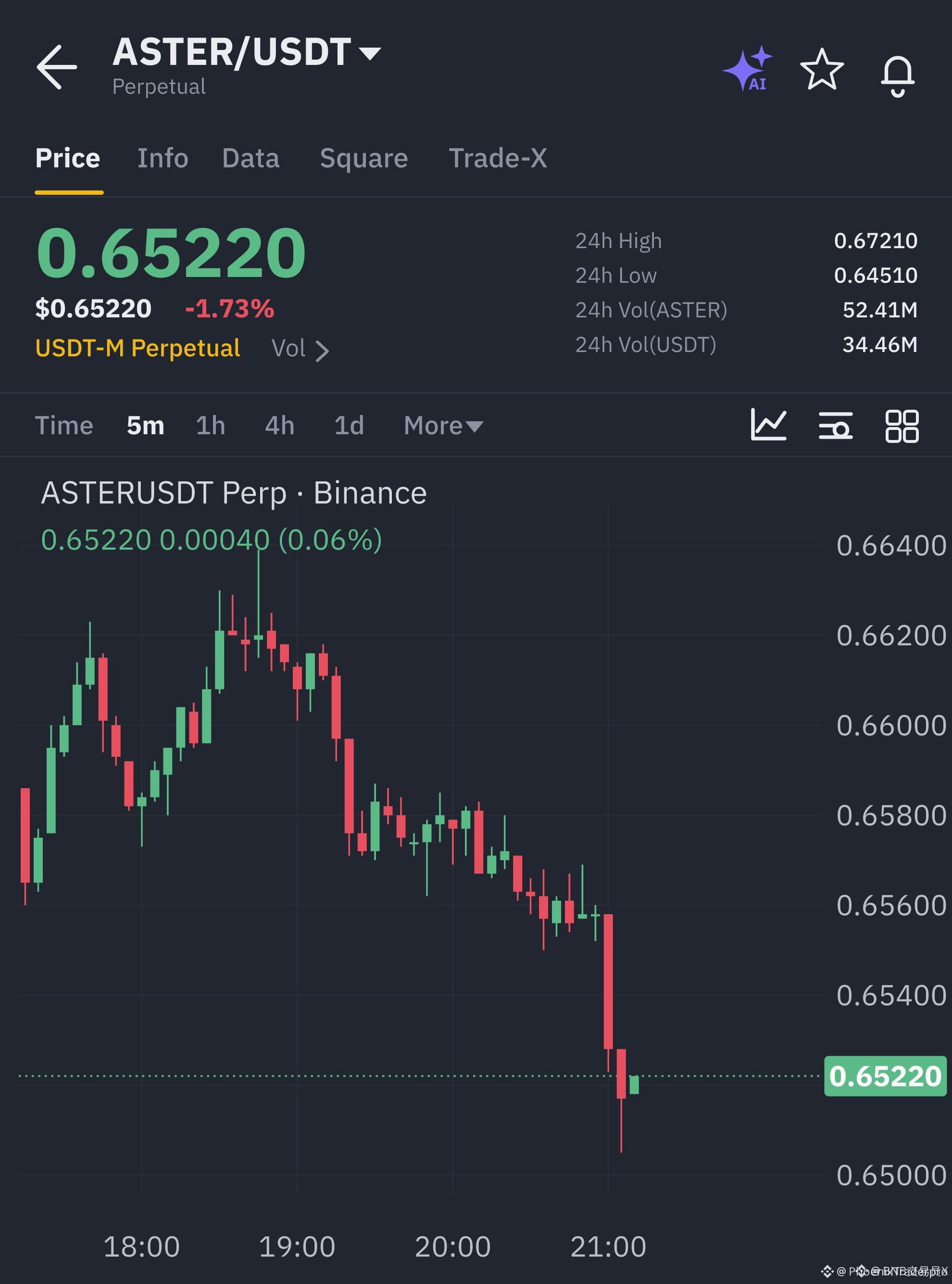
🔴 $ASTER FAILING TO HOLD THE BOUNCE AS DISTRIBUTION TAKES OVER 📉
Entry: 0.651763–0.652438 ⚡
Target: 0.647240 🚀
Stop Loss: 0.654800 ⚠️
Price action on $ASTER is revealing aggressive institutional distribution beneath the 0.658600 overhead resistance block. Sellers are firmly in control as momentum drains from recent bullish attempts, signaling a clean path toward liquidity pools below. 📊
As broader altcoin momentum across names like $INJ and $NEAR also cools off, this short expansion highlights structural weakness. 💡 Are you looking to position short on this retest, or waiting for a deeper sweep of support? 🤔
⚠️ Not financial advice. Always manage your risk. 🛡️
🏷️ #ASTER #ShortSetup #SmartMoney #INJ #NEAR
🔥 💎
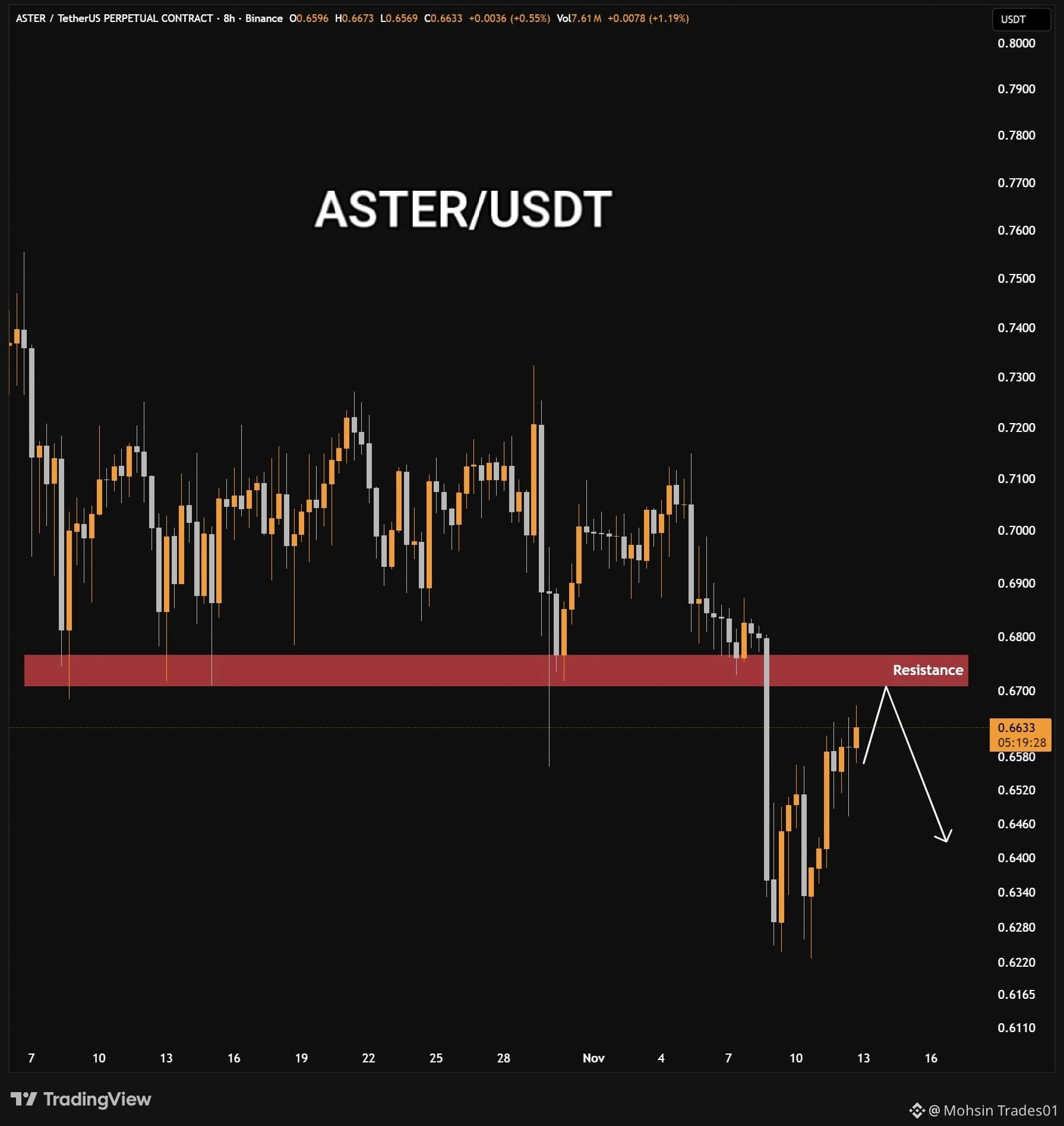
🚨 $ASTER LOSING MOMENTUM AS SELLERS CAP THE REBOUND AT RESISTANCE 📉
Entry: 0.651763-0.652438 ⚡
Target: 0.647240 🚀
Stop Loss: 0.654800 ⚠️
Bulls are losing their grip on $ASTER as every recovery attempt gets aggressively absorbed below the overhead barrier. Price action is turning heavy, signaling that sellers are stepping in to lean on late buyers before a potential flush toward lower liquidity pockets. 📊 Volume is fading on these weak bounces, confirming a distinct lack of aggressive bid-side conviction. ⚡
Managing risk remains paramount when momentum shifts downward, especially while broader market conditions keep pressure on related assets like $INJ and $NEAR . 💡 Are you looking to fade this bounce right here or waiting for a cleaner structural breakdown below support? 👇
⚠️ Not financial advice. Always manage your risk. 🛡️
🏷️ #ASTER #ShortSetup #INJ #NEAR #Crypto
🔥 📉
12


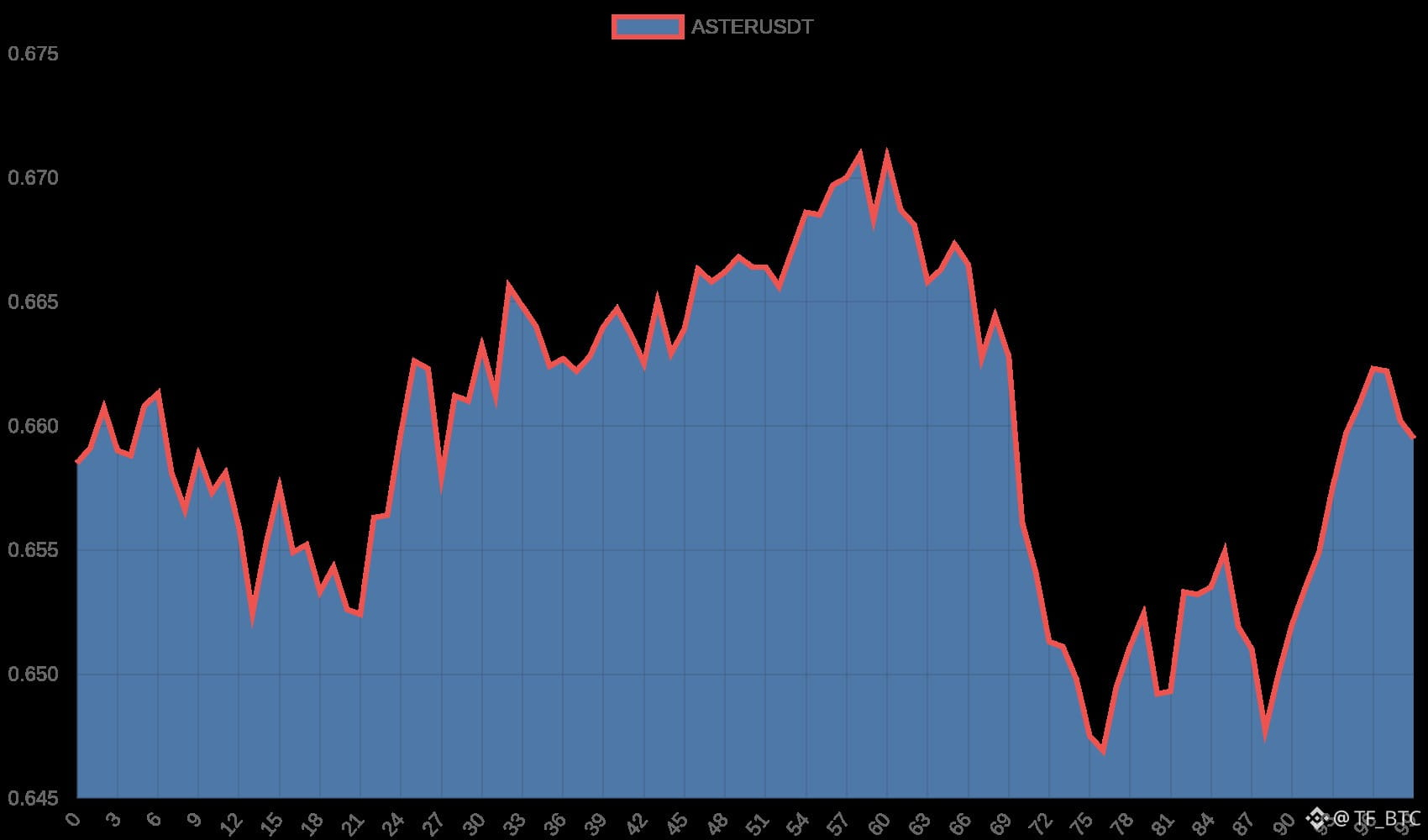
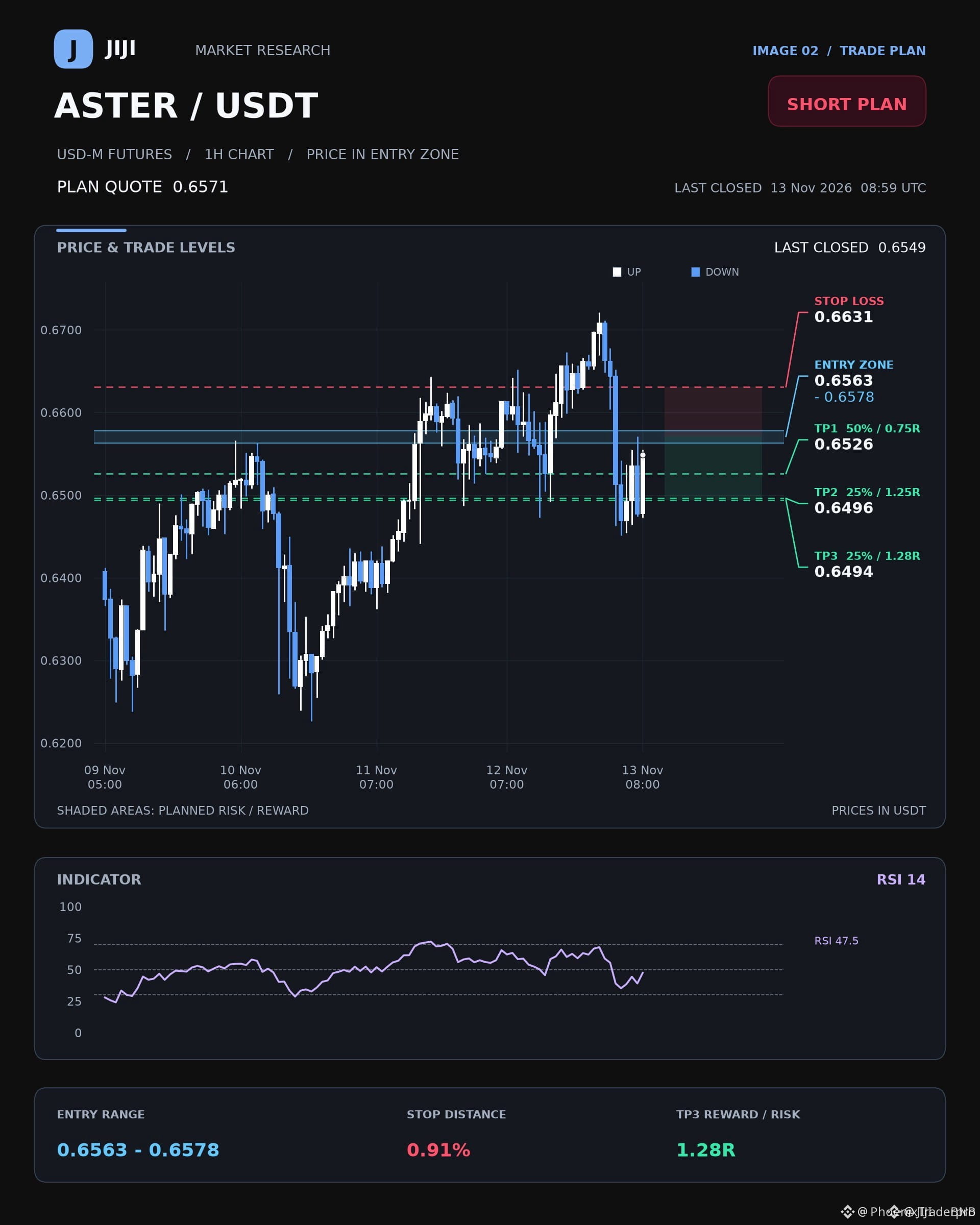
🔴 $ASTER BEAR STRUCTURE ALIGNED ACROSS HIGHER TIMEFRAMES BUT EXECUTION DEMANDS PATIENCE 📉
Entry: 0.6563 - 0.6578 ⚡
Target: 0.6526 🚀
Stop Loss: 0.6631 ⚠️
The four-hour and one-hour charts display a clean bearish moving average stack, showing that sellers firmly hold structural control across higher timeframes. Momentum indicators confirm underlying trend strength, though tight net margins from estimated trading fees mean risk management must remain airtight ⚡.
Patience is the ultimate edge here as we wait for a confirmed fifteen-minute candle close before committing capital to any downside continuation 📊.
Are you looking to enter on this initial test or waiting for deeper confirmation? 🤔
⚠️ Not financial advice. Always manage your risk. 🛡️
🏷️ #ASTER #ShortSetup #CryptoFutures #PriceAction
🐻 📉
11
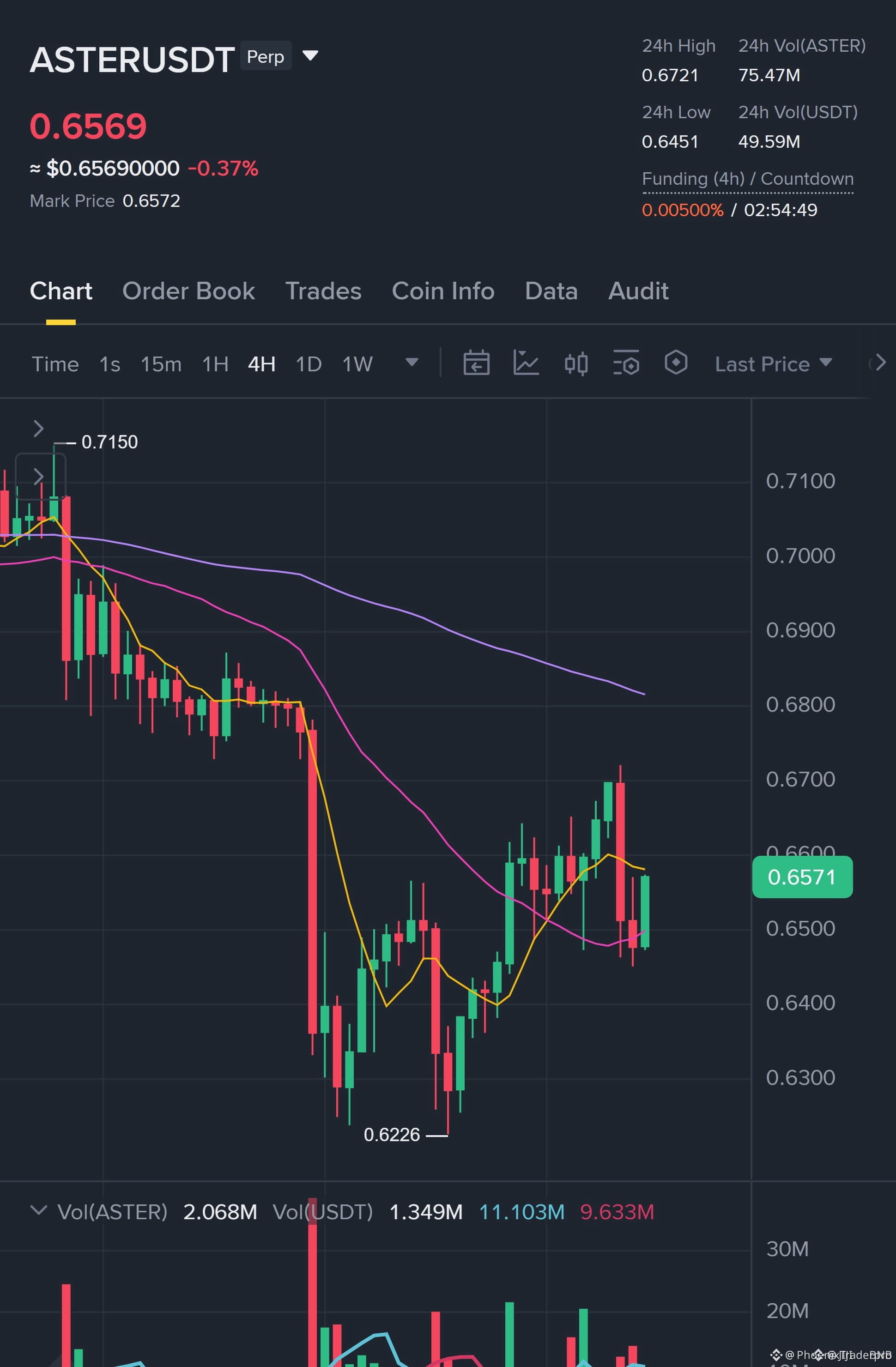
$ASTER: Balancing Patience and Precision in Volume‑Driven Moves
When $ASTER shows an hourly direction down and volume sits above baseline, the mind receives a clear signal but also a flood of alerts. Does the immediate impulse to act outweigh the benefit of a brief pause? A simple thought experiment can clarify the trade‑off.
Imagine two traders watching the same candle. Trader A jumps in as soon as the down move appears, accepting the first entry price but risking a less favorable fill if the market briefly rebounds. Trader B waits for a second candle that confirms the trend, sacrificing the earliest price but gaining a clearer picture of momentum. The core tension is entry quality versus chasing: early entry may capture a larger move, yet it often comes with higher uncertainty about the true direction.
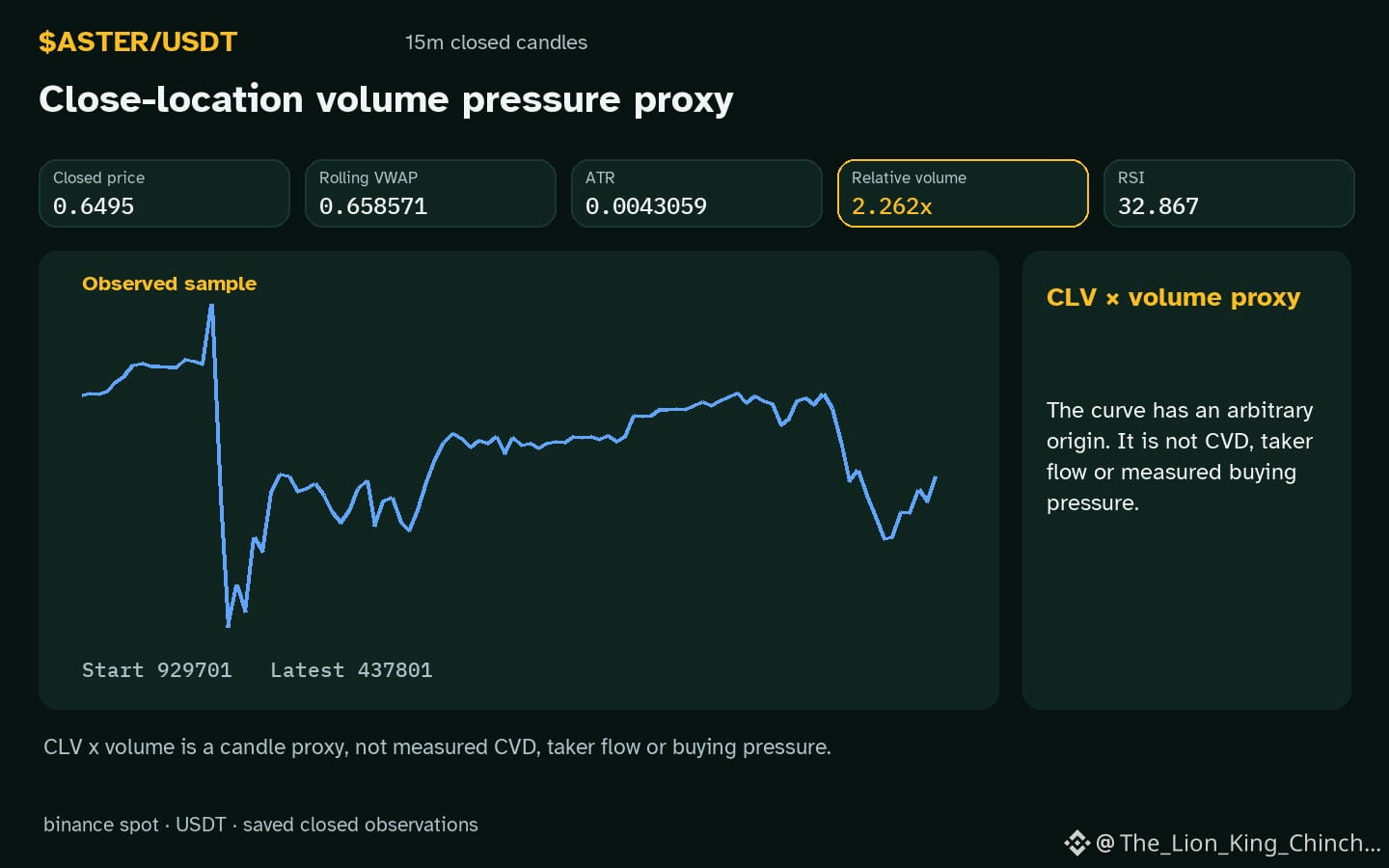
In the current observation the price remains inside the recorded range, suggesting that the down pressure has not yet broken local support 0.6451. If the next hourly candle closes lower with the same elevated relative volume 2.26x, the early entry hypothesis gains weight. Conversely, a candle that stalls or reverses would invalidate the chase and support waiting for confirmation.
A practical rule to test is to set a one‑minute mental buffer after the first down signal before checking any external feed. This pause creates a buffer zone where the trader can assess whether the volume spike sustains or fades, reducing the chance of reacting to noise. The rule’s validity will be challenged if, after the buffer, the next candle still moves sharply down despite a lower relative volume, indicating that the early entry was justified. Future closed‑candle data showing a sustained down move with high volume would weaken the waiting approach, while a reversal would reinforce it.
Probabilistic market research, not a recommendation or guaranteed return.
#ASTER #RiskManagement
$ASTER : Balancing Patience and Precision in Volume‑Driven Moves
When $ASTER shows an hourly direction down and volume sits above baseline, the mind receives a clear signal but also a flood of alerts. Does the immediate impulse to act outweigh the benefit of a brief pause? A simple thought experiment can clarify the trade‑off.
Imagine two traders watching the same candle. Trader A jumps in as soon as the down move appears, accepting the first entry price but risking a less favorable fill if the market briefly rebounds. Trader B waits for a second candle that confirms the trend, sacrificing the earliest price but gaining a clearer picture of momentum. The core tension is entry quality versus chasing: early entry may capture a larger move, yet it often comes with higher uncertainty about the true direction.
In the current observation the price remains inside the recorded range, suggesting that the down pressure has not yet broken local support 0.6451. If the next hourly candle closes lower with the same elevated relative volume 2.26x, the early entry hypothesis gains weight. Conversely, a candle that stalls or reverses would invalidate the chase and support waiting for confirmation.
A practical rule to test is to set a one‑minute mental buffer after the first down signal before checking any external feed. This pause creates a buffer zone where the trader can assess whether the volume spike sustains or fades, reducing the chance of reacting to noise. The rule’s validity will be challenged if, after the buffer, the next candle still moves sharply down despite a lower relative volume, indicating that the early entry was justified. Future closed‑candle data showing a sustained down move with high volume would weaken the waiting approach, while a reversal would reinforce it.
Probabilistic market research, not a recommendation or guaranteed return.
#ASTER #RiskManagement
54

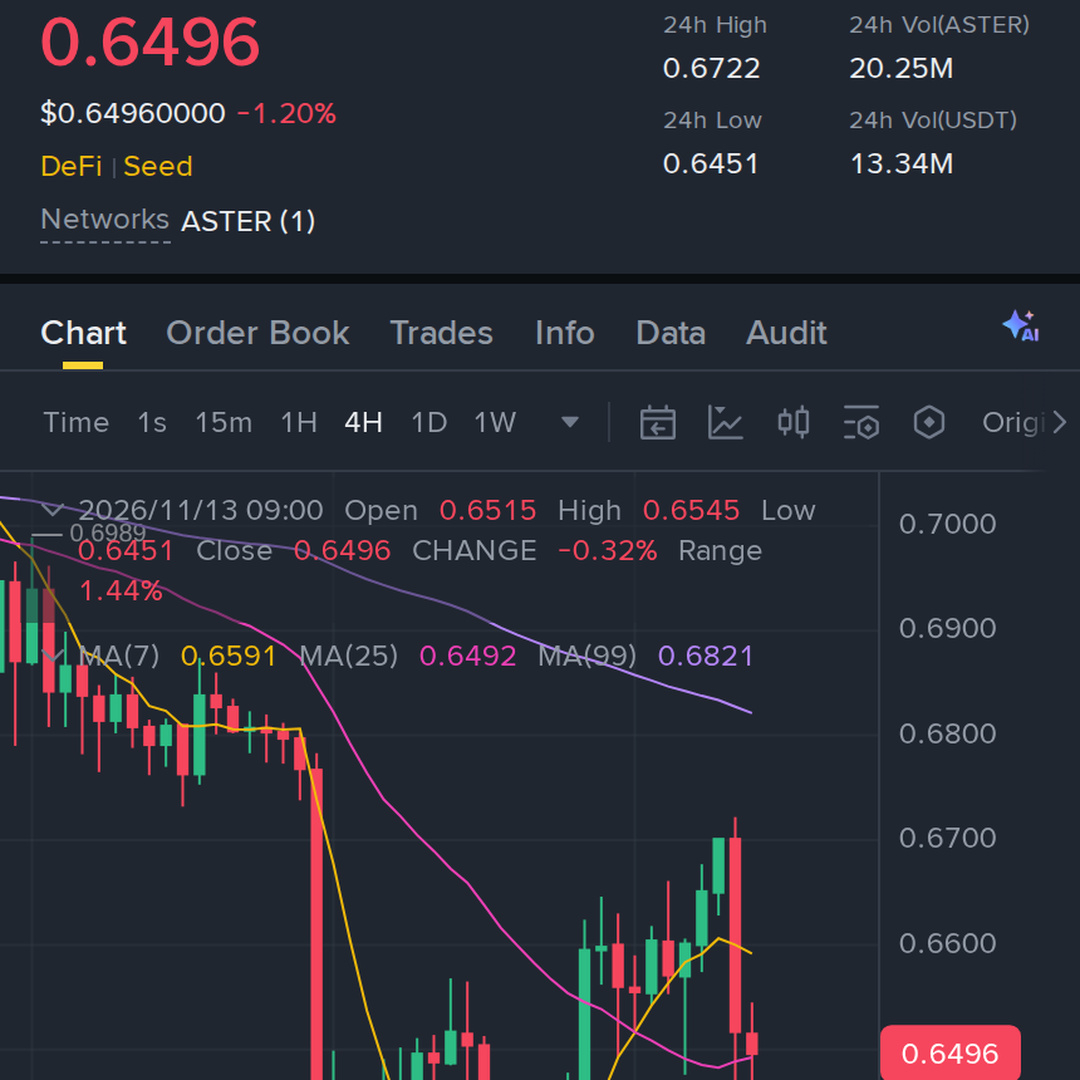
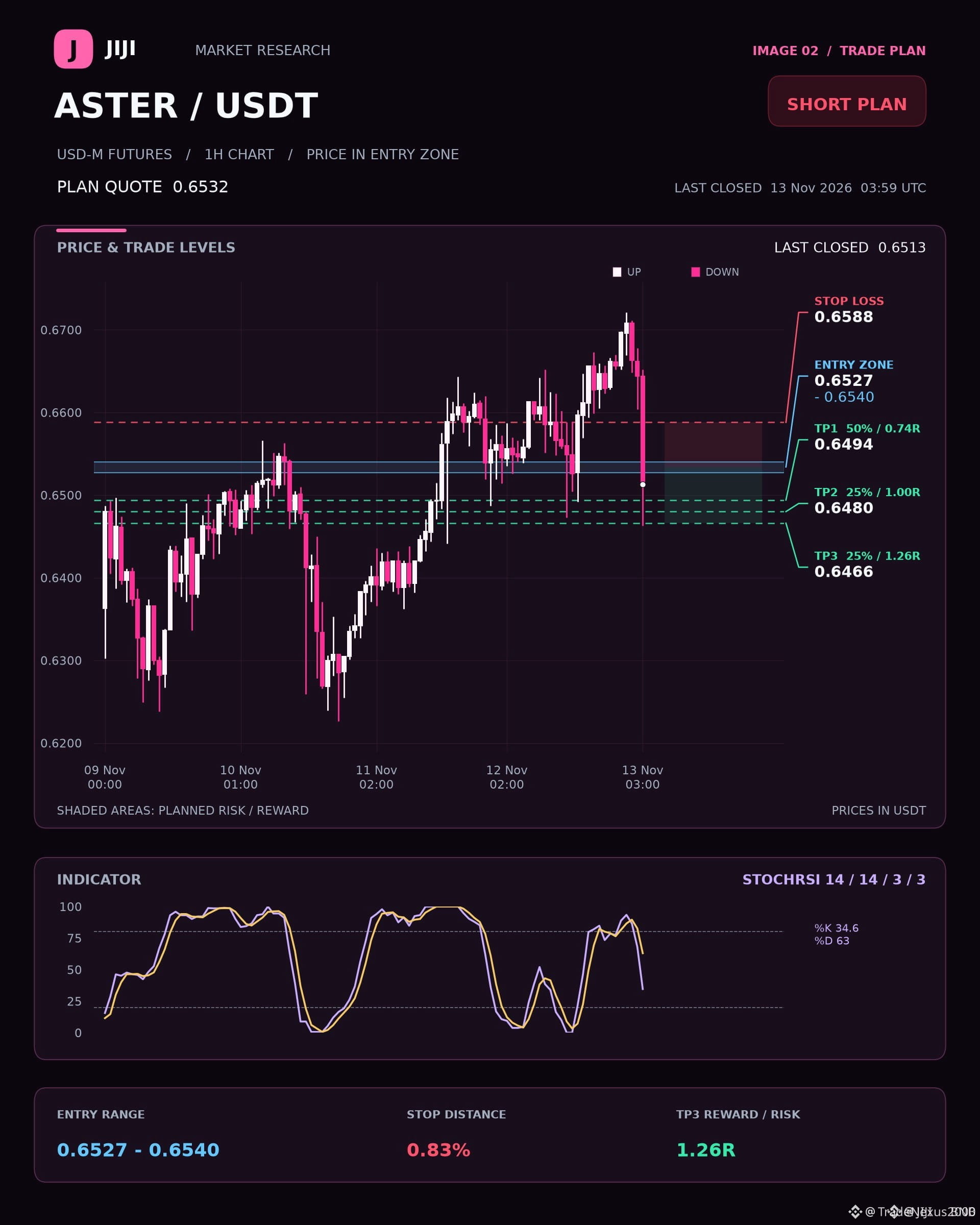
🔴 $ASTER SHOWING BEARISH DISTRIBUTION AS 4H EMA STRUCTURE REJECTS ADVANCES 📉
Entry: 0.6527 – 0.654 ⚡
Target: 0.6494 🚀
Stop Loss: 0.6588 ⚠️
The broader 4h EMA structure remains firmly aligned with downside continuation, creating a clean institutional distribution zone. 📊 Price has tapped the liquidity area, though patience is required for a confirmed 15m candle close before deployment. ⚡
Order flow indicates sellers defending this structural ceiling with precision while liquidity rests below. 💡 How are you managing confirmation triggers on this setup, or are you waiting for a deeper sweep? 👇
⚠️ Not financial advice. Always manage your risk. 🛡️
🏷️ #ASTER #ShortSetup #OrderFlow #Crypto
🦈 📉
16
Log in to explore more content
Join global crypto users on Binance Square
⚡️ Get latest and useful information about crypto.
💬 Trusted by the world’s largest crypto exchange.
👍 Discover real insights from verified creators.
Email / Phone number
Trending Topics
1
#WhoWillSucceedJensenHuangatNvidia?
91,600 views
1,170 Discussing
2
#WhatWillDriveCryptoandStocks’NextRebound?
450,910 views
3,078 Discussing
3
#BitcoinActiveSupplyInProfitDropsBelow45%
28,913 views
385 Discussing
4
#KavaSaysAbnormalActivityLimitedToKavaLend
11,987 views
194 Discussing
5
#USSpotXRPETFsSeeLargestWeeklyOutflowIn8Months
10,963 views
182 Discussing
6
#USPPIMissMayEaseBTCPressure
217,910 views
2,077 Discussing
7
#WORPTLetsTouristsConvertCryptoToThaiBaht
3,027 views
53 Discussing
8
#TONStrategyReports$23.97MQ3NetLoss
4,059 views
41 Discussing
9
#PolkadotCommunityApprovesNewStrategyWith97%Vote
20,034 views
250 Discussing
10
#dYdXPlansV9.9UpgradeToShiftUSDCToInjective
12,932 views
202 Discussing