
#boj
boj
576,183 views
1,786 Discussing
Hot
Latest

·
--
Asada (BOJ): Japanese inflation is around 2%, so there is no need to push prices higher
Bank of Japan Policy Board member Toichiro Asada says inflation in Japan is now around 2% — close to the BOJ’s target — so there is little point in pushing prices higher.
Speaking in Nagasaki today (12/11), Asada — who previously opposed the two interest rate hikes in June and September to 1.25% — said recent price increases were not necessarily driven by demand, and warned that raising rates too early could curb growth and bring down underlying inflation.
Markets still expect the BOJ to raise interest rates to 1.5% at its December 17–18 meeting. $BTC is trading around USD 73.609 (-0.65% in 24 hours).
#boj #inflation
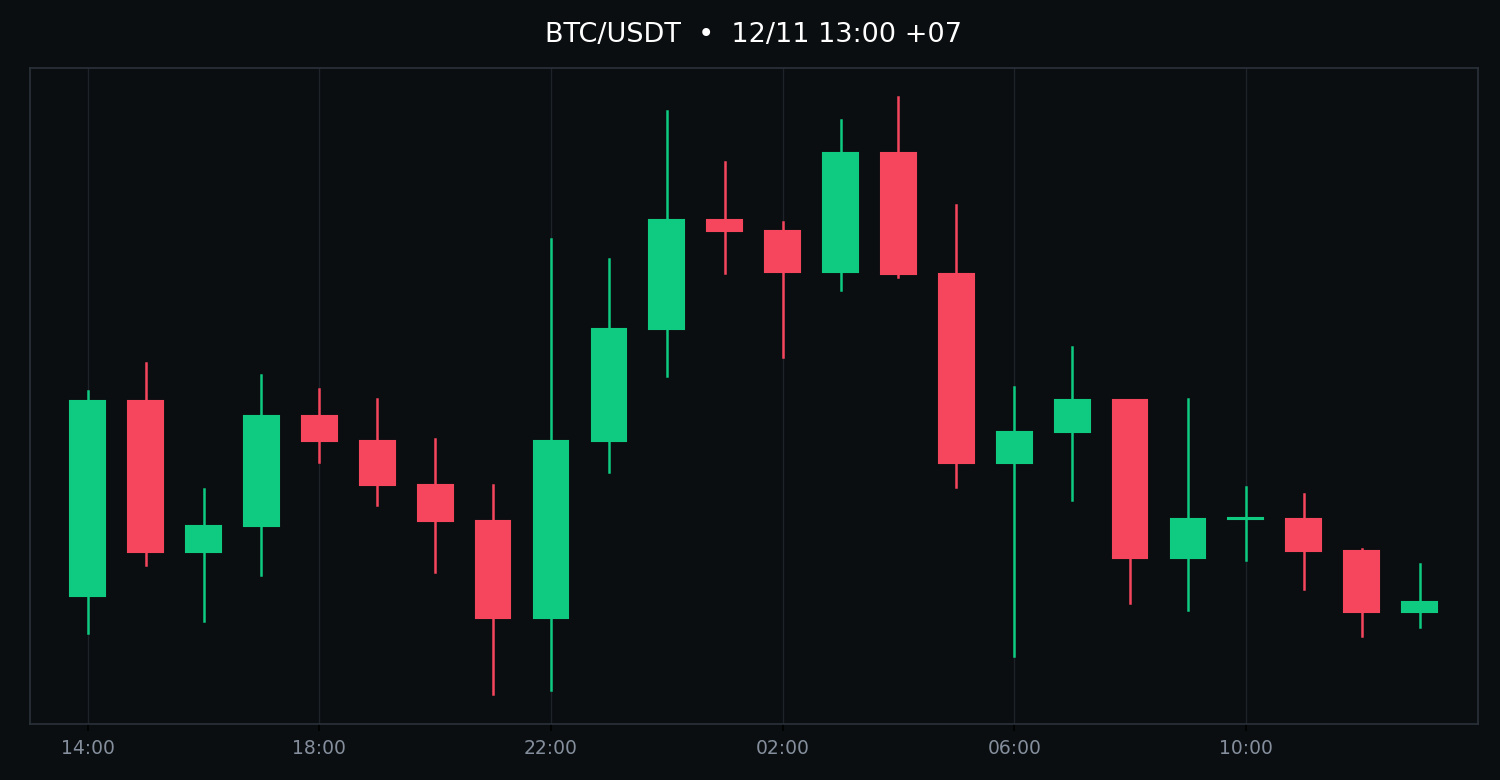
184
·
--
BOJ board member Asada Tōichirō: The neutral interest rate may be higher than the current policy rate.
Speaking in Nagasaki this morning (November 12), Asada—who opposed both the June and September rate hikes—said the current policy rate of 1.25% is already within the BOJ’s estimated neutral range of 1.1–2.5%, but the neutral rate may be higher than it is now. This means monetary policy still has room to tighten, although he continues to call for caution about the pace of further increases.
Markets still expect the BOJ to raise interest rates to 1.5% at its December meeting, with the peak rate around 1.75–2%.
$BTC is trading around USD 73.688 (-0.54% over 24 hours).
#boj #interest-rates
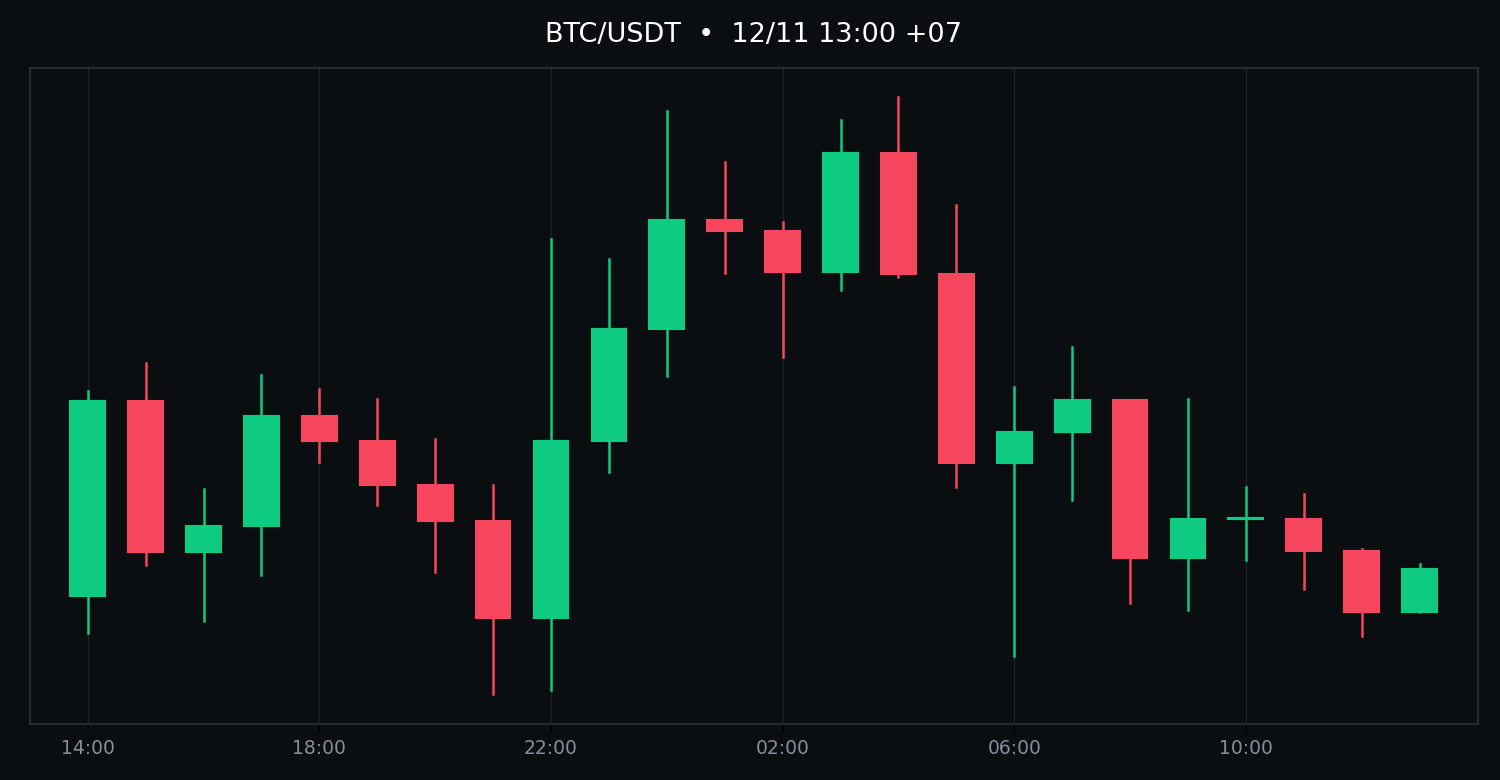
9
·
--
🇯🇵 Asada (BOJ): Not considering a rate cut proposal
Bank of Japan Board member Asada Noriichirou said he is not currently considering proposing a rate cut.
Speaking in Nagasaki today (12/11), Asada — who opposed the two rate hikes in June and September to 1.25% — maintained his cautious stance: raising rates too quickly could restrain growth and bring down underlying inflation.
Markets still expect the BOJ to raise rates to 1.5% in December.
$BTC is trading around $73,600 (-0.66% in 24h).
#jpy #boj
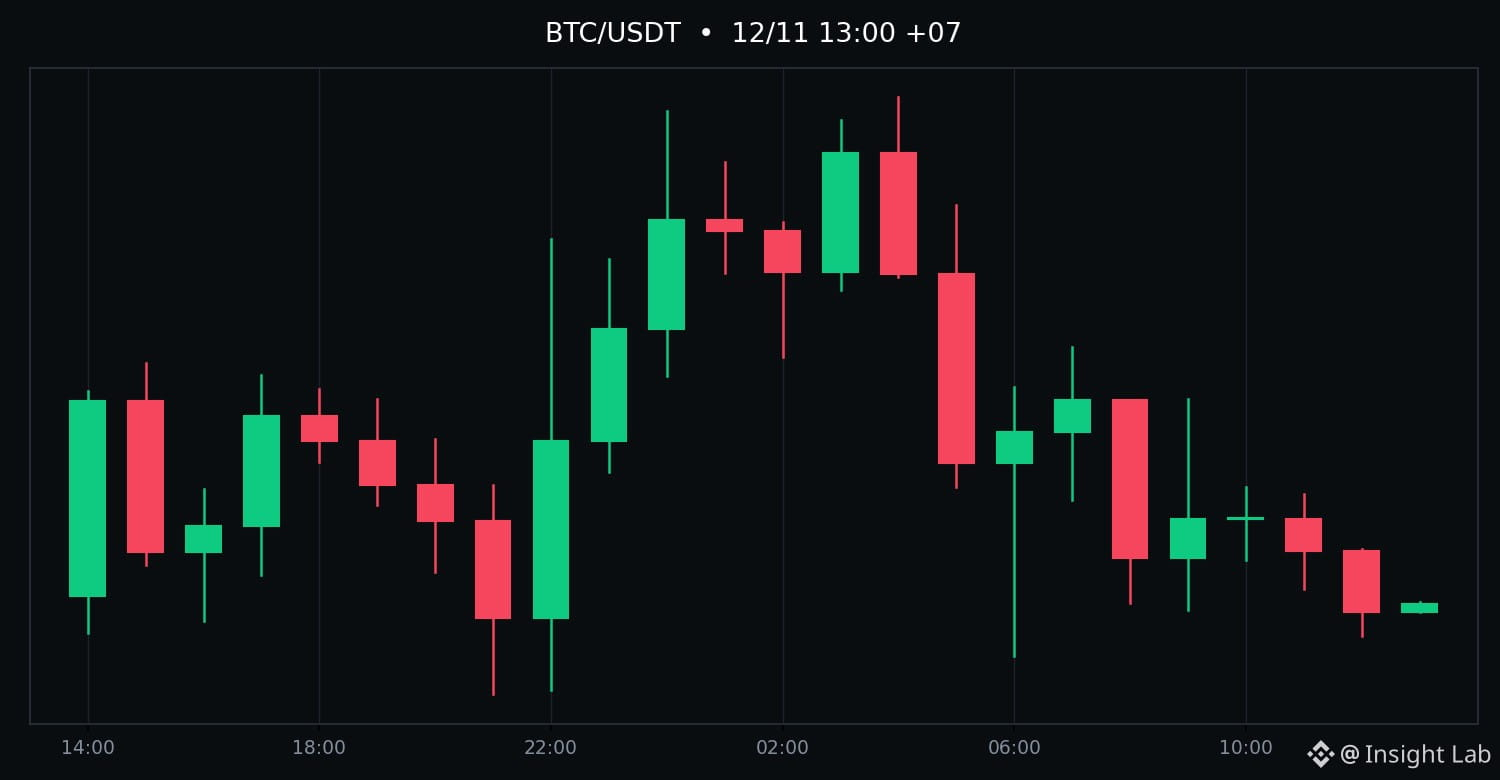
7
·
--
Asada (BOJ): Rates can still rise or fall
BOJ Policy Board member Toichiro Asada said the central bank could still raise or lower its benchmark interest rate, even though the policy rate is already at a level consistent with its target.
Speaking in Nagasaki this morning (12/11), Asada — who opposed both the June and September rate hikes — stressed the need to carefully consider the pace of tightening, as the current rate of 1.25% is already within the estimated neutral range of 1.1–2.5%.
Markets still expect the BOJ to raise rates to 1.5% in December. $BTC is trading around $73,600.
#boj #interest-rates
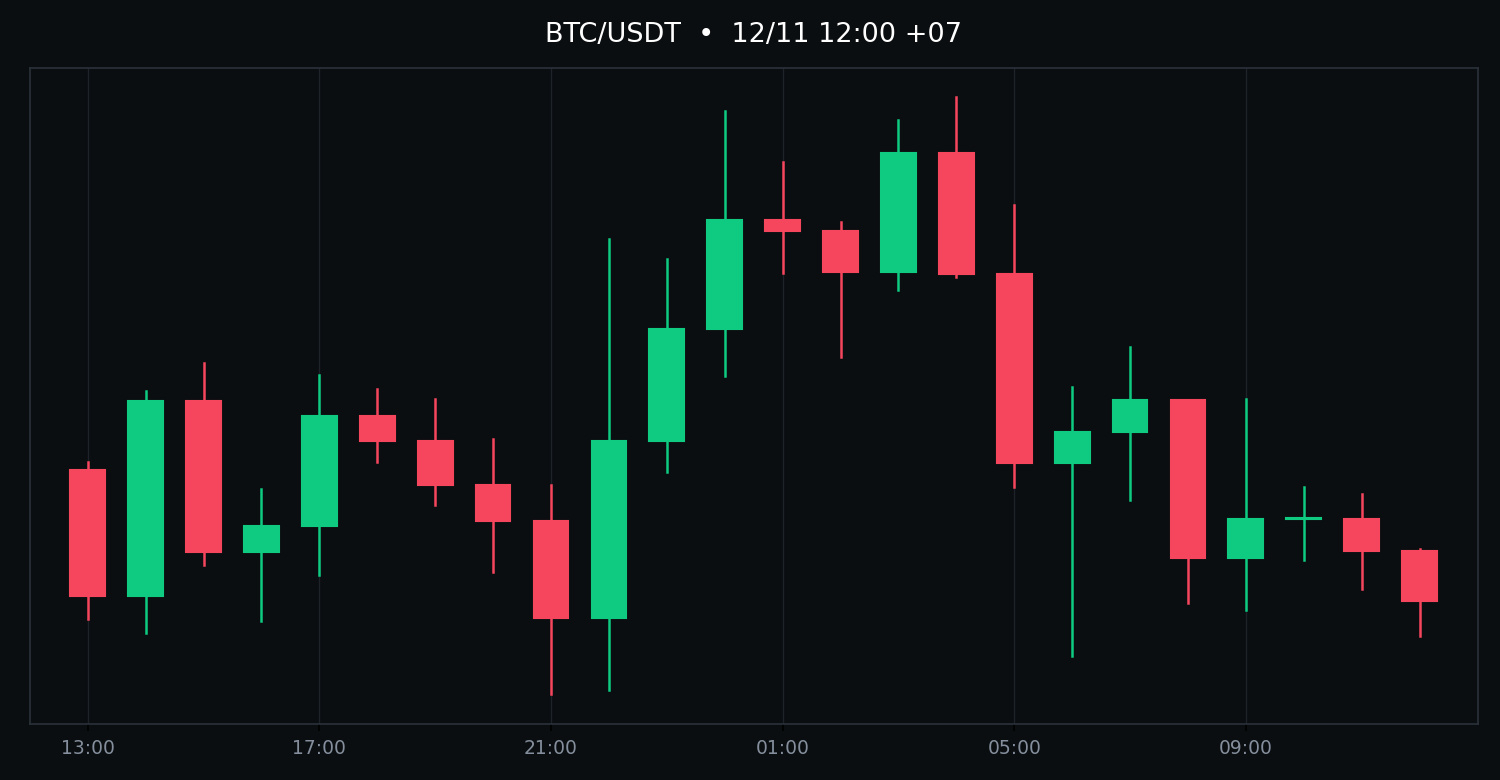
190
·
--
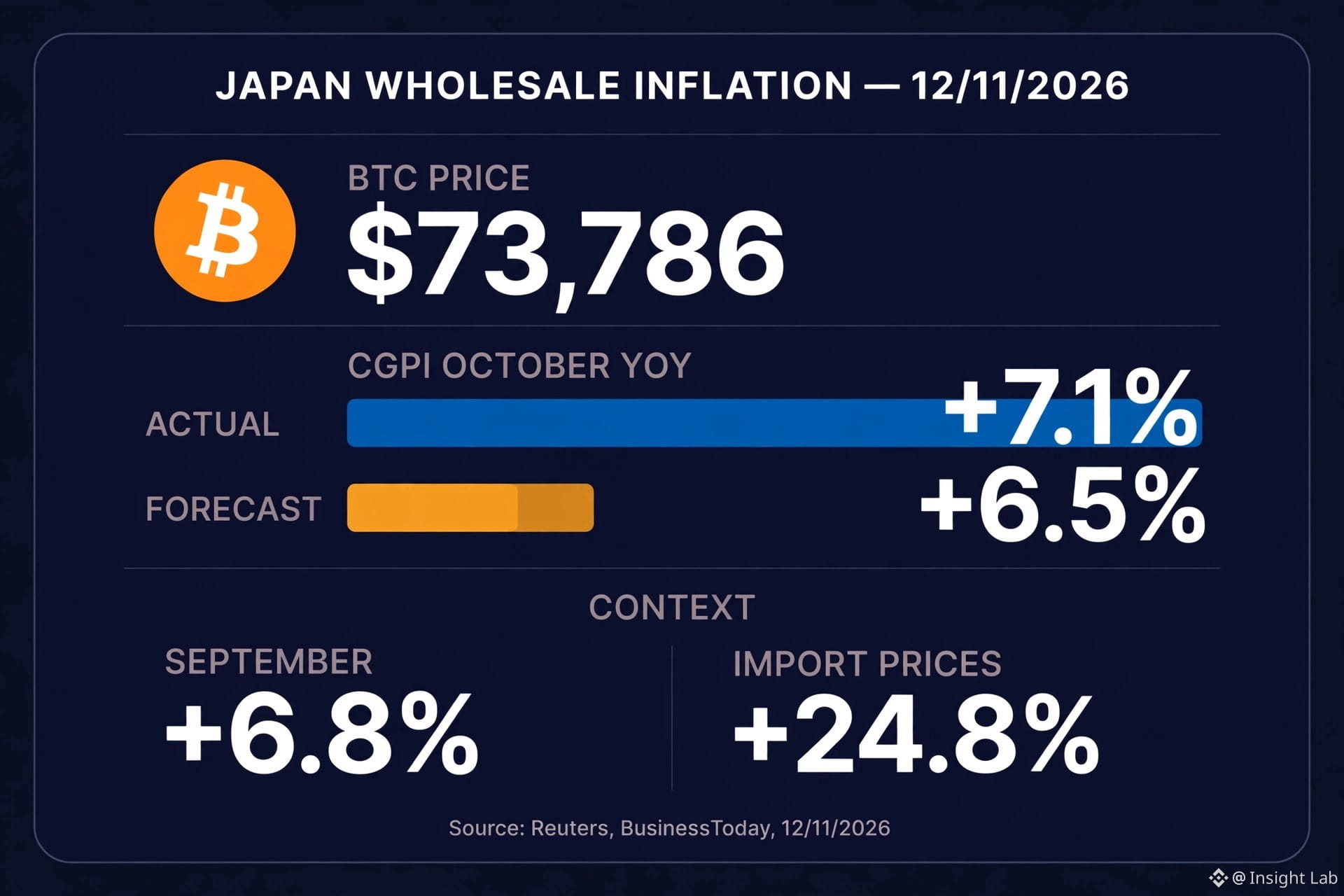
🇯🇵 Japan’s wholesale inflation accelerates, bolstering the case for a BOJ rate hike in December
The October Corporate Goods Price Index (CGPI) rose 7.1% year over year, exceeding the 6.5% forecast and accelerating from 6.8% in September.
Oil and coal prices rose 15.9% (September: +11.5%), while chemical prices increased 15.5% (September: +13.4%), as the Middle East conflict and demand for AI semiconductor chips pushed costs higher. The yen-based import price index also rose 24.8% year over year.
The BOJ will consider this data at its policy meeting on December 17–18. Many experts expect the bank to raise interest rates to 1.5%, from the current level of 1.25%.
$BTC traded around $73,786 this morning.
#boj
133
·
--
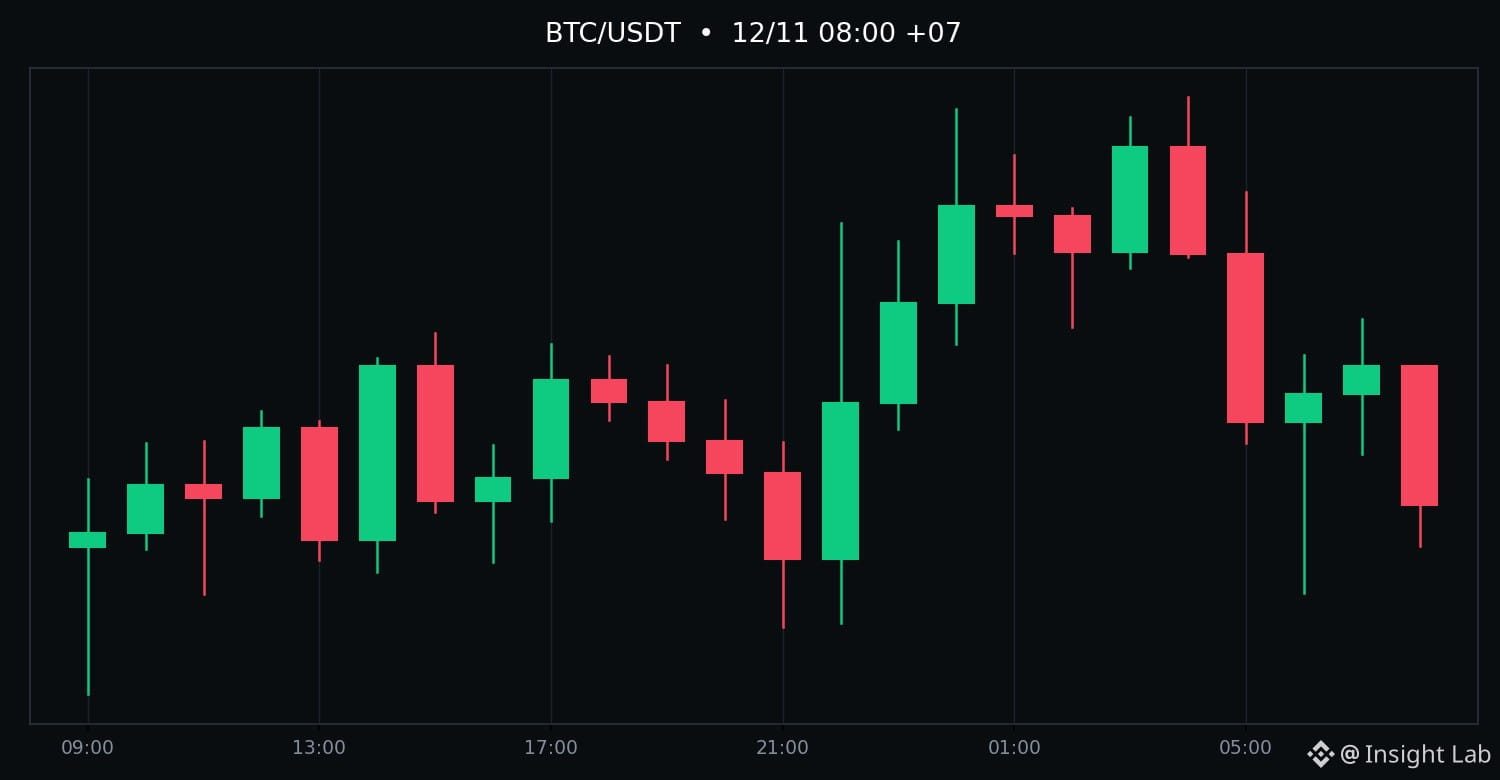
Bank of Japan (BOJ) board member Toichiro Asada said this morning (12/11) that the BOJ should be cautious about the pace of interest rate hikes, while leaving the door open to further increases.
Asada — who voted against both rate hikes this year — noted that the 1.25% policy rate is already within the estimated neutral interest rate range (above 1% to 2.5%), so each additional hike carries greater risks for the economy. Markets still expect the BOJ to raise rates to 1.5% in December.
#boj $BTC
197
·
--
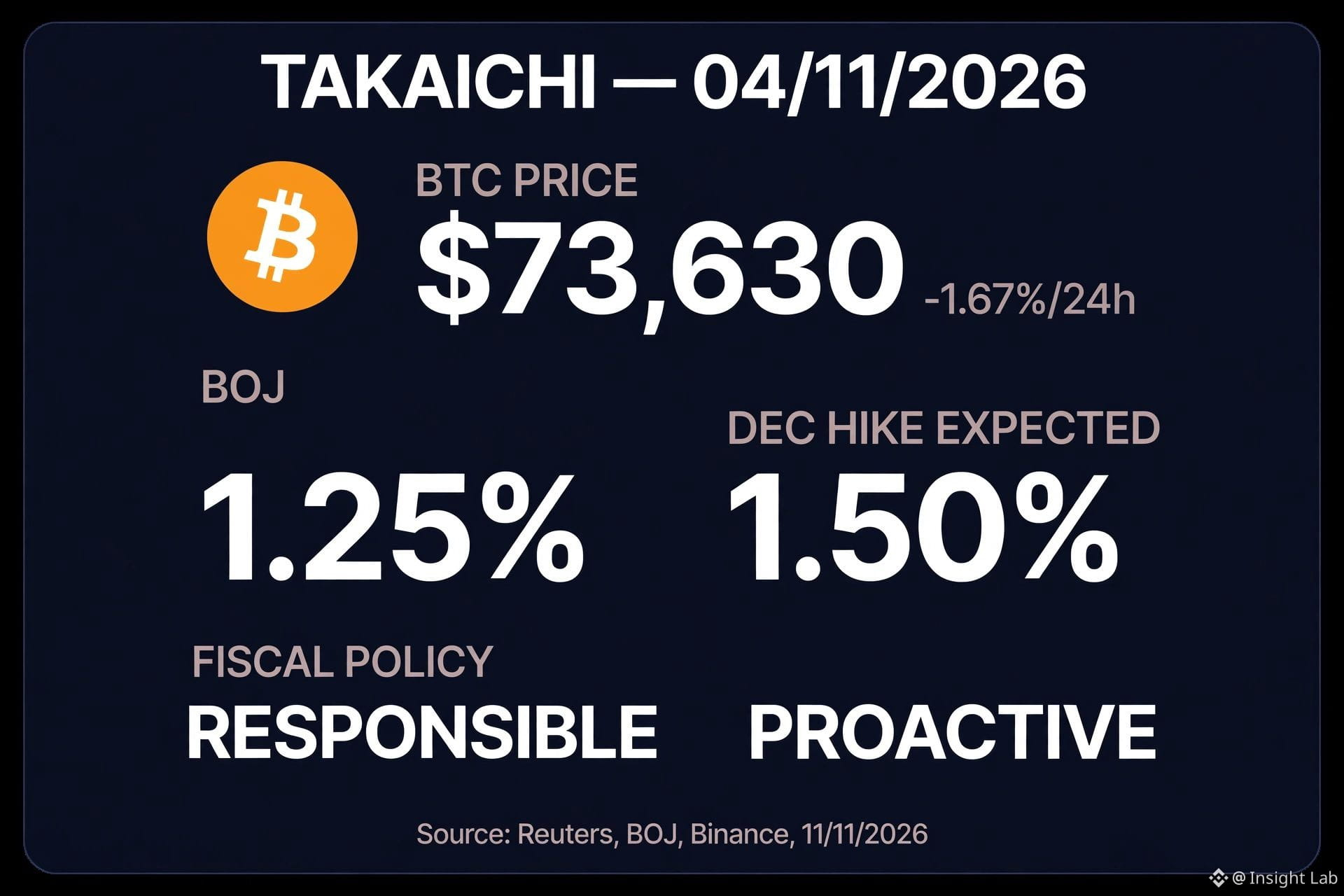
🇯🇵 [04/11] Japanese Prime Minister Sanae Takaichi (speaking in Parliament): Japan is only halfway toward achieving stable inflation accompanied by wage growth — proactive but responsible fiscal policy, and she expects the BOJ to continue an appropriate monetary policy to achieve its 2% inflation target. The BOJ held interest rates at 1.25% at the end of October; markets expect a rise to 1.5% in December. BTC around USD 73,630 (-1.67%/24h). $BTC #japan #boj
🇯🇵 [04/11] Japanese Prime Minister Sanae Takaichi (speaking in Parliament): Japan is only halfway toward achieving stable inflation accompanied by wage growth — proactive but responsible fiscal policy, and she expects the BOJ to continue an appropriate monetary policy to achieve its 2% inflation target. The BOJ held interest rates at 1.25% at the end of October; markets expect a rise to 1.5% in December. BTC around USD 73,630 (-1.67%/24h). $BTC #japan #boj
128

·
--
Verified
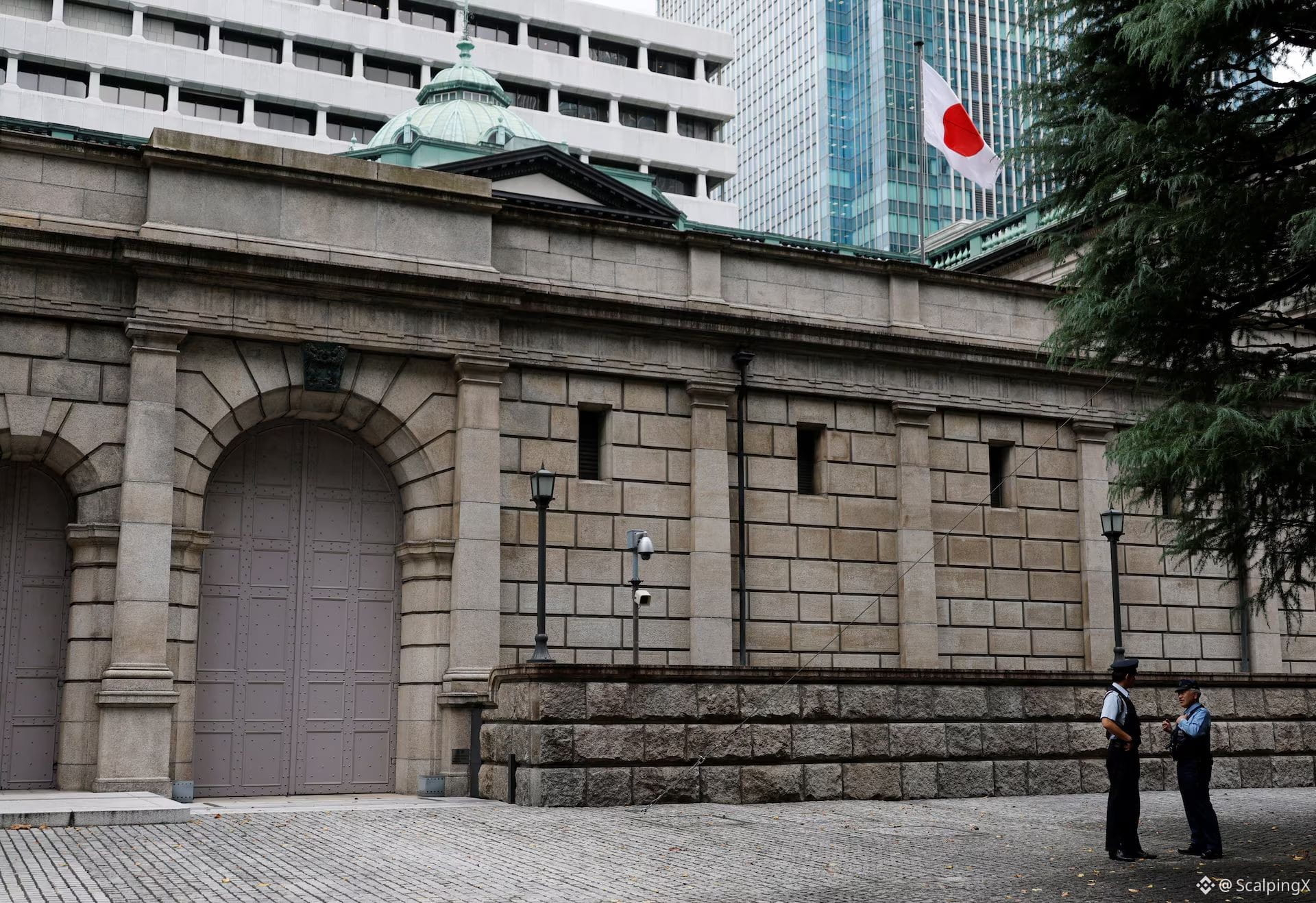
BOJ holds rates steady while signalling further tightening
🏦 The BOJ kept rates at 1.25% in an 8–1 vote. Board member Takata proposed a rise to 1.5%, indicating pressure for faster policy normalisation.
🎯 The BOJ now sees underlying inflation as broadly consistent with its 2% target. However, Governor Ueda stopped short of declaring the target sustainably and stably achieved.
📈 Higher inflation forecasts and guidance for further rate increases suggest this pause does not mark the end of tightening. Financial conditions remain accommodative.
💴 This stance could support the yen, but alone does not confirm a USD/JPY downtrend. Wage growth, inflation data and policy signals ahead of December’s meeting remain key to watch.
#BOJ $BANK $JUP
864

·
--
🐉 Bank of Japan held at 1.25% — but said underlying inflation has finally hit its 2% target, opening the door to December.
👉 The vote was 8-1: Hajime Takata dissented, calling for a hike to 1.5% now.
👉 The BoJ raised its FY2027 core CPI forecast to 2.6%, from 2.4% in July, and stressed it is ready to keep raising rates to stop inflation overshooting.
👉 It will also nearly triple ETF sales from January, to about ¥860 billion a year.
👉 More than 80% of economists now expect the next hike in December — Ueda's press conference was the test of whether the BoJ reinforces that or stays neutral.
👉 BTC is still under $80,000, around $78,100, in a market digesting this and the Binance hack at the same time.
#BinanceSquare #Bitcoin #BoJ #Crypto
A hold today, with December now firmly on the table.
1
506

·
--
Bank of Japan holds rates at 1.25% in an 8-1 vote and says underlying inflation is now in line with its 2% targetOPENING
On October 30, 2026 the Bank of Japan decided, by an 8-1 vote, to keep its guideline for the uncollateralized overnight call rate at around 1.25%. Board member Hajime Takata dissented and proposed raising the rate to around 1.5%, arguing that with underlying inflation at the price stability target the Bank needs to step up the pace of moving toward the neutral rate; the proposal was defeated.
KEY DETAILS
- On October 30, 2026 the Bank of Japan decided, by an 8-1 vote, to keep its guideline for the uncollateralized overnight call rate at around 1.25%.
- Board member Hajime Takata dissented and proposed raising the rate to around 1.5%, arguing that with underlying inflation at the price stability target the Bank needs to step up the pace of moving toward the neutral rate; the proposal was defeated.
- In its October 2026 Outlook Report, the BOJ said underlying CPI inflation is at a level generally consistent with its 2% price stability target and is expected to remain around that level; media reports note it is the first time the BOJ has made that assessment since adopting the target in 2013.
- Board members' median forecast for core CPI (less fresh food) in fiscal 2027 was raised to 2.6% from 2.4%, and the forecast excluding fresh food and energy was raised to 2.7% from 2.6%.
- The BOJ also decided unanimously to speed up sales of its ETF holdings to about 860 billion yen a year on a book value basis, from about 330 billion yen, starting in January 2027.
WHY IT MATTERS
BOJ policy and the yen shape global liquidity, which crypto markets watch closely. (Analysis, not a confirmed fact.)
IMPORTANT CONTEXT
- Governor Kazuo Ueda is scheduled to explain the decision at a press conference later on October 30.
- This is an official central bank decision, not a price forecast or investment recommendation.
- This article is informational and is not financial advice. Digital assets are volatile.
SOURCE
- Primary / main source: https://www.boj.or.jp/en/mopo/mpmdeci/mpr_2026/k261030a.pdf
- Supporting: https://www.boj.or.jp/en/mopo/mpmdeci/mpr_2026/k261030b.pdf
- Supporting: https://www.cnbc.com/2026/10/30/boj-inflation-target-rates.html
- Supporting: https://www.nikkei.com/article/DGXZQOUB300M40Q6A031C2000000/
#BOJ #InterestRates #Macro
Bank of Japan holds rates at 1.25% in an 8-1 vote and says underlying inflation is now in line with its 2% target
OPENING
On October 30, 2026 the Bank of Japan decided, by an 8-1 vote, to keep its guideline for the uncollateralized overnight call rate at around 1.25%. Board member Hajime Takata dissented and proposed raising the rate to around 1.5%, arguing that with underlying inflation at the price stability target the Bank needs to step up the pace of moving toward the neutral rate; the proposal was defeated.
KEY DETAILS
- On October 30, 2026 the Bank of Japan decided, by an 8-1 vote, to keep its guideline for the uncollateralized overnight call rate at around 1.25%.
- Board member Hajime Takata dissented and proposed raising the rate to around 1.5%, arguing that with underlying inflation at the price stability target the Bank needs to step up the pace of moving toward the neutral rate; the proposal was defeated.
- In its October 2026 Outlook Report, the BOJ said underlying CPI inflation is at a level generally consistent with its 2% price stability target and is expected to remain around that level; media reports note it is the first time the BOJ has made that assessment since adopting the target in 2013.
- Board members' median forecast for core CPI (less fresh food) in fiscal 2027 was raised to 2.6% from 2.4%, and the forecast excluding fresh food and energy was raised to 2.7% from 2.6%.
- The BOJ also decided unanimously to speed up sales of its ETF holdings to about 860 billion yen a year on a book value basis, from about 330 billion yen, starting in January 2027.
WHY IT MATTERS
BOJ policy and the yen shape global liquidity, which crypto markets watch closely. (Analysis, not a confirmed fact.)
IMPORTANT CONTEXT
- Governor Kazuo Ueda is scheduled to explain the decision at a press conference later on October 30.
- This is an official central bank decision, not a price forecast or investment recommendation.
- This article is informational and is not financial advice. Digital assets are volatile.
SOURCE
- Primary / main source: https://www.boj.or.jp/en/mopo/mpmdeci/mpr_2026/k261030a.pdf
- Supporting: https://www.boj.or.jp/en/mopo/mpmdeci/mpr_2026/k261030b.pdf
- Supporting: https://www.cnbc.com/2026/10/30/boj-inflation-target-rates.html
- Supporting: https://www.nikkei.com/article/DGXZQOUB300M40Q6A031C2000000/
#BOJ #InterestRates #Macro
EWJETF-0.16%
JPYETF+0.12%
84

·
--
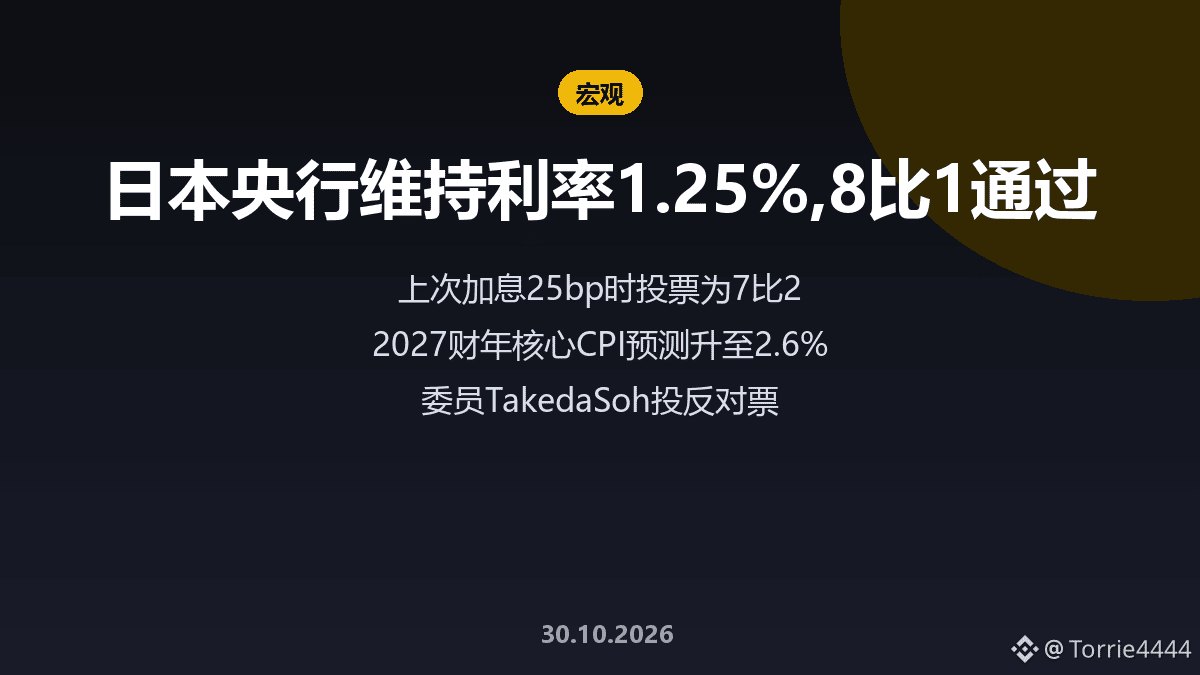
The Bank of Japan held steady today (October 30), keeping its policy rate at 1.25%, in line with market expectations.🏦
But the voting result was a little interesting: the decision passed 8–1 this time, compared with 7–2 when rates were last raised by 25 basis points. Committee member Takeda Soh voted against it.
The real focus is inflation. The BOJ said core inflation has reached a level consistent with its price target, and raised its core CPI forecasts (figures in parentheses are the July forecasts):
- FY2026: 2.5% (2.5%)
- FY2027: 2.6% (2.4%)
- FY2028: 2.0% (2.0%)
The central bank also specifically warned that it would closely monitor the risk of inflation exceeding its target and adversely affecting the economy.
For traditional markets, unchanged rates were expected. But the combination of “inflation on target + higher forecasts + a risk warning” suggests that the discussion around future rate hikes isn’t over. The yen, Japanese bond yields, and the US dollar are worth keeping an eye on.
For crypto markets, yen interest rates have long been a familiar liquidity-related topic, and $BTC is often discussed alongside yen carry-trade unwinds. There were no surprises this time, but if rate-hike expectations rise, funding-market volatility could intensify. Do you think the BOJ will raise rates again at its next meeting?
#BOJ #InterestRates #Inflation
87

·
--
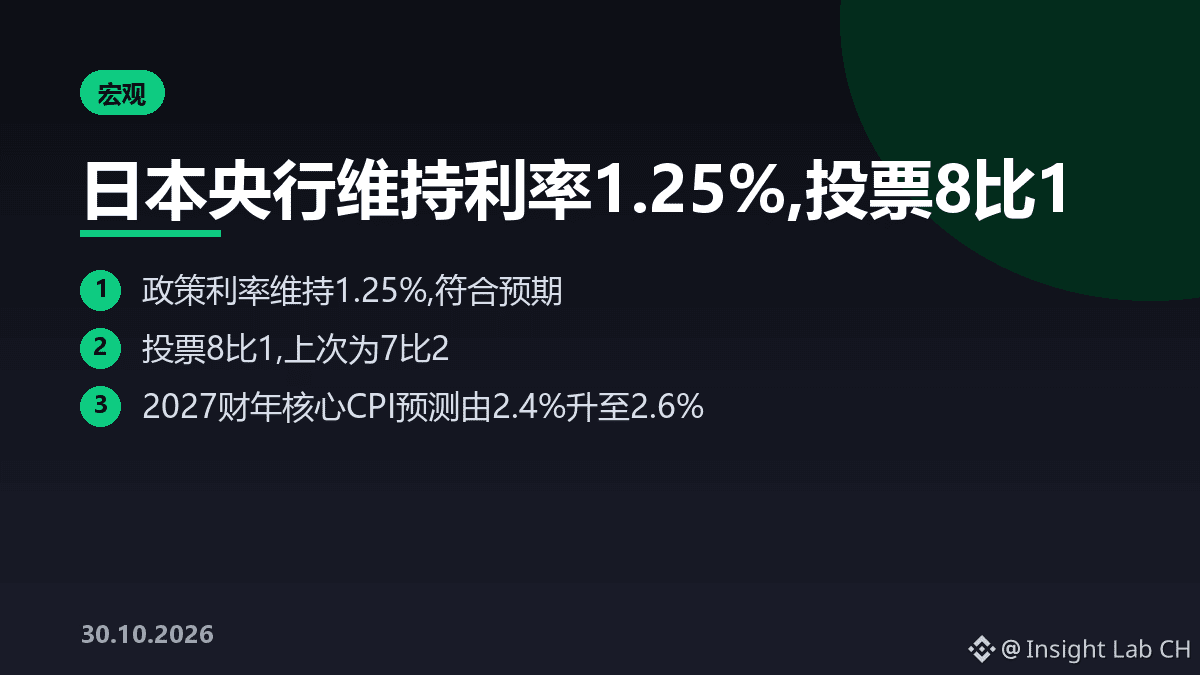
The Bank of Japan held its policy rate at 1.25% on October 30, in line with market expectations, but the vote was 8–1, with one member dissenting.
Key points:
• At the previous meeting, the BOJ raised rates by 25 basis points; the vote was 7–2
• This time, board member Takeda Soh voted against the decision
• The BOJ said underlying inflation has reached a level consistent with its price stability target
📌 The hold itself was no surprise; the wording is what matters. The BOJ forecasts average core CPI inflation of 2.5%, 2.6%, and 2.0% for fiscal years 2026 through 2028, respectively, compared with 2.5%, 2.4%, and 2.0% in its July forecast. That’s a 0.2 percentage-point upgrade for fiscal year 2027. The BOJ also warned that particular attention should be paid to the risk of inflation overshooting the target and weighing on the economy.
My take: There was one fewer dissenting vote, but the inflation forecast has been revised upward. This looks more like leaving the door open to another rate hike. If the yen’s interest-rate path shifts higher, the cost of global carry trades will change along with it. The Fed just cut rates on September 16, while policy in both the U.S. and Japan is leaning tight; it’s hard to be optimistic about liquidity conditions for risk assets.
For crypto markets, there may not be an immediate short-term impact. But if the yen strengthens and global capital flows back home, high-volatility assets like $BTC are often among the first to be sold.
Do you think the Bank of Japan will raise rates again next time? 📉
#BOJ #InterestRates #JPY

178
·
--
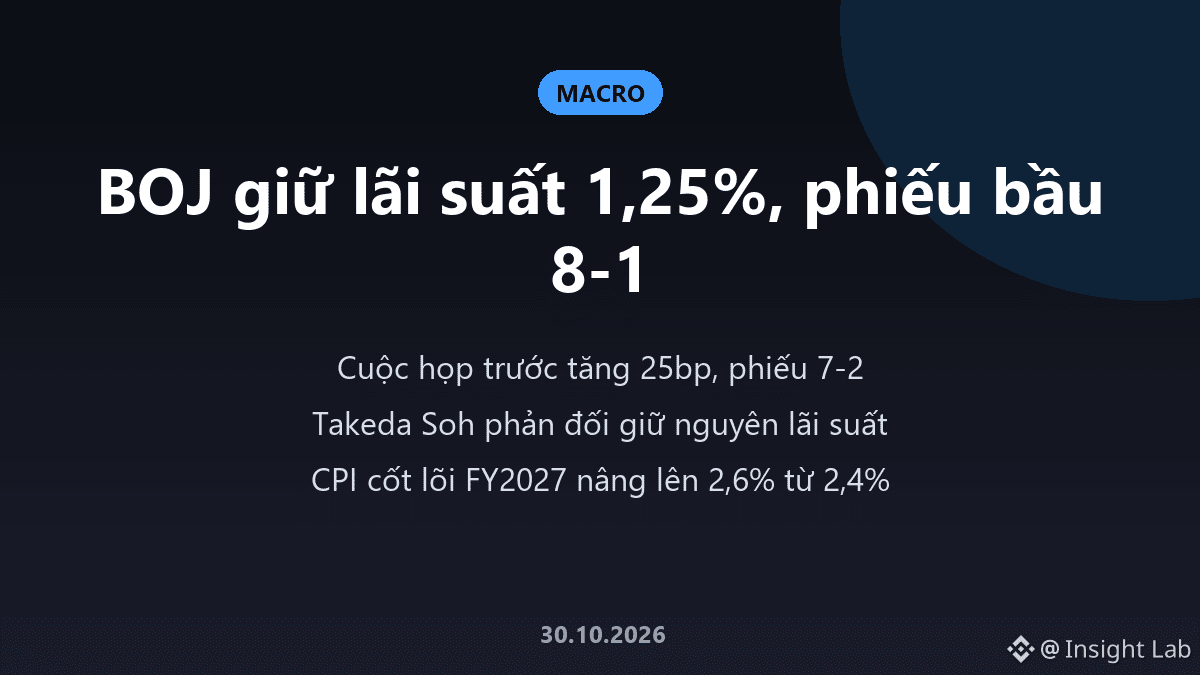
The BOJ held rates at 1.25%, but the 8–1 vote is the detail most worth reading. 🇯🇵
Today, October 30, the Bank of Japan (BOJ) kept its policy rate unchanged, as the market expected. At the previous meeting, it raised rates by 25 basis points, with a 7–2 vote. This time, board member Takeda Soh was the only dissenter.
What caught my attention was the BOJ’s upward revision to its core CPI forecasts:
- Fiscal year 2026: 2.5% (unchanged from the July forecast)
- Fiscal year 2027: 2.6% (up from 2.4%)
- Fiscal year 2028: 2.0% (unchanged)
The BOJ said underlying inflation had reached a level consistent with its price target, while warning that the risk of inflation overshooting the target needed particularly close monitoring. Rates stayed put, but the tone leaned hawkish.
For markets, the yen and Japanese bond yields are the first places to react. If the BOJ raises rates again, carry trades that borrowed cheaply in yen could unwind, and $BTC is often sensitive to this kind of capital outflow. I think the next meeting will be the real test.
Do you think the BOJ will raise rates again before the end of the year?
#BOJ #InterestRates #JPY
230

·
--
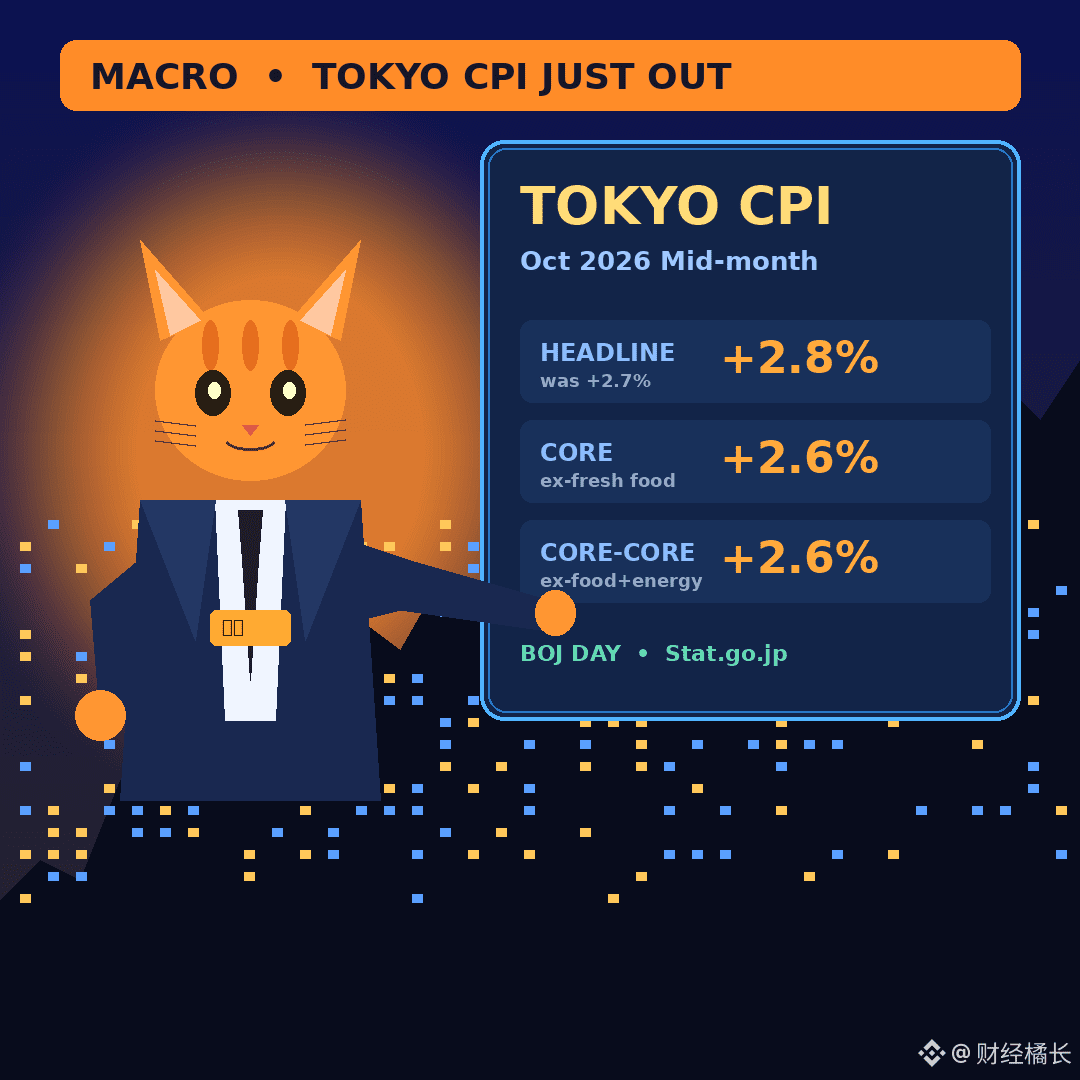
Tokyo CPI just out: Headline 2.8%, Core down to 2.6% | BOJ day today
[Fact | Statistics Bureau of Japan, Ministry of Internal Affairs and Communications, 10/30 mid-month flash report]
• Tokyo’s 23 wards all-items index: 103.5, up 2.8% year on year (+2.7% in September), up 0.5% month on month on a seasonally adjusted basis
• Excluding fresh food (Core): 103.3, up 2.6% year on year (+2.7% in September); excluding fresh food and energy (Core-Core): up 2.6% year on year (+2.9% in September)
• Pushing prices up: fresh food (vegetables +10.5%, fish and seafood +14.2%), accommodation, etc.; weighing prices down: rice and other cereals -7.2%, childcare fee cuts under government policy; energy turned positive year on year, at around +2.2%
[View] Headline edged up, but both core measures eased, showing a split between “food-driven volatility vs. underlying cooling.” With the BOJ Outlook Report and Governor Ueda’s press conference today, the market is more focused on whether Core can hold around 2% than on a single month’s Headline.
[Opportunity/Risk] If the Outlook stresses that the inflation target has essentially been achieved and uses dovish language, the yen and Japanese government bond yields may come under pressure, benefiting risk appetite. If it emphasizes upside risks or hints at a December rate-hike path, USD/JPY and global stocks and bonds could be repriced.
How will tonight’s Outlook Report interpret this CPI data? Do you put more faith in Headline or Core?
#宏观 #日本 #CPI #BOJ
$BTC $ETH
For reference only; this does not constitute investment advice
750
·
--
The Bank of Japan officially released its latest price trends report on Tuesday. The data showed that Japan’s core underlying inflation rate, excluding fresh food and special items, surged to 3.2% year over year in September, up sharply from 2.6% the previous month. The indicator not only reached its highest level in nearly three years, but also remained well above the BOJ’s long-standing 2% inflation target.
The release of these figures has significant implications for current market expectations. In September, the BOJ had just raised its benchmark interest rate to 1.25% in one move, marking its largest single rate hike since 1990. With geopolitical tensions in the Middle East recently driving up service-sector production costs, the latest data has further strengthened expectations that the BOJ will continue its rate-hiking cycle.
For macro financial markets, stronger-than-expected inflation in Japan directly affects global carry trades. A rising yen and higher Japanese government bond yields often prompt some cross-border investors who rely on low-cost yen funding to unwind their positions and bring capital back home. This reallocation of global capital could add volatility to the U.S. Dollar Index, Treasury yields, and commodity markets.
For crypto markets, changes in yen liquidity have long been an external factor investors need to watch. Risk assets such as $BTC may face short-term uncertainty over liquidity as carry-trade flows shift, potentially increasing market volatility. Over the medium to long term, however, the trajectory of the crypto ecosystem will still be determined by overall global liquidity conditions. Investors are largely staying neutral for now and watching closely for further guidance at Friday’s central bank meeting.
#BOJ #Inflation #InterestRates
127
·
--
The Bank of Japan (BOJ) officially released its latest report on price trends on Tuesday. The data showed that in September, the underlying inflation indicator, which excludes fresh food and special factors, surged year over year to 3.2%, accelerating sharply from 2.6% the previous month and reaching its highest level in three years. The BOJ had already raised its benchmark interest rate to 1.25% in September, marking its largest rate hike since 1990. This strong set of figures directly confirms that inflationary pressures have spread throughout Japan.
The data’s significance lies in its unequivocal indication that Japan’s core inflation has become firmly established and moved well above the long-term target of 2%. Although markets broadly expect the BOJ to hold off on action at its monetary policy meeting this Friday, rising producer prices in the services sector amid tensions in the Middle East add to the picture. An official declaration that underlying inflation has reached its target now appears imminent, sharply increasing the likelihood of another rate hike in the coming months.
At the level of traditional macro finance, the BOJ’s continued hawkish shift is having a profound impact on global capital flows. The substantial rise in the cost of yen funding will continue to accelerate the unwinding of the global “yen carry trade.” The large-scale withdrawal of low-cost, yen-funded leveraged capital could easily push up global sovereign bond yields and heighten liquidity vulnerabilities in international financial markets.
For cryptoasset markets, rising global risk-free rates and the retreat of carry-trade capital are undoubtedly major headwinds. As the macro liquidity environment tightens, risk assets, including $BTC , face the dual pressures of valuation declines and liquidity outflows. Amid the current confluence of geopolitical complexity and monetary tightening, investors should remain highly cautious and watch for the potential risk of a deep downturn.📉
#BOJ #Inflation #InterestRates #MacroEconomics
144

The Bank of Japan released its latest inflation trend data on Tuesday. The core Consumer Price Index surged to 3.2% year over year in September, far above the previous reading of 2.6% and its highest level in nearly three years. This key measure has now significantly exceeded the central bank’s long-term 2% target, while producer prices in the services sector have also been accelerating.
From a technical and macro-cycle perspective, the Bank of Japan raised its benchmark interest rate to 1.25% in September, marking its largest rate hike since 1990. Inflation data continue to break through resistance, dispelling market concerns about a return to deflation and providing firm underlying support for monetary policy normalization.
The data have prompted global investors to reassess the value of yen-denominated assets and the cost of carry trades. Although the central bank is widely expected to leave its benchmark rate unchanged at Friday’s policy meeting, the materialization of expectations for medium-term tightening will gradually push the yen’s exchange-rate baseline higher, putting technical pressure on the U.S. Dollar Index. The global liquidity landscape is undergoing a structural reshaping.
For crypto markets, the resolution of macroeconomic uncertainty often helps establish medium- to long-term support. Although the unwinding of yen carry trades has previously triggered localized pullbacks, as the fundamental trend becomes clearer, spot investors are actively buying dips at key support levels. $BTC is showing strong resilience against declines, with the market outlook favoring a period of sideways base-building followed by an upside breakout. 🚀
#BOJ #Inflation #CryptoMarket
110

Bitcoin's December just got a rate-hike problem — from Tokyo.
Japan's September core CPI rose to 2.1%, crossing the Bank of Japan's 2% target for the first time since December. It matched forecasts, but removes the doves' last excuse: dissenters who voted against September's 1.25% hike argued inflation was still below target. It isn't anymore.
Reuters sources say the BOJ will likely use next week's meeting to signal underlying inflation has roughly hit 2% — keeping a December hike to 1.50% on the table. And it's not alone: CME FedWatch puts an 80.5% chance on a Fed hike by December 9, with the BOJ meeting December 17–18.
Why it matters: two of the world's biggest central banks tightening in the same month would tighten global liquidity — the classic headwind for risk assets. $BTC sits near $82K (-1.0%/24h) heading into it. Counterweight: some of this is already priced — polls already lean toward a December hike, and 2.1% matching forecast exactly isn't a shock.
Does December's crypto rally thesis survive two rate hikes?
$BTC #Bitcoin #BOJ #Inflation #Macro
17
·
--
The Bank of Japan has recently sent a clear policy signal, planning to accelerate the pace of rate hikes this year and identifying December as a key decision window. Statements from official sources particularly emphasized that the current benchmark interest rate remains significantly below the neutral rate, and that policymakers urgently need to tighten monetary policy to ensure inflation is firmly within the target range.
The urgency of this policy shift exceeds the more cautious expectations of some institutions. With Japanese inflation remaining elevated in recent months, policymakers’ concerns about keeping real interest rates negative for too long are rising sharply. If the Bank of Japan moves ahead with aggressive rate hikes before the end of the year, it would mark the effective end of the era of ultra-loose liquidity.
In global financial markets, the yen and global carry trades are facing another major repricing. A rapidly narrowing U.S.–Japan interest rate differential would strongly boost the yen, prompting a large-scale repatriation of cross-border arbitrage capital. Yields across global bond markets may be forced higher, while valuation models across asset classes face widespread downward pressure.
For crypto assets, a rapid withdrawal of yen liquidity has historically posed a major test of liquidity. Risk assets such as $BTC are particularly vulnerable to liquidity squeezes amid a wave of carry-trade unwinds, and market sentiment is likely to turn sharply defensive in the short term. Investors should be highly alert to the risk of a second liquidity shock before year-end.📉
#BOJ #InterestRates #MacroEconomics
34
·
--
Japan’s Ministry of Internal Affairs and Communications has just released September inflation data, showing that the nationwide core CPI rose 2.1% year over year. This increase was in line with the market forecast of 2.1% and accelerated sharply from 1.7% the previous month.
The return of core CPI above the 2% target for the first time since December 2025 reinforces the view that inflationary pressures are becoming deeply entrenched in Japan’s economy. This development has raised expectations that the Bank of Japan (BOJ) will have more room to continue normalizing policy and raise interest rates at upcoming meetings.
For financial markets, the prospect of BOJ policy tightening could strengthen the yen and push Japanese government bond yields higher. This could trigger a wave of unwinding yen carry trade positions, creating short-term liquidity pressures on global risk assets.
Crypto markets and $BTC are often highly sensitive to liquidity outflows from yen carry trade flows. If selling pressure spreads, investors should prepare for sharp swings and prioritize portfolio risk management.
#JapanCPI #BOJ #Inflation
214
Log in to explore more content
Join global crypto users on Binance Square
⚡️ Get latest and useful information about crypto.
💬 Trusted by the world’s largest crypto exchange.
👍 Discover real insights from verified creators.
Email / Phone number
Trending Topics
1
#WhoWillSucceedJensenHuangatNvidia?
108,427 views
1,328 Discussing
2
#WhatWillDriveCryptoandStocks’NextRebound?
483,468 views
3,226 Discussing
3
#BitcoinActiveSupplyInProfitDropsBelow45%
40,994 views
511 Discussing
4
#KavaSaysAbnormalActivityLimitedToKavaLend
18,346 views
270 Discussing
5
#USSpotXRPETFsSeeLargestWeeklyOutflowIn8Months
15,475 views
236 Discussing
6
#USPPIMissMayEaseBTCPressure
236,903 views
2,127 Discussing
7
#WORPTLetsTouristsConvertCryptoToThaiBaht
4,586 views
65 Discussing
8
#TONStrategyReports$23.97MQ3NetLoss
5,927 views
41 Discussing
9
#PolkadotCommunityApprovesNewStrategyWith97%Vote
22,017 views
261 Discussing
10
#dYdXPlansV9.9UpgradeToShiftUSDCToInjective
15,757 views
213 Discussing